
Nexon, the global publisher renowned for its deep roots in the massively multiplayer online (MMO) genre, has reported a robust financial performance for the third quarter of its fiscal year. The company saw growth across nearly every major performance metric, with results comfortably exceeding its initial financial outlook for the period. Central to this success were three of the publisher’s flagship franchises—MapleStory, Dungeon & Fighter, and FC—which collectively generated ¥108.5 billion (approximately $678.4 million) in revenue, marking a significant 24% increase compared to the same period last year.
This surge in revenue highlights the effectiveness of Nexon’s ongoing strategy to revitalize its long-standing intellectual properties while diversifying its portfolio. By leaning into brand extensions and adapting its core titles for modern audiences, the company has managed to achieve a level of stability that shields it from the volatility often seen in the gaming industry.
A Period of Strong Financial Momentum
The third-quarter figures demonstrate that Nexon’s strategic pivot is yielding tangible returns. The company’s operating income for the quarter benefited from a strategic balancing act: while it saw higher royalty revenues from FC Online and the newly successful MapleStory: Idle RPG, these gains were bolstered by a disciplined approach to expenditure. Specifically, the company managed to offset the natural costs of operation by lowering its marketing, human resources, and cloud infrastructure expenses, leading to a more efficient bottom line.
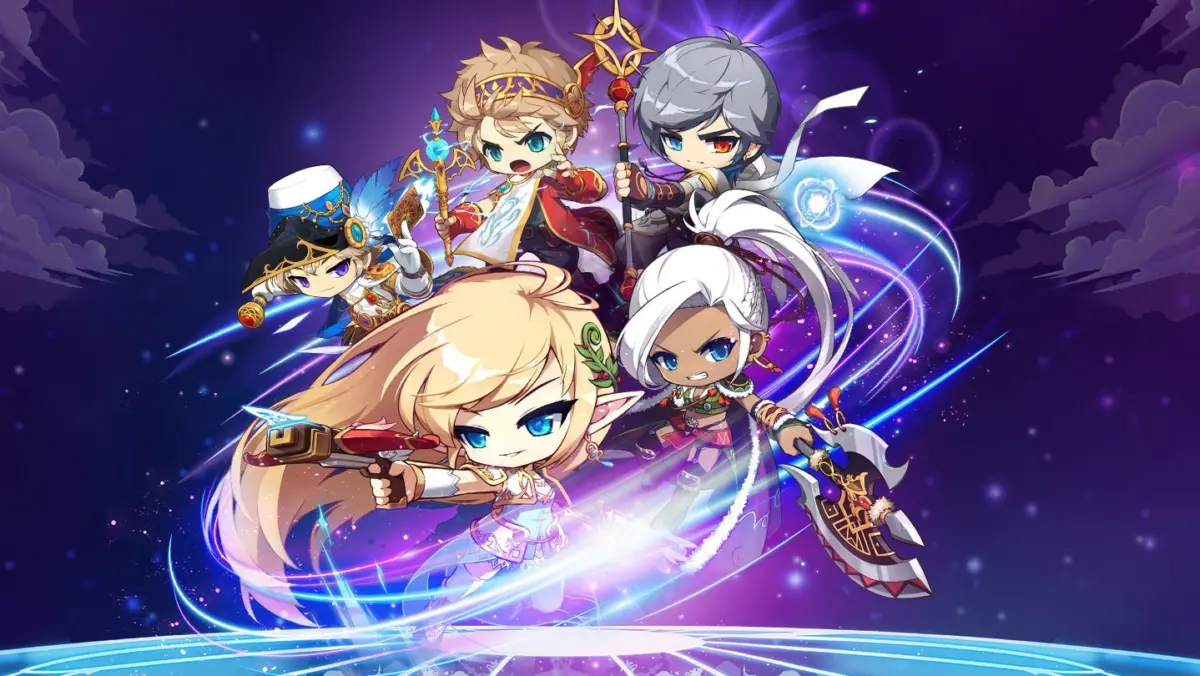
Perhaps the most striking highlight of the quarter was the performance of the MapleStory franchise. The series experienced a massive 72% year-over-year revenue growth, establishing a new quarterly record for the IP. This performance served as the primary engine for Nexon’s overall revenue growth, proving that even decades-old franchises can find new life through consistent updates, mobile adaptations, and sustained community engagement.
In contrast, the Dungeon & Fighter franchise faced a more challenging landscape. Revenue for the series declined by 33% year-over-year. Nexon attributed this downturn to weaker-than-expected engagement with the September "National Day" content updates in China—a market that has historically been the stronghold for the franchise. Despite this dip, the company remains heavily invested in the future of the brand, evidenced by the announcement of Project Overkill. Developed by Neople and slated for publication by Tencent, this new online RPG is designed to expand the Dungeon & Fighter universe, signaling that Nexon is looking toward long-term franchise development rather than short-term fluctuations.
Strategic Transformation and Resource Allocation
Beyond its established hits, Nexon has been aggressively refining its operational structure. Earlier this year, the company introduced a "transformation initiative" aimed at sharpening its focus on commercial viability. As a direct result of this initiative, the company confirmed that six ongoing projects were discontinued in recent months. This was not a move driven solely by cost-cutting, but rather a strategic reallocation of talent and budget toward titles that demonstrate higher potential for success in a competitive market.
This transformation is also being applied to the company’s internal workflows through the integration of artificial intelligence. Nexon emphasized that AI is being deployed across various departments, including game development, localization, and code review. According to the company, the primary goal of this integration is to liberate developers from repetitive tasks, allowing them to focus on "taking creative risks and validating new ideas."
Nexon was quick to clarify its stance on the role of human creativity in this process, addressing potential industry concerns regarding automation. The company stated, "The aim is to create more ambitious, higher-quality games with the teams already in place, not to make the same games at lower cost. Nexon’s games are made by people, and that is not changing." By utilizing AI as a force multiplier rather than a replacement for human talent, the company hopes to improve the overall quality and scale of its future projects.
Diversification and Future Outlook
Diversification remains a cornerstone of Nexon’s corporate strategy. The company is actively working to ensure it is not overly reliant on any single market or flagship title. The success of Embark Studios’ The Finals (often discussed alongside their other projects like Arc Raiders) continues to serve as a vital component of this strategy. Arc Raiders, the studio’s third-person shooter, has now sold over 17 million copies to date. The game recently saw a resurgence in player interest following the launch of the "Frozen Trail" update, which proved highly effective in re-engaging lapsed players and driving new unit sales, demonstrating that post-launch support remains a key pillar of Nexon’s growth model.
Junghun Lee, President and CEO of Nexon, expressed confidence in the company’s trajectory during the earnings report. "Our IP expansion strategy is delivering clear results," Lee noted. "Diversified revenue from brand extensions in established franchises like MapleStory, along with FC‘s return to growth, and new games like Arc Raiders, strengthens our core business and reduces dependence on any single franchise or market."
Lee also addressed the impact of the company’s recent internal changes, noting that the third quarter served as a proving ground for the new transformation initiative. By guiding decisions on where to invest capital and human talent, the company has successfully pivoted toward projects that offer the strongest commercial potential.
As Nexon looks toward the future, the company appears to be in a position of relative strength. By combining the enduring popularity of its classic IPs with a rigorous, data-driven approach to project management and a commitment to integrating modern technology into its creative pipeline, Nexon is positioning itself to navigate the complexities of the current gaming landscape. Whether through the revitalization of the MapleStory brand, the expansion of the Dungeon & Fighter universe, or the continued growth of new, non-MMO projects, the company is demonstrating a clear path forward that balances legacy success with future-facing innovation. With a steady hand on its portfolio and a clear focus on high-quality, human-led development, Nexon enters the final stretch of its fiscal year with significant momentum and a refined roadmap for sustained commercial success.