
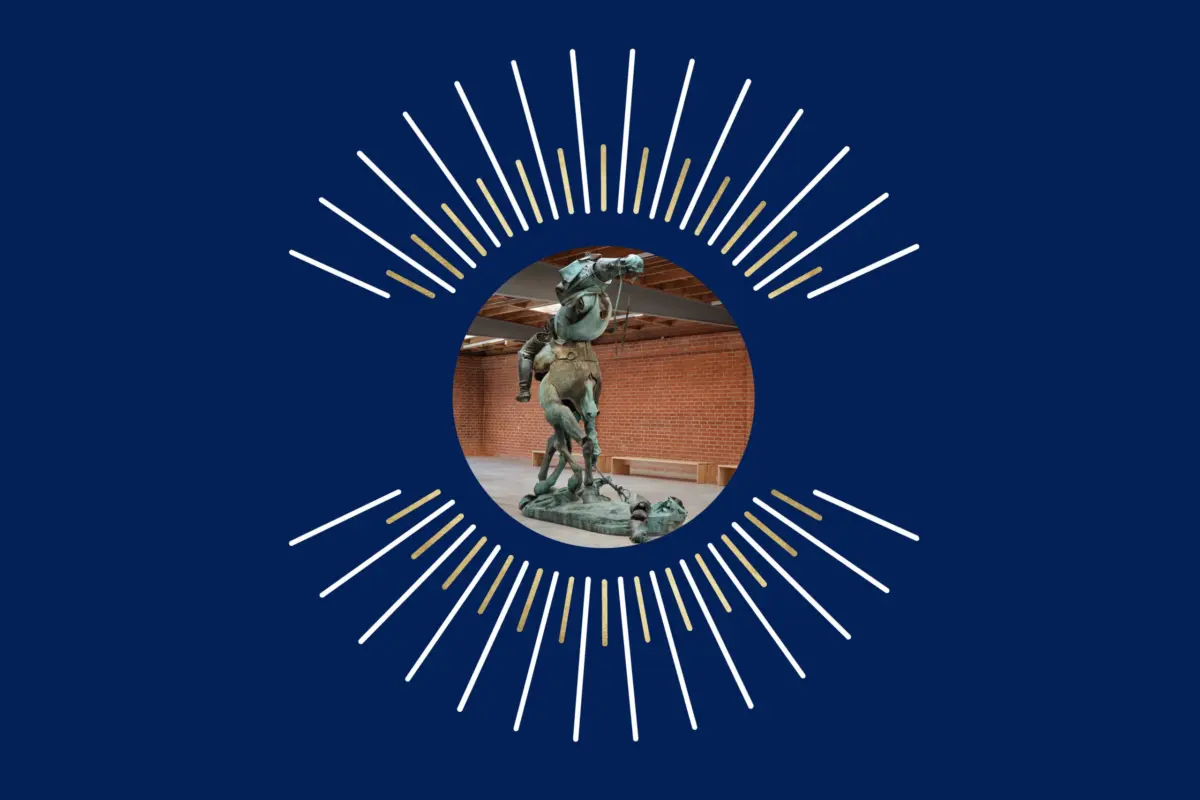
In the realm of contemporary art, few exhibitions manage to transcend the walls of the gallery to fundamentally alter our collective understanding of history. Yet, that is precisely the achievement of "MONUMENTS," a landmark exhibition that has been recognized as the standout curatorial accomplishment of the year. Spanning two distinct Los Angeles venues—The Geffen Contemporary at MOCA and The Brick—the exhibition stood out to the ARTnews Awards jury for its uncompromising curatorial vision, its intellectual rigor, and its profound engagement with one of the most volatile subjects in the American cultural landscape: the legacy of Confederate statuary.
A Decade-Defining Curatorial Achievement
The exhibition, which ran from October 23, 2025, through May 3, 2026, was the culmination of a decade of intensive research and development. Orchestrated by a powerhouse team of curators—Hamza Walker, Kara Walker, and Bennett Simpson, with the support of Hannah Burstein and Paula Kroll—the project sought to address the presence of decommissioned Confederate monuments by placing them in the unconventional, neutral, and critical environment of an art museum.
Perhaps the most striking aspect of "MONUMENTS" was its physical presentation. By removing these statues from their original public pedestals—where they were intended to function as elevated, untouchable symbols of authority—and placing them directly on the gallery floors of MOCA, the curators stripped them of their power to intimidate or dictate historical narratives. Visitors were confronted with these objects as sculptural entities, many still bearing the scars and markings of their removal, including layers of protest graffiti. This choice transformed the statues from icons of history into raw, visceral objects of study. By bringing these monuments down to eye level, the exhibition allowed for a radical repositioning of the viewer, inviting a new, critical dialogue about the "true legacy" of these objects and how their ideological foundations continue to reverberate through contemporary society.
Placing History in Dialogue with the Present
The curatorial thesis of "MONUMENTS" was as sharp as it was ambitious. It did not merely present the decommissioned statues as artifacts; it placed them in a deliberate, productive dialogue with the work of contemporary artists. By juxtaposing the oppressive history embodied by the monuments with the reflective, challenging work of figures such as Bethany Collins, Julie Dash, Davóne Tines, Cauleen Smith, Torkwase Dyson, Andres Serrano, Martin Puryear, Nona Faustine, and Hank Willis Thomas, the exhibition highlighted the ongoing struggle over public memory.
The exhibition invited visitors to consider the nature of monumentality and the question of who, exactly, is granted the privilege of being remembered in the public square. At The Brick, the presentation was particularly pointed. Co-curator and artist Kara Walker contributed a haunting piece titled Unmanned Drone (2023). For this work, Walker dismantled a decommissioned equestrian statue of Stonewall Jackson, only to weld it back together in a fractured, distorted configuration. This process served as a powerful metaphor for the broader task facing the nation: how can we possibly piece together the fragmented, often toxic history of the United States to create something that is not just new, but honest?
Throughout both venues, the exhibition demonstrated that contemporary artists are not merely passive observers but are, in fact, essential partners in helping the public navigate the unsettled and often painful debates surrounding these artifacts. The "productive friction" created between the historical objects and the contemporary works transformed "MONUMENTS" from a thematic show into a once-in-a-generation experience that redefined what a museum exhibition can achieve. It remains a definitive study in how institutions can effectively reframe history and facilitate public engagement with the most difficult aspects of our shared past.
Special Citation: The David Geffen Galleries at LACMA
While "MONUMENTS" was honored for its thematic intensity, the ARTnews Awards jury also felt compelled to issue a special citation to the Los Angeles County Museum of Art (LACMA) for the inaugural hang of the David Geffen Galleries, which opened to the public on May 4.
This recognition acknowledges a different, yet equally impressive, curatorial feat. Unlike a traditional thematic exhibition, the new hang at LACMA represents a systemic rethinking of how a permanent collection is presented. The building itself, designed by the architect Peter Zumthor, is a sprawling, single-floor structure that spans Wilshire Boulevard. Rather than attempting to impose a singular, linear, and often reductive narrative of art history, the museum chose a more nuanced approach. The installation focuses on creating conversations between different eras, geographies, and artistic styles, highlighting the commonalities that emerge when disparate works are placed in proximity.
The success of this endeavor was largely credited to an unprecedented level of collaboration among the museum’s 15 distinct curatorial departments. By breaking down the traditional silos of museum management, the curators were able to provide fresh insights into iconic works while simultaneously drawing much-needed attention to lesser-known pieces. The resulting juxtapositions—elegant, unexpected, and intellectually stimulating—set a new standard for how major institutions can utilize their permanent collections to foster a more inclusive and global understanding of art.
A Year of Notable Contenders
The strength of the field in this year’s awards cycle was particularly evident in the list of nominees, each of which offered a distinct and significant contribution to the curatorial landscape.
Among the notable nominees was "Into the Time Horizon" at the Nevada Museum of Art in Reno. Curated by Apsara DiQuinzio and Kolin Perry, this exhibition, running from November 2025 to January 2027, explored complex concepts of temporality and environmental consciousness, pushing the boundaries of traditional museum exhibitions.
The Carnegie Museum of Art in Pittsburgh was recognized for its ambitious staging of the 59th Carnegie International, titled "If the word we." Curated by Ryan Inouye, Danielle A. Jackson, and Liz Park, the exhibition served as a profound exploration of community, language, and the collective voice in a fractured era.
Similarly, the Buffalo AKG Art Museum received acclaim for "Let Us Gather in a Flourishing Way," curated by Andrea Alvarez. This exhibition, which traveled to the Des Moines Art Center, was noted for its sensitive approach to community-based art and its focus on themes of growth, resilience, and assembly.
Finally, the Hammer Museum in Los Angeles was honored for "Several Eternities in a Day: Form in the Age of Living Materials," curated by Pablo José Ramírez with Jessi DiTillio. Running from April through August 2026, the exhibition provided a fascinating look at the intersection of organic form and contemporary materiality, challenging viewers to rethink the boundaries between the natural world and artistic production.
Each of these exhibitions, alongside the winner, underscores the vital role that museums and nonprofit institutions play in shaping public discourse. By tackling themes of history, power, memory, and the environment, these curatorial projects have proved that the museum remains a space of essential, ongoing dialogue—a place where the past is not merely stored, but actively interrogated to better understand our present and future.