
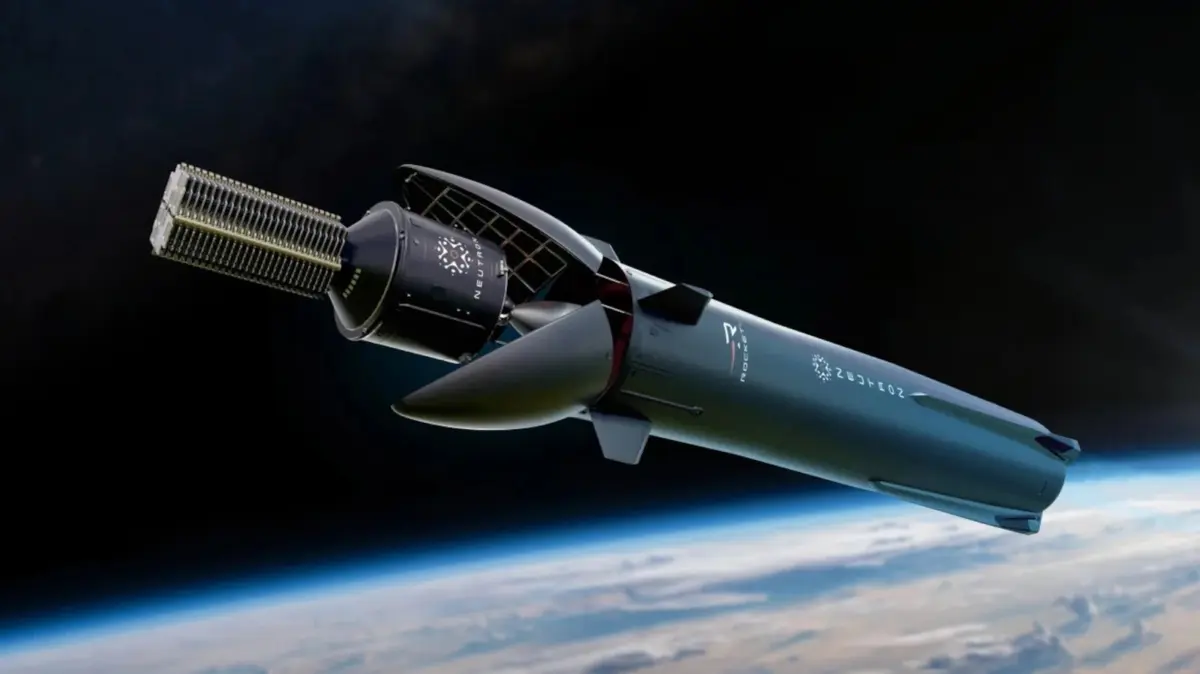
For the first time in decades, the future of American access to space faces a period of profound transition and uncertainty. That very uncertainty is already beginning to manifest as a historic market opportunity for emerging aerospace companies poised to capture a changing landscape. Over the past few weeks, the Department of Defense has injected significant capital into the commercial space sector, handing out two separate $150 million loans to rising rocket developers Stoke Space and Rocket Lab.
These strategic investments are explicitly designed to build out critical launch infrastructure and expand manufacturing capabilities. The immediate goal is to help these firms reach a level of operational maturity where they can reliably launch vital national security and military payloads into orbit. Crucially, however, this financial backing also empowers these companies to aggressively attract and successfully execute high-profile commercial contracts. Business across the industry is already booming, and industry analysts expect a massive influx of payloads to head toward these alternative providers and other competitors over the next few years. The primary catalyst for this shift is simple: SpaceX, the undisputed dominant force in the global space sector, is intentionally stepping back from a significant portion of the commercial market.
Elon Musk’s sprawling aerospace enterprise has expanded dramatically in recent years, branching into ventures that range widely from artificial intelligence infrastructure to natural gas extraction. However, the long-term corporate future of SpaceX relies heavily on Starship, its massive, next-generation vehicle currently undergoing rigorous flight testing. As the largest and most powerful rocket ever constructed, Starship is intended to carry astronauts back to the Moon and serves as the only launch vehicle capable of deploying SpaceX’s newest V3 Starlink satellites.
SpaceX’s corporate strategy treats Starship’s eventual success as an absolute necessity. Operating under the assumption that the vehicle will soon be fully operational, the company has already stopped accepting reservations for commercial flights on its legendary workhorse, the Falcon 9. While the U.S. military and NASA may secure a brief grace period to continue utilizing the Falcon 9, Elon Musk has made it unmistakably clear that he intends to wind down operations for the Falcon fleet sooner rather than later.
This aggressive pivot leaves the broader space ecosystem facing difficult questions. What happens if Starship is not ready to scale its flight rate within the next few years? Even if the vehicle meets its timeline, what happens when its schedule is entirely consumed by launching thousands of Starlink satellites, leaving little to no room for external customers? Furthermore, as a substantially larger and more powerful rocket, Starship will likely command a much higher price tag per launch than smaller medium-lift vehicles. Once the Falcon 9 is officially retired, where will the rest of the commercial market and the Department of Defense turn for reliable, cost-effective access to orbit?
Small companies, small rockets, big opportunity
Recognizing the looming crunch in launch capacity, the Pentagon is moving proactively to mitigate potential vulnerabilities. National security leadership wants a diverse roster of independent companies capable of delivering government payloads to orbit, thereby reducing the nation’s strategic dependence on a single provider and a single corporate leader.
To achieve this, the military’s Office of Strategic Capital—an investment arm established in 2022 to support critical technology sectors—is funneling substantial resources directly into SpaceX’s smaller rivals. For Stoke Space, the $150 million loan commitment is earmarked to help construct a brand-new, dedicated launchpad at the Space Force base in Cape Canaveral. This facility will serve as the operational home for its in-development Nova Block 2 rocket. For Rocket Lab, the funding will be used to upgrade production factories and significantly expand its fleet of drone recovery vessels designed to catch returning rocket boosters out at sea.
It is no coincidence that Stoke’s Nova Block 2 and Rocket Lab’s in-development Neutron rocket are natural competitors to the retiring Falcon 9 rather than the much larger Starship. Although these vehicles are slightly smaller—capable of carrying 15 and 13 metric tons to low Earth orbit, respectively, compared to the Falcon 9’s 23 tons—they sit squarely in the sweet spot for medium-sized missions. For a multitude of satellite operators and commercial space enterprises, a medium-lift vehicle is all they require. These rockets represent a far more practical and economically viable fit than commissioning a much larger, more expensive Starship flight, assuming SpaceX would even entertain outside reservations.
Still, the phrase "in-development" remains a persistent point of anxiety for the industry. Every one of these new rockets must successfully prove that it can launch and recover payloads with absolute reliability; otherwise, the commercial business model collapses. Development timelines have already proven slippery across the sector, with Rocket Lab pushing its Neutron debut back to 2027, while the Nova Block 2 is not scheduled to begin test flights until 2029.
These delays highlight just how far ahead of its time the Falcon 9 was when it first revolutionized the industry. Naturally, other formidable competitors are also knocking at the door, most notably Jeff Bezos’s Blue Origin and its heavy-lift New Glenn rocket. Ultimately, the trajectory of the space industry over the next decade will be dictated by which of these vehicles successfully come online, and when.
Good for the military, good for business
Recent geopolitical conflicts, most notably the war in Ukraine, have underscored that space infrastructure is an indispensable component of modern warfare. On multiple occasions, Ukraine’s sudden disruptions in access to Starlink connectivity—reportedly occurring at Musk’s direct behest—directly impacted military strike operations and operational planning. These events exposed the inherent fragility of relying too heavily on a single commercial entity for critical national security communications.
Consequently, the Pentagon’s current investments are strategically designed to diversify its corporate partners in the orbital domain, ensuring multiple pathways to space. Building redundancy will be vital for military space operations, particularly in the event of potential conflicts with technologically advanced adversaries.
Simultaneously, these federal investments in launch infrastructure and manufacturing lay a strong foundation for commercial operations, actively nurturing the broader space economy. As a primary strategic concern of the 21st century, the U.S. government is effectively subsidizing the expansion of the entire aerospace sector. A higher volume of active launch providers naturally fosters greater technological innovation and specialized engineering.
These technological advancements ultimately serve as the dual engines of both national economic prosperity and military readiness. As is frequently the case within the military-industrial complex, public investment stimulates a self-sustaining cycle of industrial growth.
With the eventual departure of the Falcon 9, commercial conditions are remarkably favorable for alternative providers. Rocket Lab’s Neutron rocket, despite having yet to complete its first orbital flight, is already completely booked through the remainder of the decade. Capitalizing on shifting market dynamics, the company has raised its baseline launch fees from $55 million to $70 million, fully aware that the impending absence of the Falcon 9 grants them substantial pricing power.
For competitors who have spent years operating in the shadow of SpaceX’s dominance, a significant market boom is arriving. The primary challenge moving forward will not be finding customers, but rather scaling operations to meet unprecedented demand. By comparison, the proven Falcon 9 completed an astonishing 165 orbital launches last year alone, while the currently sold-out Neutron is slated for a modest schedule of roughly 16 launches over the next few years.