

AI-focused stocks staged a tentative, yet fragile, comeback on Friday, providing a brief respite after a brutal, global-scale rout that sent tremors from the trading floors of Wall Street to the high-tech exchanges of Asia. While the session ended in the green, it has done little to soothe the anxieties of investors heading into the weekend. The central question remains: Are we witnessing a long-overdue market correction that will allow for more sustainable growth, or is this the first stage of an AI bubble finally beginning to burst?
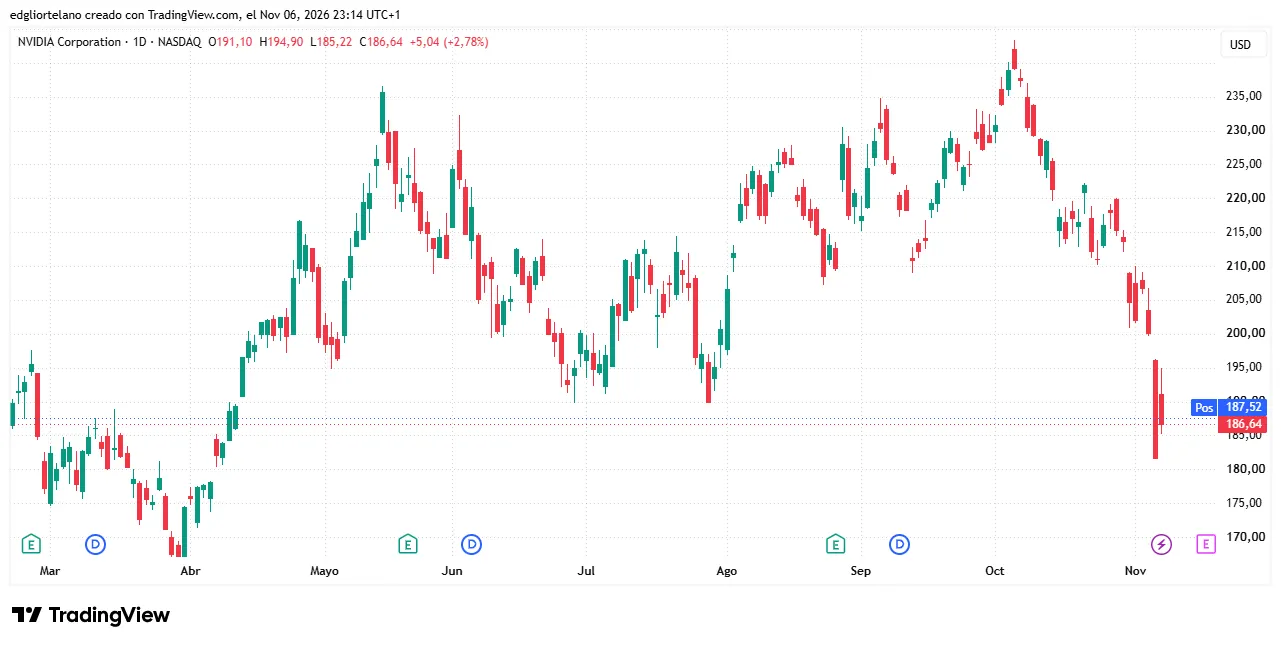
The price action on Friday reflected a market trying to find its footing. Nvidia, the poster child for the artificial intelligence boom, managed a 2.78% recovery to $186.64, a modest rebound following a punishing 9.3% plunge during Thursday’s trading session. Similarly, Advanced Micro Devices (AMD) saw its shares bounce back to $449.04, reclaiming some ground after a staggering 17.3% collapse just a day earlier. Despite these gains, both stocks remain significantly suppressed relative to their October peaks, serving as a stark reminder that a single day of "relief rally" trading is rarely enough to repair the structural damage caused by a multi-day selloff.
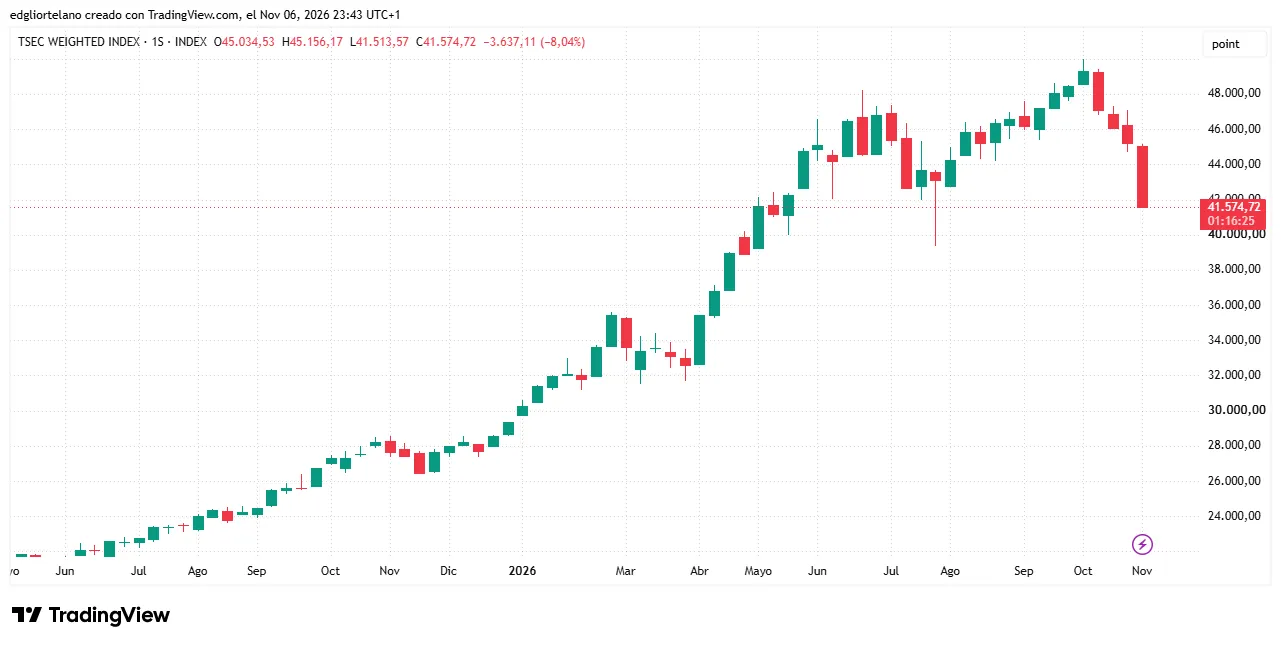
The contagion was not confined to U.S. shores. The panic was global, with markets in Asia suffering particularly acute damage. South Korea’s KOSPI index cratered by 6% on Friday, while Taiwan’s benchmark index faced a harrowing week, dropping more than 8%—its worst performance in several months. The situation became so dire that semiconductor giant TSMC hit its daily limit-down threshold during the height of the rout. The severity of the decline prompted interventionist concerns, with Reuters reporting that Taiwanese officials felt compelled to request state-owned banks to step in and provide support to the markets to prevent a total collapse in investor confidence.

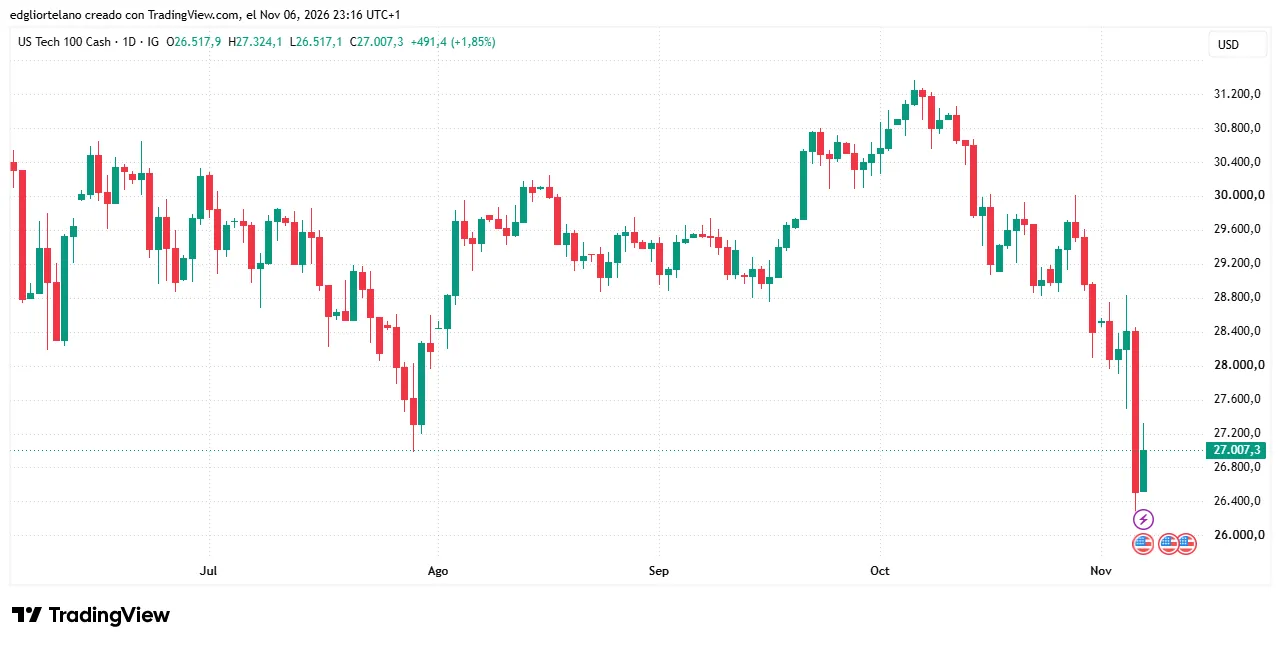
Back in the United States, the tech-heavy US Tech 100 proxy index also posted a recovery, gaining 1.85% to reach 27,007.3. However, this gain is largely cosmetic when viewed against the broader backdrop of the week; the index remains down more than 5.5% over the five-day period. The daily candles on the charts illustrate a pattern of a bounce occurring only after a substantial, rapid slide from October highs, rather than a return to the previously established upward trend.
Why the AI Trade is Unraveling
The sudden souring of investor sentiment is being attributed to a confluence of factors, ranging from geopolitical and regulatory shifts to underlying economic realities. One significant catalyst was the U.S. midterm elections, which have accelerated fears among tech investors that a shift in political winds could lead to significantly tougher regulatory scrutiny of data center expansion. According to findings from Ballotpedia, voters in 40 out of 41 local ballot contests on November 3 favored policies that would limit data center development. In some instances, this meant the outright rejection of pro-construction measures. While some of these votes were purely advisory in nature, the political signal was unmistakable: the massive infrastructure appetite of the AI industry is running into a wall of local resistance.
This matters profoundly for the chip sector because data centers represent the primary engine of their growth. Every new hyperscale project requires a monumental investment in advanced processors, high-end servers, complex cooling systems, and massive power grid upgrades. If local opposition results in sustained regulatory hurdles, companies will face delays in order fulfillment or be forced to move construction projects to more expensive, less ideal locations, all of which erode profit margins.
However, the skepticism toward the AI trade predated the recent election results. For months, market strategists have been sounding the alarm that the sector was becoming dangerously overheated. AI companies and their primary customers have been spending aggressively to build out massive capacity, often moving forward with plans before there is any clear evidence of a return on that investment. In a climate of higher borrowing costs, this "build it and they will come" strategy becomes increasingly difficult to sustain. Market strategist Steve Sosnick, quoted by Reuters, succinctly described the sentiment, noting that many of the most heavily owned stocks in the sector were already "priced to perfection," leaving no room for operational errors or macroeconomic disappointments.
Correction or Bubble Burst?
In financial parlance, a "correction" describes a scenario where a market index or an individual stock falls by at least 10% from a recent peak. Crucially, a correction does not necessarily imply that the underlying business is shrinking. It is often a valuation reset. For instance, consider a hypothetical chip manufacturer whose shares trade at 60 times annual earnings because investors are pricing in a future of explosive, uninterrupted growth. If those same investors suddenly decide that a more realistic multiple is 40 times earnings, the stock price can fall by a third without the company’s actual profits dropping by a single dollar.
A "bubble bursting," however, is a much more structural and painful event. It occurs when market expectations decouple entirely from reality and the capital that was fueling the boom begins to evaporate. History provides a somber roadmap for such events. During the dot-com crash, the Nasdaq experienced a catastrophic decline of roughly 77% between March 2000 and October 2002. It is important to remember that the internet itself was not a fad; it was a transformative technology. However, investors at the time had vastly overestimated how quickly companies could translate that technological potential into actual, sustainable profit.
Telecom operators in the late 1990s spent fortunes laying vast networks of fiber-optic cables for a digital future that had yet to arrive. Companies like Global Crossing, which built an international network, were forced to file for bankruptcy in 2002 because their debt loads became unsustainable when the expected revenue failed to materialize. The technology they built eventually became the backbone of the modern internet, but many of the companies and shareholders who bankrolled that infrastructure were wiped out in the process.
Today’s AI landscape is showing similar signs of a potential mismatch between long-term promise and near-term returns. While some of the current market activity is innovative—such as former crypto miners renting out their hardware or the emergence of a new wave of inference startups—there is a growing concern about the capital structure of the industry. Consider a company that borrows billions to build a data center filled with expensive Nvidia chips, banking on the idea that they can rent out that computing power at premium rates for years. If the demand from end-users turns out to be lower than projected, or if construction is delayed by regulatory red tape, the debt obligations do not disappear.
If an operator is forced to cancel massive chip orders, the impact cascades: their contractors lose business, and utility companies that planned infrastructure upgrades for those data centers lose their anticipated customers. Lenders and investors holding the debt of these projects could then face significant losses. This is where a stock-market selloff transitions from a concern for day traders into a systemic problem for the broader economy.
Yet, it is vital to acknowledge the differences between this moment and the year 2000. Tech giants like Microsoft, Alphabet, Amazon, and Meta are vastly more stable than the speculative startups of the dot-com era. They are highly profitable, cash-rich businesses with established customer bases. They can withstand market volatility and project delays in a way that smaller, debt-dependent AI-cloud providers simply cannot. It is entirely possible for artificial intelligence to continue transforming the global economy while simultaneously seeing a host of individual, smaller AI companies fail, or seeing investors who overpaid for "AI-exposure" suffer significant losses.
The financial warning lights are undoubtedly beginning to flicker. Reuters reported on Friday that the cost of insuring against a default by AI-cloud provider CoreWeave has climbed above 1,000 basis points. This metric functions similarly to insurance on a loan; as the price to secure that protection rises, it signals that investors are becoming increasingly concerned about the borrower’s ability to repay their debt. However, the broader bond markets are still functioning relatively normally, suggesting that the current strain is localized to the riskiest corners of AI financing rather than signaling a systemic, economy-wide crisis.
The coming week will provide more concrete data points to test the resilience of the market. Results from CoreWeave, Applied Materials, and Cisco will be scrutinized to determine if customers are still placing orders for capacity and hardware. Meanwhile, incoming inflation data will play a critical role in shaping expectations for future interest rates and borrowing costs. If the industry reports stable orders and manageable debt levels, it will support the case that this is merely a temporary correction. Conversely, if there is a trend of canceled projects, failed refinancing efforts, and shrinking sales, it would indicate that the financial foundations of the current AI boom are indeed cracking. The central question remains not whether AI has a future, but whether every company betting billions on that future has the financial endurance to reach it.