
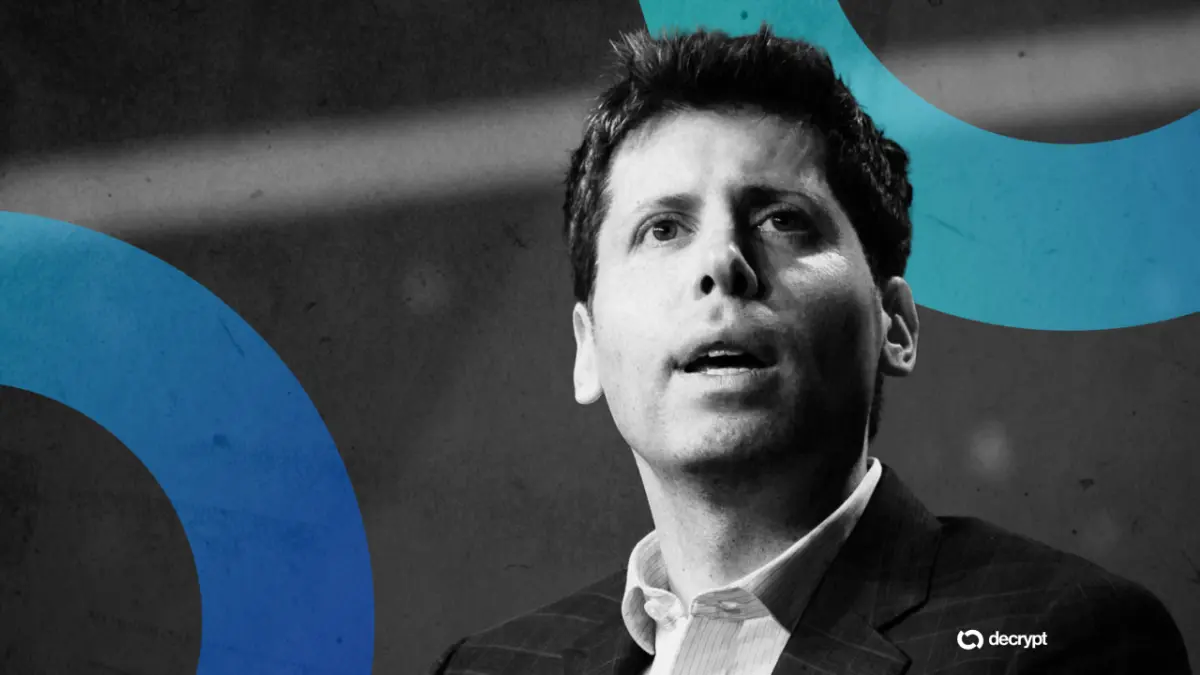
OpenAI CEO Sam Altman has moved to clarify his position regarding computer memory following a wave of public backlash triggered by comments he made concerning the allocation of global DRAM supplies. Altman, who found himself at the center of a social media firestorm, explicitly denied suggesting that individuals should have less access to memory, insisting that his remarks were stripped of their necessary nuance.
"I actually do want the world to have tons of memory and people to put as much as they want in their computers, and it is fucking annoying that this was taken out of context," Altman wrote on X, formerly Twitter, early Wednesday morning. "I have been arguing for the world to ramp up memory production for a long time."
The controversy originated from an interview Altman conducted with the YouTube channel Cheeky Pint. During the conversation, the OpenAI chief discussed the mounting pressures on the semiconductor industry, specifically the shortages of critical components like DRAM—dynamic random-access memory—that have been exacerbated by the aggressive expansion of AI data centers worldwide.
"From like a global allocation perspective, actually, it’s quite terrible to have everybody have a bunch of the world’s limited supply of DRAM sitting in their own computer and being used 5% of the time," Altman stated during the interview. "You want maximum utilization in a cloud if you’re trying to deal with this very supply-constrained environment."
Critics interpreted these comments as a suggestion that personal computer users are "wasting" memory that should be redirected toward the massive clusters of GPUs and server racks powering artificial intelligence models. The backlash was swift and high-profile, notably including a jab from Tesla and SpaceX CEO Elon Musk. On Sunday, Musk shared a meme featuring the Inglourious Basterds character Hans Landa, captioned with a question directed at Altman: "You are withholding DRAM from the cloud, are you not?" Musk added his own commentary, asserting, "The people deserve to have their RAM too!"
In the days following the initial criticism, Altman leaned into the social media discourse. He engaged with users who were mocking his original statements, admitting that he "lol’d" at one particular meme. In a playful nod to the controversy, he even briefly changed his display name on X to "Ram Altman" after a user suggested the rebrand. He later explained that he adopted the moniker only to emphasize his genuine desire for the world to have an abundance of memory.
Beyond the immediate social media spat, Altman’s underlying concerns regarding the memory supply chain remain a focal point of the broader technology industry. In the same Cheeky Pint interview, he directed criticism toward memory manufacturers, suggesting they have been sluggish in their efforts to scale production to meet modern demand. He noted that he would be "very sad" if the current price trajectory for chips and related components did not see a downward shift, highlighting the frustration of developers and firms operating within a constrained market.
The Global RAM Shortage Crisis
The friction between Altman and his critics arrives against the backdrop of a profound, long-term global memory shortage. As AI adoption continues to accelerate, the appetite for high-performance memory has surged, putting unprecedented pressure on the supply chain. SK hynix, one of the primary players in the memory manufacturing space, issued a stark warning last week, suggesting that the demand for memory—driven by the insatiable needs of AI data centers—is expected to outstrip global supply through at least 2030.
The economic reality of this shortage is already being felt across the consumer electronics landscape. Data from Tom’s Hardware illustrates the severity of the crisis: contract prices for 16GB DDR5 memory modules climbed from approximately $8.70 in October 2025 to $48 by September 2026. This represents a staggering increase of more than 550% in under a year.
The ramifications for the industry are dire. During a recent earnings call, Chen Ching-wen, CEO of the memory manufacturer Team Group, offered a grim outlook for the coming quarters. He indicated that there is "no downward price trend whatsoever" and cautioned that the industry is approaching a threshold where the supply-demand imbalance could become so severe that "even money can’t buy goods." This prospect of absolute scarcity poses a significant threat to consumer device manufacturers, who are increasingly forced to pass these ballooning costs onto their customers.
The impact is already visible in the retail market. In April 2026, Meta announced a price hike for its Quest 3 and Quest 3S virtual reality headsets, raising the retail price by $50 to $100. This followed a similar move by Sony, which increased the pricing for its PlayStation 5 consoles and PlayStation Portal remote players in March.
As the industry grapples with these supply-side bottlenecks, the debate over how memory is distributed—and whether it is more efficiently utilized in massive, centralized data centers or dispersed across millions of individual, underutilized consumer devices—is likely to continue. For his part, Altman maintains that his frustration is rooted not in a desire to limit consumer hardware, but in a desire to see a systemic increase in global production capacity.
The broader tech community remains divided on the feasibility of his vision. While the efficiency of cloud-based resource allocation is a core tenet of modern computing, the decentralization of hardware remains a pillar of personal computing and privacy-focused technology. As prices remain high and supplies remain tight, the conversation surrounding the "RAM crunch" is expected to intensify, with major tech CEOs and manufacturers under increasing pressure to find a sustainable path forward. For now, the rift between the need for massive computational power in the cloud and the accessibility of hardware for the individual user remains one of the defining tensions of the current era of artificial intelligence.