
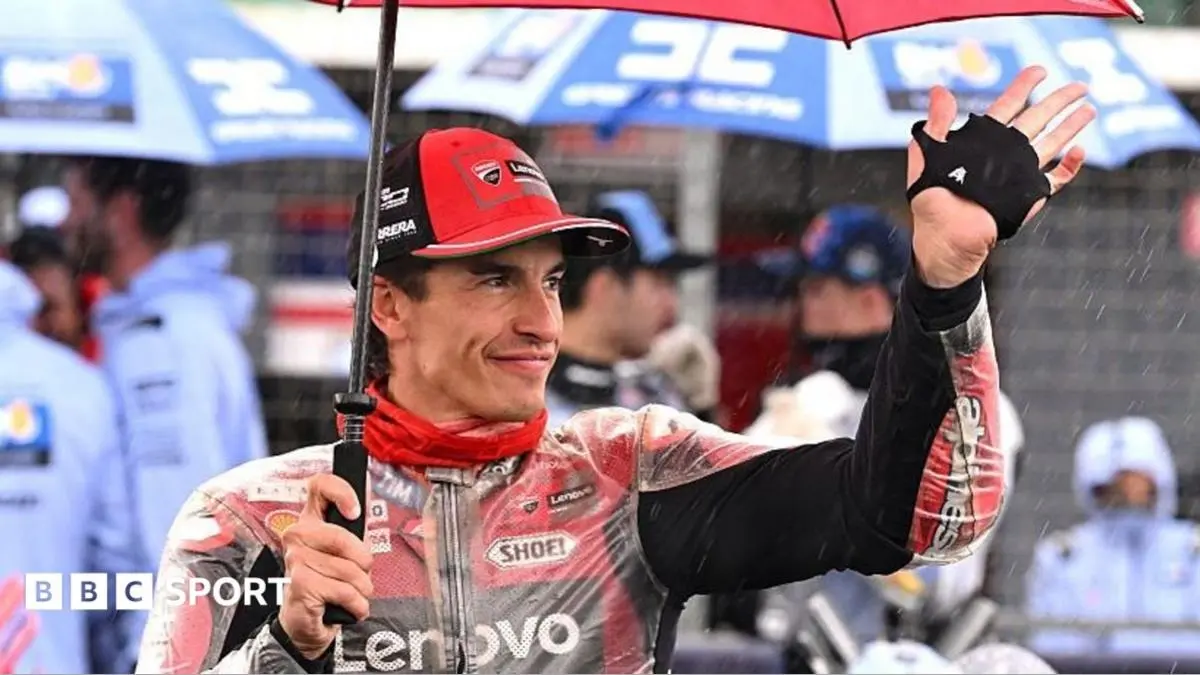
The premier-class event, which would have been the final grand prix held at the legendary circuit off the coast of Melbourne under its current scheduling, was initially delayed and ultimately abandoned due to persistent rain and dangerously poor visibility that blanketed the coastal venue.
Organisers had spent hours frantically trying to salvage the racing schedule after deteriorating weather conditions forced the cancellation of the earlier Moto2 and Moto3 races. In an effort to get the headline MotoGP race underway, race management pushed the start time back by several hours, hoping that a break in the weather would allow the riders to take to the asphalt.
For a time, there appeared to be a glimmer of hope as the rain eased off considerably, leaving sections of the iconic circuit looking deceptively dry in some areas. Teams prepared their bikes, riders suited up, and fans waited anxiously in the grandstands for the lights to go out.
However, a critical lack of visibility persisted around the circuit, meaning that medical helicopters would be completely unable to fly safely over the track in the event of an emergency. That safety hazard ultimately led to the decisive call to cancel the grand prix entirely, bringing a premature and frustrating end to the weekend’s racing action.
Explaining the difficult decision, race director Graham Webb detailed the strict safety protocols that govern the sport, particularly regarding airborne medical evacuation.
"The helicopter needs a window of around 60 minutes in both places – Phillip Island and Melbourne – in order for us to start the race," Webb said, shedding light on the logistical challenges faced by officials on race day.
"Just based on safety, we need to make sure that, if we do have any issues, we’re covered, we can get a rider quickly to hospital. Most circuits, we can reach a circuit within 45 minutes, which is our regulation, but here in Phillip Island the hospital is further than 45 minutes by road and therefore we rely on the air ambulance."
Without that vital aerial safety net operating at full capacity, running a high-speed motorcycle race of this magnitude was deemed an unacceptable risk, leaving officials with no other choice than to pull the plug on the day’s main event.
Despite the abrupt end to the Australian weekend, the championship battle rolls on relentlessly. Reigning world champion Marc Marquez continues to lead the overall standings by a margin of 10 points with just four races remaining in the season, keeping the championship fiercely contested as the paddock prepares for the final stretch of the year.
The cancellation also adds a poignant chapter to Phillip Island’s storied history on the world championship calendar. The Australian MotoGP is moving to a new street circuit in Adelaide from next season, marking the end of an era for the beloved coastal track.
Other than two years lost to the coronavirus pandemic, Phillip Island has been a steadfast fixture on the world championship calendar for 30 years, earning a reputation among riders and fans alike as one of the most thrilling, challenging, and picturesque circuits in global motorsport.
Over those three decades, the circuit has played host to some of the most memorable moments in modern motorcycle racing history. Australian two-time world champion Casey Stoner famously celebrated six consecutive victories in succession at his home track from 2007 to 2012, thrilling local crowds with his sheer dominance. Years prior, compatriot Mick Doohan sealed his fifth and final premier-class world title with an unforgettable victory in the 1998 race, cementing the circuit’s legacy in Australian sporting folklore before its eventual departure from the calendar.