
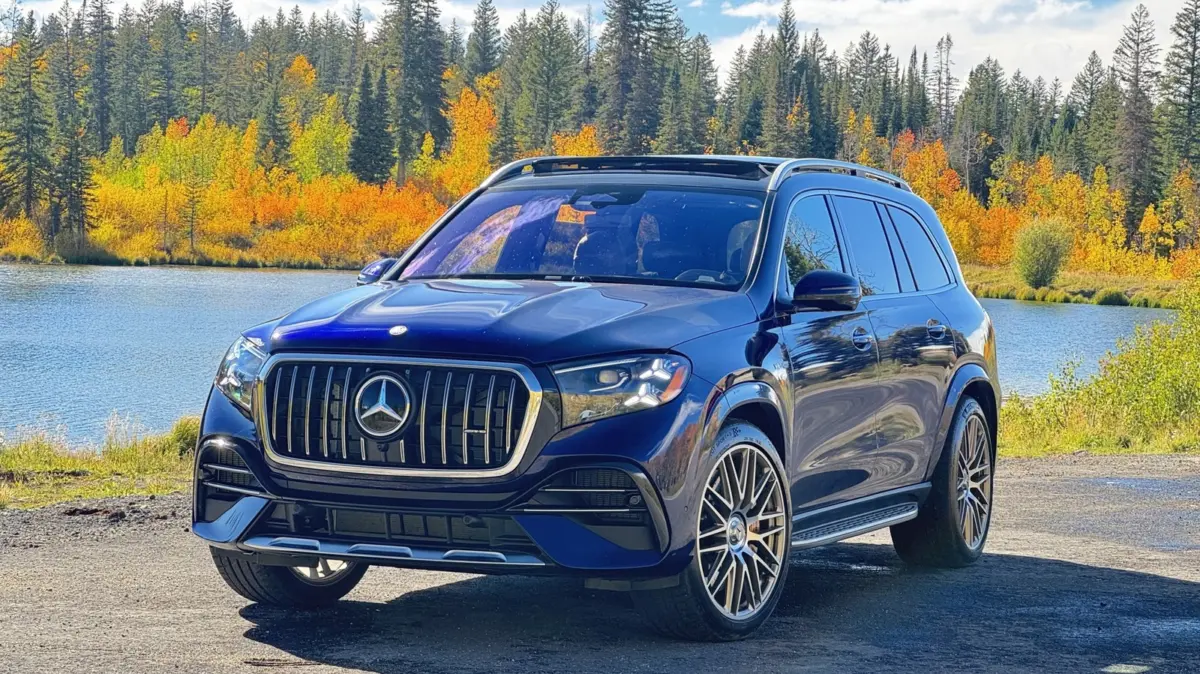
The Mercedes-Benz GLS occupies a unique and demanding space in the German automaker’s lineup. As the brand’s largest SUV, it carries the heavy responsibility of being the metaphorical S-Class of SUVs. To ensure it keeps pace with the W223 S-Class’s recent refresh—which brought updated styling, fresh powertrains, and advanced cabin technology—the GLS has now undergone its second facelift. Over the past few weeks, a series of Mercedes SUV reviews have rolled out, starting with the reworked 2027 Mercedes-Benz GLE, followed by the Mercedes-AMG GLE53, and culminating with the flagship Mercedes-AMG GLS63.
While the non-AMG variants share the core updates applied to the smaller GLE, the GLS63 represents the absolute pinnacle of the lineup. It is a machine that is utterly ridiculous, entirely pointless on paper, yet undeniably awesome in practice. Invited by Mercedes to Colorado to experience the refreshed 2027 GLE and GLS lineups firsthand—complete with stays in woodland cabins and regional mountain dining—automotive journalists put the diverse range of utility vehicles through their paces across changing terrain.
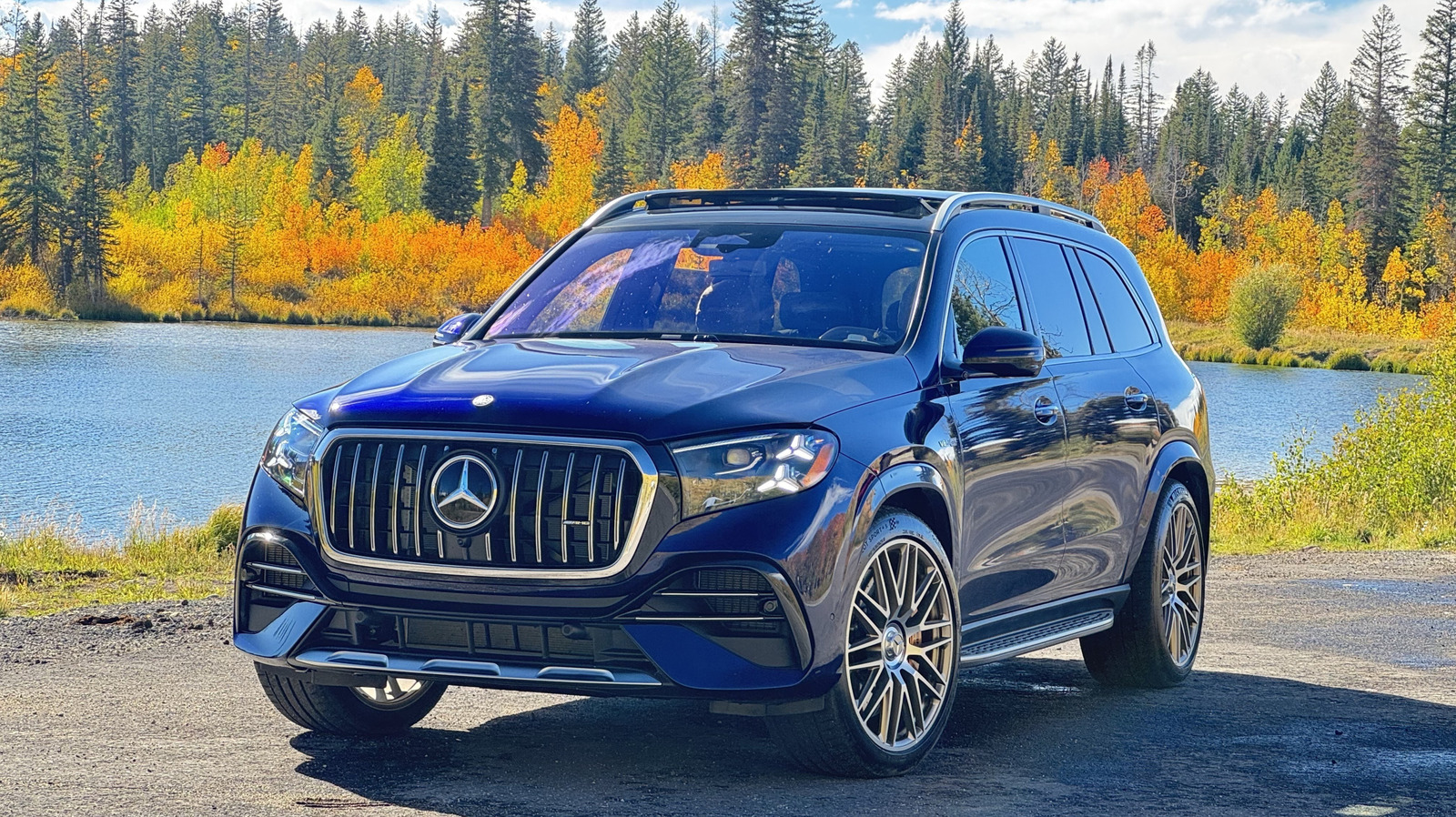
Second Facelift’s the Charm
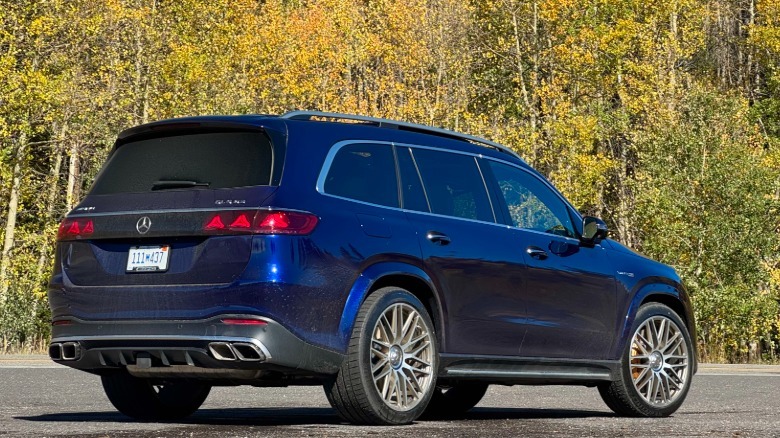
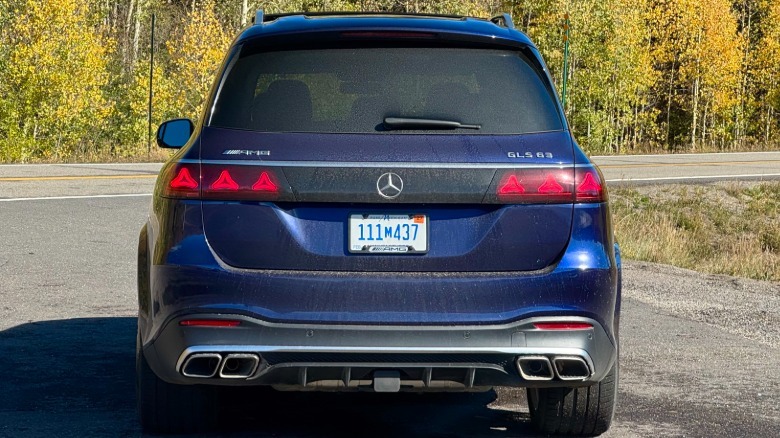
This update marks the second time Mercedes has refreshed its largest SUV, bringing its aesthetic language into alignment with the rest of the brand’s contemporary vehicle portfolio. The most striking visual changes are concentrated on the exterior lighting and grille treatments. The GLS adopts star-shaped daytime running lights, featuring subtle, stacked three-pointed stars within each headlight housing, accompanied by a polarizing black plastic grille surround that mirrors current Mercedes design trends. At the rear, the taillights incorporate a similar triple-star motif connected by another prominent strip of black plastic. While automotive aesthetics are subjective, opinions from initial drives lean toward a preference for the cleaner, more understated appearance of the outgoing GLS model.
Beneath the skin, the broader GLS lineup benefits from substantial powertrain revisions shared with the GLE. The entry-level GLS450 is powered by a turbocharged 3.0-liter inline-six engine paired with an upgraded mild-hybrid system featuring an electric auxiliary compressor. While horsepower remains steady at 375, maximum torque sees a boost of 44 pound-feet, bringing the total to 413 lb-ft. The 2027 GLS450 commands a starting price of $95,500, including destination charges, and is currently arriving at dealerships nationwide.
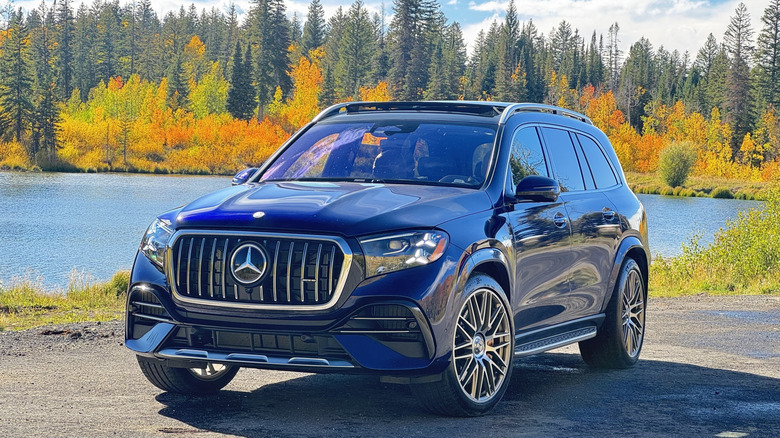
Stepping up to the V8-powered GLS580 introduces the new M177 Evo twin-turbocharged 4.0-liter V8 engine equipped with a flat-plane crank. This configuration generates 530 horsepower and 553 lb-ft of torque, enabling the heavy luxury SUV to accelerate from zero to 60 miles per hour in an estimated 4.5 seconds. Starting at $122,500, the GLS580 mirrors the praised driving dynamics of its GLE counterpart.
Beyond powertrain modifications, the GLS receives significant technological and chassis enhancements. These include cloud-based air suspension damper controls, the optional E-Active Body Control air suspension system, standard micro-LED Digital Light headlights, and next-generation driver assistance infrastructure. The upcoming driver assistance suite is slated to enable point-to-point hands-free Level 2++ autonomy via future over-the-air updates, alongside comprehensive interior technology upgrades.

Would Sir Like More Screen?
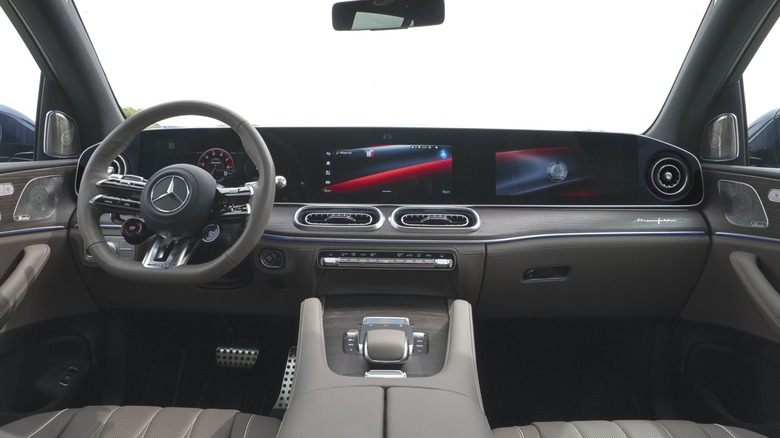
Inside the cabin, the GLS adopts the architecture seen in the GLE, incorporating the expansive Mercedes Superscreen setup. This configuration places three distinct 12.3-inch displays behind a single continuous pane of glass spanning the entire width of the dashboard. The driver’s instrument cluster sits behind an updated AMG steering wheel featuring physical volume rollers and cruise-control toggles, though the remaining steering wheel controls retain frustrating touch-sensitive surfaces. While the steering wheel itself offers a comfortable grip, the reliance on haptic touch controls draws criticism.
The central 12.3-inch infotainment display inherits the limitations noted in the GLE, notably its squat aspect ratio. Surrounded by prominent, glossy black bezels, the center screen feels undersized relative to the massive glass panel housing it, complicating usability while driving. Interacting with the interface is further complicated by the learning curve associated with the new MB.OS operating system.
A third dedicated touchscreen positioned in front of the passenger allows occupants in AMG models to monitor active powertrain telematics, such as real-time horsepower utilization. However, other functions could arguably be managed more effectively through a personal smartphone or tablet. Notably, the passenger display lacks the capability to adjust seat massage functions or expanded seat adjustments. Passengers must reach across the center console and disrupt the primary infotainment screen to alter their own seating parameters, presenting an ergonomic oversight.
On a positive note, because the underlying vehicle platform dates back to 2020, the cabin retains a physical row of climate control switches and a console-mounted touchpad. These traditional controls ease navigation through the extensive infotainment menus. However, like the smaller GLE, front-seat storage remains surprisingly limited given the vehicle’s massive footprint as a family-oriented luxury liner, with storage largely restricted to the split-center armrest.
It Features the Same Huge 603 Horsepower and 627 Lb-Ft of Torque as Before
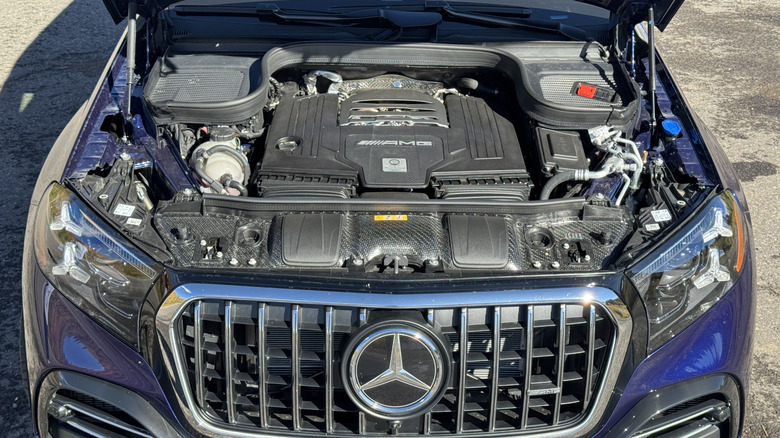
At the apex of the hierarchy sits the AMG GLS63, powered by a hand-built twin-turbocharged V8 engine. It retains its predecessor’s output of 603 horsepower and 627 lb-ft of torque, though Mercedes reports internal engine revisions. The powerplant delivers a distinct acoustic character, moving from a sharp startup snarl to a deep roar under wide-open throttle. For the first time, the GLS63 features a launch control function—an aggressive performance feature for a three-row family utility vehicle, but one that provides immense straight-line acceleration.
While unconfirmed by Mercedes-AMG, the introduction of these capability metrics appears influenced by the competitive landscape, specifically the Cadillac Escalade-V. Powered by a supercharged 6.4-liter LT4 V8 producing 682 horsepower and 653 lb-ft of torque, the American competitor established a high benchmark for performance-oriented luxury haulers upon its debut, complete with its own dramatic launch control soundtrack.
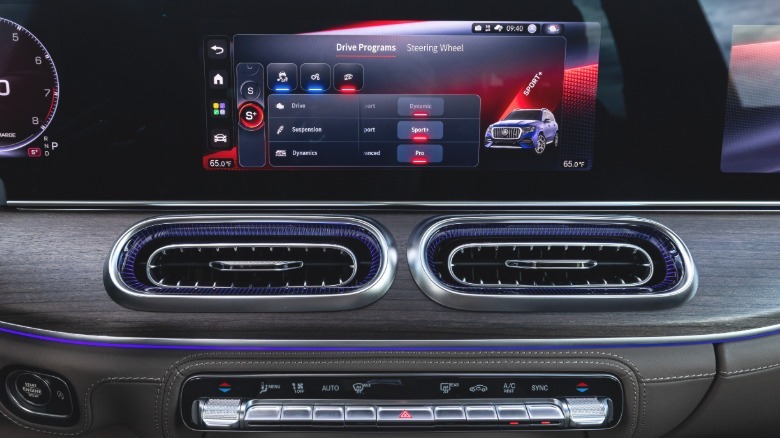
Executing a launch in the GLS63 follows the established AMG protocol: selecting Sport+ mode, depressing both the brake and accelerator pedals simultaneously, and releasing the brake upon system prompt. Mercedes estimates that the 6,118-pound three-row luxury vehicle accelerates from zero to 60 mph in 3.9 seconds, a figure that translates directly to the driver’s seat as the vehicle launches with immense force.
It Still Wasn’t Perfect
A test vehicle finished in Manufaktur Mystic Blue Metallic over Truffle Brown Nappa leather, equipped with optional 23-inch AMG forged multi-spoke wheels and carbon-ceramic brakes featuring 15.8-inch front and 14.2-inch rear rotors, revealed some dynamic quirks. During brief driving stints, modulating the upgraded carbon-ceramic brakes proved challenging. Minimal pedal pressure frequently produced abrupt deceleration, suggesting that buyers might prefer standard braking setups for smoother daily driving, despite the exceptional stopping power of the carbon-ceramics.
Navigating wet, twisting mountain roads in Colorado highlighted the vehicle’s physical scale. While body roll is effectively minimized by the standard AMG Ride Control+ air suspension and active roll stabilization, the vehicle cannot fully mask its 6,100-pound curb weight. Even when wrapped in wide Michelin Pilot Sport 4S tires measuring 285/40 up front and 325/35 out back, the sheer mass of the vehicle becomes apparent during hard braking and tight cornering on slick surfaces.
While a more comprehensive evaluation on dry pavement would likely reveal higher grip limits, the GLS63 on damp, leaf-covered asphalt prioritizes straight-line drama and composure over nimble handling. Nevertheless, it achieves levels of dynamic capability that defy traditional expectations for a large family transporter.
The GLS63 Is Excessive, Ridiculous, Silly, and Cool Because of It
High-performance luxury SUVs like the GLS63 exist in a realm defined by excess. Few buyers require a 603-horsepower, three-row vehicle capable of sub-four-second acceleration with a base price of $156,800 before options. Yet, it is precisely these superlative specifications that define its appeal. Choosing a GLS63 is less an exercise in rational decision-making and more a reflection of substantial financial freedom.
For buyers positioned to acquire and maintain such a vehicle, the flashy exterior and interior updates elevate its road presence significantly, ensuring it stands out in any setting where making a bold automotive statement is the primary objective.