
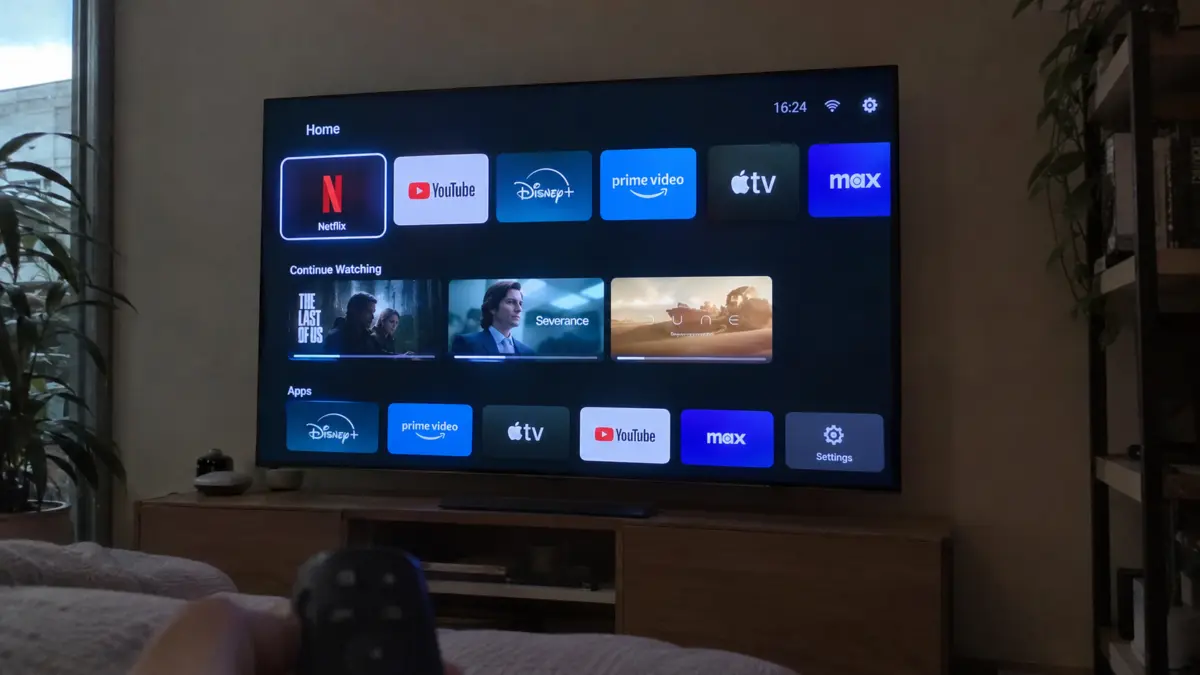
For years, the experience of owning a modern smart TV has been defined by a frustrating trade-off: in exchange for high-definition displays and internet connectivity, consumers have been forced to accept sluggish interfaces, aggressive data tracking, and a relentless barrage of sponsored advertisements. Now, a growing movement of tech-savvy owners is fighting back, deploying autonomous AI agents to reclaim their living room hardware. By directing these agents to strip away factory-installed bloatware and replace intrusive home screens, users have initiated a trend that has quickly earned a moniker: "vibe coding" your TV.
The phenomenon reached a fever pitch on social media over the weekend, fueled by success stories of users transforming bloated, ad-heavy sets into sleek, minimalist media hubs. The trend’s breakout moment involved a Xiaomi television belonging to the parents of a software developer named Gathin T. Frustrated that the device forced his family to navigate through a sponsored ad before reaching their streaming services, Gathin turned to Claude Code, an AI agent capable of executing commands directly on a computer. He provided the model number of the television, and the agent, operating over the local Wi-Fi network, successfully identified and disabled 25 unnecessary software packages. The result was a radical transformation: the TV’s sluggish, ad-ridden interface was replaced by a custom, streamlined launcher that, according to Gathin, functions with the fluidity of an Apple TV.
This shift comes at a time when consumer frustration with "smart" devices has reached an all-time high. Modern televisions have become increasingly invasive, often utilizing Automatic Content Recognition (ACR) software. This technology acts as a digital fingerprinting tool, monitoring everything that appears on the screen—from cable broadcasts and gaming consoles to external devices connected via HDMI—and transmitting that data back to manufacturers to facilitate targeted advertising. The scale of this surveillance is immense; in December 2025, the state of Texas filed a lawsuit against industry giants including Sony, Samsung, LG, Hisense, and TCL. The complaint alleged that these manufacturers were capturing screenshots of user displays as frequently as every 500 milliseconds, or twice a second, raising significant concerns about the extent to which private living rooms have been turned into data-collection hubs.
Regulatory efforts to curb this behavior have been ongoing since at least 2017, when Vizio paid $2.2 million to settle charges brought by the Federal Trade Commission for collecting viewing data from 11 million TVs without explicit consumer consent. However, such fines have done little to stifle the industry’s appetite for ad revenue. In 2024, Walmart finalized its acquisition of Vizio for approximately $2.3 billion, with executives explicitly highlighting the manufacturer’s profitable and rapidly expanding advertising business as a primary driver for the deal. This underscores a pervasive reality for the modern consumer: the television you purchase is designed to remain a revenue-generating asset for the manufacturer long after it is installed in your home.
"Vibe coding," a term popularized by OpenAI co-founder Andrej Karpathy in 2025, describes the process of using natural language to instruct AI models to generate and execute code. It has rapidly evolved from a niche hobby into a powerful tool for consumer advocacy. Earlier this month, the same AI-driven approach was used by gamers to reverse-engineer software, enabling them to integrate vastly different gaming worlds, such as stuffing elements of Minecraft into Elden Ring.
The technical bridge for this TV-based movement is the Android Debug Bridge (ADB), a versatile maintenance tool included in most Android-based smart TVs. By unlocking "developer mode"—a process typically requiring the user to tap a "Build" number in the settings menu seven times—the TV becomes accessible to external commands. Anthropic’s Claude Code agent acts as the catalyst, navigating through the device’s architecture, identifying every installed application, and flagging those responsible for telemetry and ad delivery.
Gathin’s approach, which he packaged as an open-source project called "cleanyourtv," offers a non-destructive alternative to traditional "rooting," which can permanently compromise a device’s security. Instead of permanently deleting system files, the project simply disables unwanted apps, allowing users to restore the device to its factory state with a single script. The project’s success has been swift; as of Tuesday, it boasted support for 107 models from 37 different brands and had garnered over 10,700 stars on GitHub. Gathin noted on his donation page that thousands of users successfully deployed his solution within the first 48 hours of its release.
The trend has expanded well beyond simple debloating. Other users are leveraging AI to create highly personalized, functional interfaces. Developer Mihir Gupta, for instance, replaced a 192 MB stock launcher with a custom 83 MB version, resulting in a 90% increase in free memory on his parents’ aging Android TV. Others have taken a more creative route: Ryan Doyle used an AI agent to analyze his TV’s product specifications and generate a custom interface that displays his live business revenue and new Stripe payment notifications. Rod Pers went even further, replacing the standard ad-filled menu with a real-time, 3D model of his own apartment, complete with functional controls for lights and ceiling fans.
Not all television manufacturers are equally susceptible to these modifications. Cleanyourtv is primarily effective on Android TV and Google TV platforms, which include brands like Sony, TCL, Hisense, Philips, and Xiaomi. Other platforms, such as Samsung’s Tizen and LG’s webOS, operate on different architectures that are significantly more restrictive. While some users have successfully debloated LG sets, the comprehensive interface overhauls possible on Android systems are currently out of reach. This distinction is significant, as security researchers have previously demonstrated that LG’s software can, in some instances, continue to collect voice data and monitor user location even when the television is powered off.
For Amazon Fire TV users, a rival project titled "dumbtv" has emerged, focusing on disabling roughly 65 software packages, including the invasive ACR software, and replacing the interface with a lightweight, 41 KB launcher that lacks internet permissions entirely. Its mission statement is blunt: "your apps, your HDMI inputs, a clock, and nothing else."
However, the "vibe coding" movement is not without its risks. The lack of a safety net means that users who misinterpret instructions or provide incorrect prompts can inadvertently "brick" their devices, effectively turning them into expensive, non-functional paperweights. One user reported that an AI agent, in its attempt to reboot the system, accidentally uninstalled the core operating system, leaving the TV stuck on a low-level recovery screen. Furthermore, developers have issued warnings that network ADB connections are typically unencrypted, potentially allowing any device on a shared Wi-Fi network to seize control of the TV. Users are advised to disable debugging features once their modifications are complete.
There are also concerns regarding the reliability of the AI agents themselves. Microsoft identified a vulnerability earlier this year where attackers could use "prompt injection"—hidden instructions—to manipulate models like Claude Code into exposing sensitive credentials. While Anthropic patched this flaw in May, the incident serves as a reminder that these agents operate with significant autonomy and require a degree of vigilance.
As the movement grows, it has also sparked a wave of practical, albeit humorous, advice. One user on X cautioned that if you decide to "clean up" your parents’ television, it is perhaps best not to explain the technical details—lest they realize that the same AI agents can be applied to every other "smart" device in their home. As of Tuesday, the cleanyourtv repository had been "forked" 1,200 times, with 85 active pull requests from volunteers looking to refine the project. What began as a simple annoyance with a single television has rapidly evolved into a widespread reclamation project, signaling a growing fatigue among consumers who are no longer willing to tolerate the intrusion of advertising and tracking into their private, home-viewing experiences.