
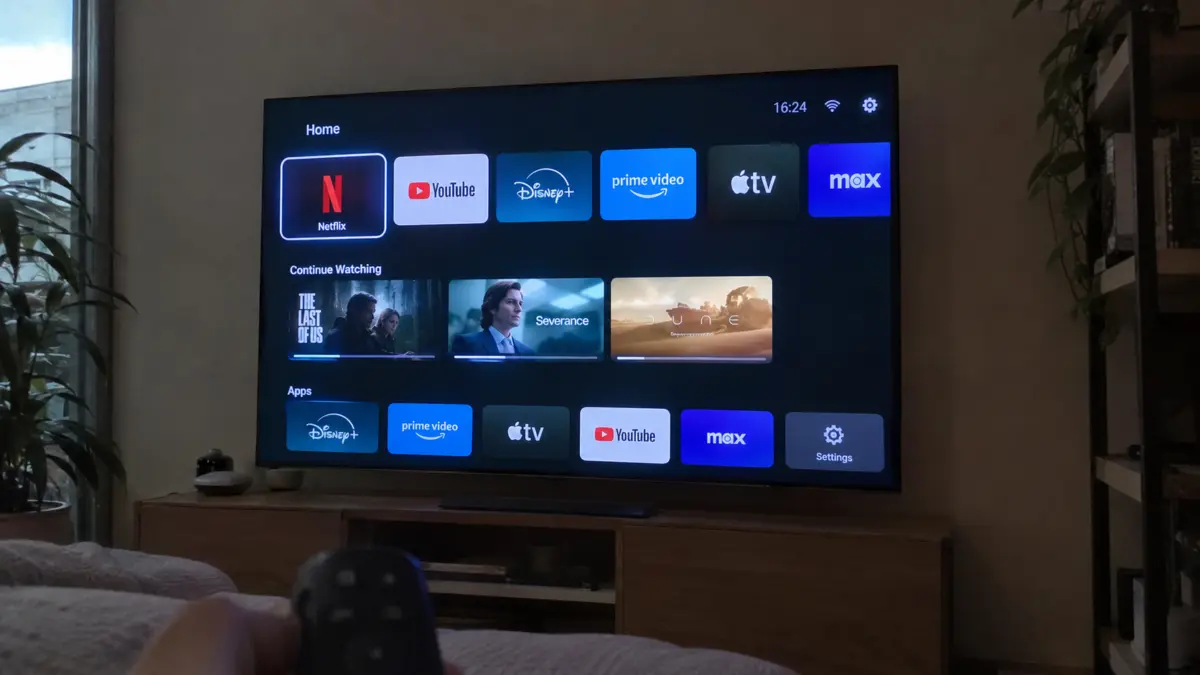
For years, the modern smart TV experience has been defined by a compromise: consumers pay hundreds, sometimes thousands, of dollars for a high-definition display, only to find the hardware hijacked by a suite of pre-installed, profit-driven software. Now, a growing movement of tech-savvy owners is fighting back, leveraging the power of AI agents to forcibly strip away sponsored ads, invasive tracking software, and the sluggish, cluttered home screens that manufacturers force upon them.
The trend, which gained significant momentum on social media platform X over the past weekend, has been colloquially dubbed "vibe coding" your TV. It involves utilizing AI-driven coding agents to interact directly with the television’s operating system, effectively stripping away the "bloatware" that turns modern sets into advertising billboards.
The catalyst for this digital uprising was a viral post by a developer known as Gathin T., who decided to address the frustrations of his parents’ Xiaomi television. The device was so heavily laden with intrusive software that it displayed a sponsored advertisement before the user could even navigate to a streaming service like Netflix. Utilizing Claude Code—an AI agent capable of writing and executing terminal commands—Gathin provided the TV’s model number and instructed the AI to identify and neutralize the unwanted software. The agent successfully located the TV on the local Wi-Fi network, remotely disabled 25 specific Xiaomi software packages, and generated an entirely new, streamlined home screen launcher. The result, according to Gathin, was a device that functioned with the clean, minimalist efficiency of an Apple TV.
This intervention highlights a long-standing tension between hardware manufacturers and consumers. Most TVs sold in the last decade utilize Automatic Content Recognition (ACR), a sophisticated, often controversial technology that "fingerprints" whatever content is appearing on the screen—whether it is cable broadcasts, gaming console output, or external devices connected via HDMI. This data is then harvested and transmitted to manufacturers, who use it to serve targeted advertising to the user. The scale of this surveillance is staggering; in December 2025, the State of Texas filed a lawsuit against major manufacturers including Sony, Samsung, LG, Hisense, and TCL, alleging that these devices could capture screenshots of user displays as frequently as every 500 milliseconds.
The regulatory response to these practices has been sluggish and largely ineffective. As far back as 2017, Vizio reached a $2.2 million settlement with the Federal Trade Commission following allegations that it collected viewing data from 11 million devices without obtaining user consent. Despite the public outcry and legal scrutiny, the business model proved resilient. Walmart’s acquisition of Vizio for approximately $2.3 billion in 2024 underscored the immense value that retailers place on the "profitable, fast-growing ad business" inherent in modern smart TVs. For the average consumer, this means that the television they purchased is effectively a dual-purpose machine: a display for entertainment and a persistent revenue stream for the manufacturer.
The term "vibe coding," popularized by OpenAI co-founder Andrej Karpathy in 2025, refers to the practice of describing a desired outcome in plain language and allowing an AI model to write and execute the necessary code to achieve it. This capability has moved rapidly from niche software development into the realm of hardware modification. Earlier this month, users began utilizing Claude-based agents to reverse-engineer video games, leading to inventive and often bizarre projects, such as integrating elements of Minecraft into Elden Ring.
The technical bridge for this TV-hacking phenomenon is the Android Debug Bridge (ADB), a maintenance tool integrated into Android-based TVs. By enabling "developer mode"—a process that typically involves tapping the "Build" number in the settings menu seven times—users can allow a computer on the same network to issue commands to the TV. AI agents like Claude Code can traverse this connection, catalog every installed application, and identify those responsible for advertising or telemetry, which is the background software that transmits user usage data back to corporate servers.
Gathin’s project, hosted on GitHub under the name "cleanyourtv," serves as a testament to the community’s desire for a cleaner experience. Rather than deleting the files—a move that could cause system instability—the script switches off unwanted apps, allowing for an easy restoration if necessary. The project does not require "rooting" the device, which is a risky procedure that grants full administrative control. As of this week, the repository featured tested setups for 107 TV models across 37 brands and had garnered over 10,700 "stars" on GitHub. Gathin noted on his donation page that thousands of users had already applied these modifications to their own sets within the first 48 hours of the project’s release.
The trend has quickly moved beyond simple debloating. Other users are experimenting with more drastic modifications. Mihir Gupta replaced his TV’s 192 MB stock launcher with a custom 83 MB alternative, resulting in a reported 90% increase in free memory and a significantly more responsive interface. Others have used AI to inject personal utility into the hardware; one user, Ryan Doyle, prompted an AI to "hack" his TV’s interface to replace the default screensaver with a live display of his current business revenue and incoming Stripe payments.
More creative users have taken the aesthetic overhaul to extreme lengths. One user, Rod Pers, replaced his TV’s ad-heavy interface with a live 3D model of his own apartment, programmed to reflect the real-time status of his smart home lights and ceiling fans. Adrian Friend utilized the animation tool Rive to build a bespoke, minimalist interface, while others have reported success in simplifying the interfaces for elderly relatives who previously struggled with the complex, ad-cluttered menus.
A competing open-source project, known as "dumbtv," focuses specifically on Amazon Fire TV devices. It disables roughly 65 software packages, including the native ACR software, and installs a 41 KB launcher that lacks internet permissions entirely. Its mission statement is blunt: to provide nothing more than the user’s apps, HDMI inputs, and a clock.
However, the "vibe coding" wave is not without its risks. The compatibility of these tools varies widely; while "cleanyourtv" works effectively on Android and Google TV sets from brands like Sony, TCL, and Hisense, other platforms like Samsung’s Tizen and LG’s webOS operate on entirely different architectures. While some users have successfully debloated LG sets, they have not yet achieved the deep interface overhauls seen on Android-based hardware. This remains a significant point of interest for privacy advocates, particularly given reports that suggest some LG TVs may continue to capture voice data or location information even when the device appears to be powered off.
Furthermore, the process is not foolproof. The community has reported cases of "bricking"—a term used to describe a device that has been rendered non-functional, essentially turning the television into an expensive, stationary object. One user reported that an AI agent, in an attempt to reboot the system, accidentally uninstalled the core operating system, leaving the user staring at an old Android recovery screen.
Security experts also urge caution regarding the use of network ADB. The connection is unencrypted, meaning that on certain firmware, any device on the same local Wi-Fi network could theoretically take control of the television if debugging mode is left enabled. Moreover, AI agents themselves are not immune to manipulation; Microsoft researchers identified a vulnerability earlier this year where malicious "hidden instructions" could trick models like Claude Code into exposing sensitive user credentials, a flaw that Anthropic has since patched.
As the movement matures, the discourse has shifted toward practicality. Some early adopters have warned that while "vibe coding" is a powerful tool for cleaning up a smart TV, it is a process that requires a degree of caution. One user on X jokingly cautioned others that if they decide to "clean" their parents’ TV, they should refrain from explaining how they did it—lest their parents decide to apply the same AI-driven scrutiny to their other connected household appliances.
Despite the risks, the momentum shows no sign of waning. As of Tuesday, the "cleanyourtv" repository had been "forked" 1,200 times, with 85 open pull requests reflecting a massive, ongoing collaborative effort to refine the code and expand compatibility. What began as a frustrated developer’s late-night project has rapidly evolved into a widespread consumer movement, signaling a shift in how users perceive their relationship with the smart devices that increasingly occupy their homes.