
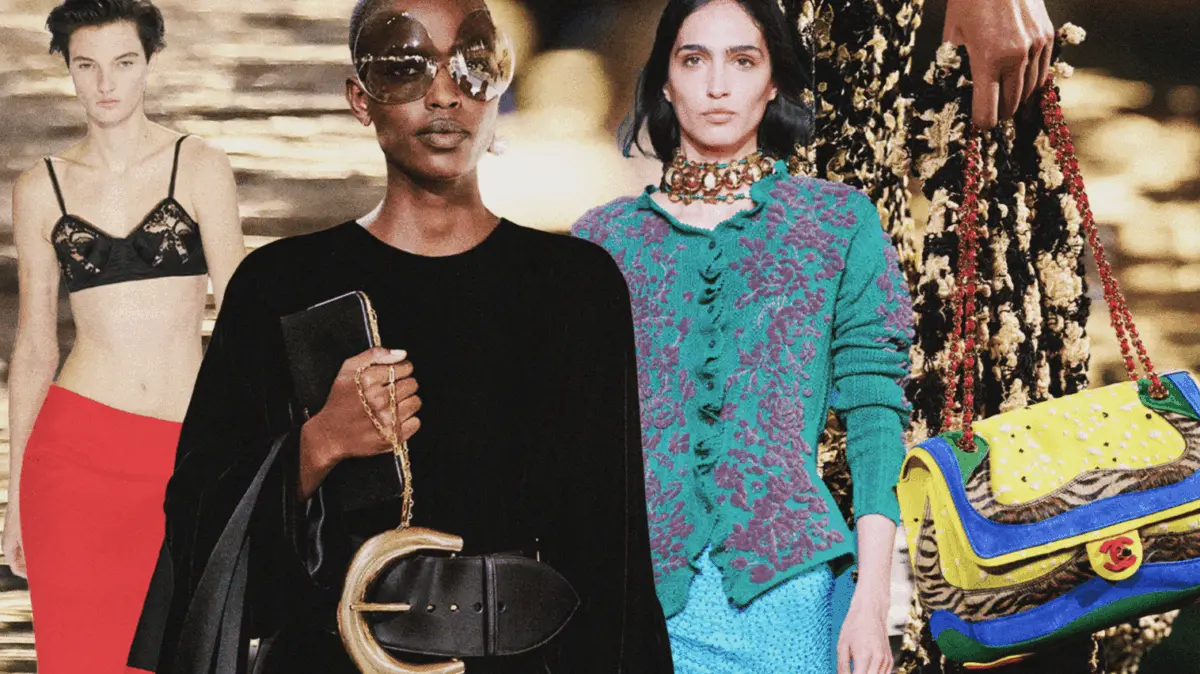
What do Prada’s 63 distinct skirt silhouettes, Chanel’s 83 individual shoe designs, and Celine’s signature bug-eyed sunglasses and oversized belts have in common? They represent the definitive “hero items” emerging from the spring 2027 runways—a collection of pieces that are capturing the zeitgeist with a fervor not seen in years. These are not the omnipresent Gucci double-G belts or the ubiquitous Balenciaga logo T-shirts that defined the pre-pandemic era of logomania, nor are they merely another chapter in the eccentric, thrift-store-inspired revival championed during the Man Repeller era. Instead, these hero items possess a specific, calculated funk—a new system of visual signaling tailored for a digitally native, fashion-savvy generation. In this current climate, a pair of pumps featuring a sharp, contrasting teal toe cap communicates as much about one’s cultural literacy as an entire ensemble once did.
The conversation surrounding the death of “quiet luxury” has been ongoing for seasons, but the vibrant, expressive menswear collections that dominated the summer effectively served as the final nail in the coffin for the beige-toned minimalism that once ruled the streets. While the industry spent months dissecting the decline of stealth wealth, a more powerful, maximalist sentiment was quietly stewing in the background. It is now becoming clear that the resurgence of the singular “hero item” arguably found its catalyst in the singular, glorious collection designed by Dario Vitale for Versace. His work, characterized by a troupe of rumpled, sensual savants, brought a much-needed jolt of energy to the runway. According to Chloe King, an influential voice at Neiman Marcus and Saks Fifth Avenue, the impact was immediate. "Bold, graphic, and colorful, Vitale’s pencil skirts and shoes were on every industry insider in September," King noted, marking the moment when the tide began to shift back toward statement dressing.

The shift is as much psychological as it is aesthetic. Designers are responding to a pervasive weariness regarding the industry’s recent obsession with perfection and predictability. Tory Burch, speaking on the current climate, observes that there is a genuine, growing hunger for individuality among consumers. "Right now, there’s a fatigue around perfection and predictability, and a desire for individuality," says Burch. "Our customer is gravitating towards pieces with personality, wit, distinctive color, and detail: embroidered cardigans, oversized sunglasses, trompe l’oeil pierced hardware, and handwoven shoes and totes." The brand’s own pierced shoes, which originally debuted in the spring 2023 collection, remain a testament to this shift, serving as one of the label’s most recognizable and enduring hits years after their initial launch.
This enthusiasm for the singular, standout object is being felt across the highest echelons of design. Julian Klausner of Dries Van Noten recently highlighted this trend on an episode of The Run-Through With Vogue, speaking shortly after his own retro-glam show. "What I love is that people are really picking up on specific pieces," Klausner said. "I feel like this time around, more than the image or the general looks or show, it’s really people picking up on a bag, on a shoe, on a jacket, on a T-shirt." This granular approach to shopping—where the consumer bypasses the "total look" in favor of the one object that anchors their identity—suggests that the modern shopper is curating their closet with the precision of a collector.

The anecdotal evidence from designers is bolstered by significant data points that confirm this pivot in consumer behavior. Google Trends data indicates that searches for "statement belts"—a category dominated this season by the likes of Celine, Valentino, and Chopova Lowena, and bolstered by the previous seasons of Chloé and Polo Ralph Lauren—have surged by 350%. Simultaneously, interest in statement necklaces, particularly those that lean into the "everything and the kitchen sink" aesthetic that was highlighted in the fall 2026 accessories trend report, has jumped by 250%. These metrics suggest that the consumer is no longer looking for accessories to blend in, but to act as the focal point of their wardrobe.
Miuccia Prada and Raf Simons have been particularly effective in driving this narrative, having made a convincing, high-fashion argument for the power of the statement skirt formula by effectively casting off pants in favor of structural, high-impact designs. The market response has been swift; platforms like The RealReal and eBay have reported a significant uptick in queries for vintage Prada skirts as enthusiasts scramble to capture the aesthetic of the current runway season.

While vintage pieces can satisfy some of this demand, the extreme specificity of modern statement footwear—such as Prada’s perforated pumps or Jil Sander’s architectural, curved heels—remains difficult to source on the secondary market. This scarcity is naturally pushing accessories to the absolute forefront of the luxury conversation. Robert Burke, a veteran luxury consultant, noted to Vogue Business that this is a deliberate departure from recent years. "I can’t remember a season in many, many years where the focus of footwear has been so incredibly strong," Burke said. "It was a deliberate move to put an emphasis on creative footwear, which can change an outfit." The sheer commitment to this trend was on full display at Chanel, where Matthieu Blazy debuted 83 unique pairs of shoes, ensuring that every single look was punctuated by a distinct, conversation-starting piece of footwear.
This trend is also inextricably linked to the cult of the celebrity designer. There is an undeniable frenzy surrounding the vision of creative leads like Blazy. Whether in the boutiques of Paris or the flagship stores of New York, shoppers have been lining up to claim pieces from his inaugural collections. As style Substacker Jalil Johnson suggests, this behavior is driven by a desire to participate in a specific cultural moment. "Even if the item maybe isn’t terribly novel, if they’re capturing a fresh feeling, which is what Matthieu is doing, there is this rationale to invest because it’s capturing the moment," Johnson explains. "It’s almost like buying a piece of history."

This phenomenon is perhaps best exemplified by the work of Michael Rider at Celine. His designs have ignited a fervor that is playing out in real-time across social media platforms like TikTok, where fans are obsessively recreating the cummerbunds from his recent men’s runway show. The competition to secure specific items, such as the fall drop’s ultra-low kitten heels or specific colorways of the house’s signature luggage pouches, has become so intense that it has changed the retail experience. "The Parisian sales girls were like, ‘That’s a hot item, hide it,’" Johnson recounted, highlighting the scarcity that has come to define these "hero" objects.
Ultimately, the most compelling aspect of this movement is its move toward utility. As evidenced by recent street style trends, these pieces are not being sequestered in closets for special occasions or handled with the fragility of museum artifacts. They are being integrated into daily life, worn with confidence and frequency. "What I loved about the spring 2027 season was the proposition that hero items need not be saved for a special occasion, nor worn sparingly," King said. In this new era of fashion, the "hero item" is no longer just a trend—it is a functional, essential, and highly visible component of modern personal style.