
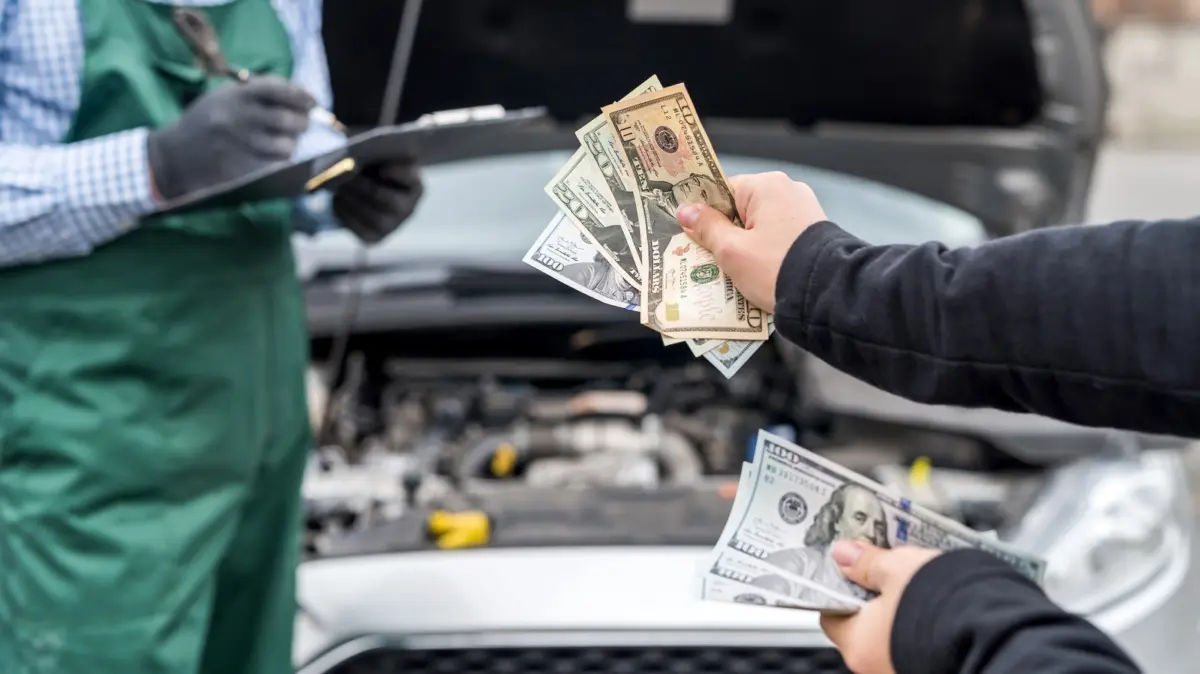
Everything is noticeably more expensive than it was just a few years ago. The price of gasoline remains persistently high, driven by well-documented market shifts and geopolitical conflicts. Yet, buried among ever-rising fuel, utility, and grocery bills, an even more punishing financial burden is hitting vehicle owners: the cost of keeping a car on the road has surged by an astonishing 60 percent since January 2019, according to data from the St. Louis Federal Reserve. By comparison, general inflation has risen by roughly 32 percent over the same period, meaning vehicle maintenance and repair costs are climbing at twice the pace of the broader economy.
Car dealerships naturally bear some of the blame for this trend, as they routinely charge higher labor rates and parts markups than independent neighborhood mechanics. However, independent repair shops are also jacking up their prices, and mechanics argue that the rising costs are largely out of their control. A closer look at day-to-day operations reveals a fundamental shift in how modern vehicles are built, maintained, and diagnosed—a shift that is quietly emptying the pockets of drivers nationwide.
To understand where these costs are coming from, one only needs to look inside modern service bays. Ralph Czeisler, owner of Emil’s All-Tire in Brooklyn, New York, recently highlighted the reality of modern vehicle maintenance during a routine procedure. While performing a standard oil change, Czeisler noted that mechanics can no longer simply grab a wrench and wipe their hands. On a contemporary vehicle, technicians must use a specialized computer just to reset the oil change indicator light. For a luxury vehicle where an oil change might normally cost around $400, accessing the proprietary software required to reset the light adds an extra $75 fee.
"You can’t just go and reset it," Czeisler explained. "You have to pay for information to download to your computer, to upload to the customer’s computer to reset the light. Otherwise it’s never going to reset and that costs more money. And the result? I pay more money. The consumer pays more money. It’s not fair. But this is how the industry practice has gone."
The underlying issue is that modern cars have effectively transformed into rolling computers, packed with countless microprocessors, digital control units, and software-dependent systems. Routine maintenance and minor troubleshooting now require specialized digital diagnostic tools, turning what used to be mechanical tasks into software-managed procedures.
The More Complex, The More Expensive
Automakers are not making vehicles more complex out of spite or merely to frustrate independent mechanics. Consumers increasingly demand advanced safety features and driver assistance systems, commonly known as ADAS. These technologies rely on a sophisticated array of cameras, radar modules, and ultrasonic sensors to monitor the vehicle’s surroundings, warn drivers of potential hazards, and intervene in emergency braking situations. According to data from AAA, the inclusion of ADAS systems can increase the cost of a routine collision repair by more than 36 percent.
The financial ripple effects of this technological integration go far beyond major crash damage. Consider something as routine as a windshield replacement. A basic windshield swap for an older vehicle used to be a relatively inexpensive and straightforward job. Today, replacing the glass on a modern work van or passenger vehicle can easily cost close to $1,000. While the larger size of modern automotive glass plays a minor role in the price hike, the vast majority of the expense comes from the mandatory recalibration of the cameras and sensors mounted directly behind the windshield. Even basic convenience features, such as automatic rain-sensing wipers and adaptive high beams, require precise digital alignment.
For an independent repair shop that services a wide variety of makes and models, keeping up with these technological demands requires a significant capital investment. A shop must acquire multiple diagnostic computers to cover domestic, European, and Asian manufacturers, sometimes even needing brand-specific equipment for individual automakers. Furthermore, these computers are useless without regular software updates to incorporate new vehicle models and patch existing ones. This forces independent shops into expensive, recurring subscription plans just to maintain the capability to diagnose and repair the cars rolling through their doors.
The hardware costs are equally daunting. According to shop invoices, a single sensor calibration machine can cost around $28,000, with the accompanying computer system adding another $12,000. When factoring in the complete diagnostic array, total equipment costs can reach up to $90,000. On top of that, shops must purchase specific target boards mounted to the calibration machines to align cameras for different car models. Each of those physical boards can cost hundreds, if not thousands of dollars, particularly for premium luxury brands.
These staggering overhead costs leave independent shops with little choice. They cannot absorb tens of thousands of dollars in diagnostic equipment, software subscription fees, and specialized tools without passing those expenses along to their customers. Combined with other compounding economic pressures, such as tariffs on imported auto parts, it is clear why routine vehicle maintenance has become such a massive financial strain. With new car prices remaining out of reach for a vast majority of Americans, motorists are finding themselves trapped between the high cost of buying a new vehicle and the rapidly escalating price of keeping their old one on the road.