
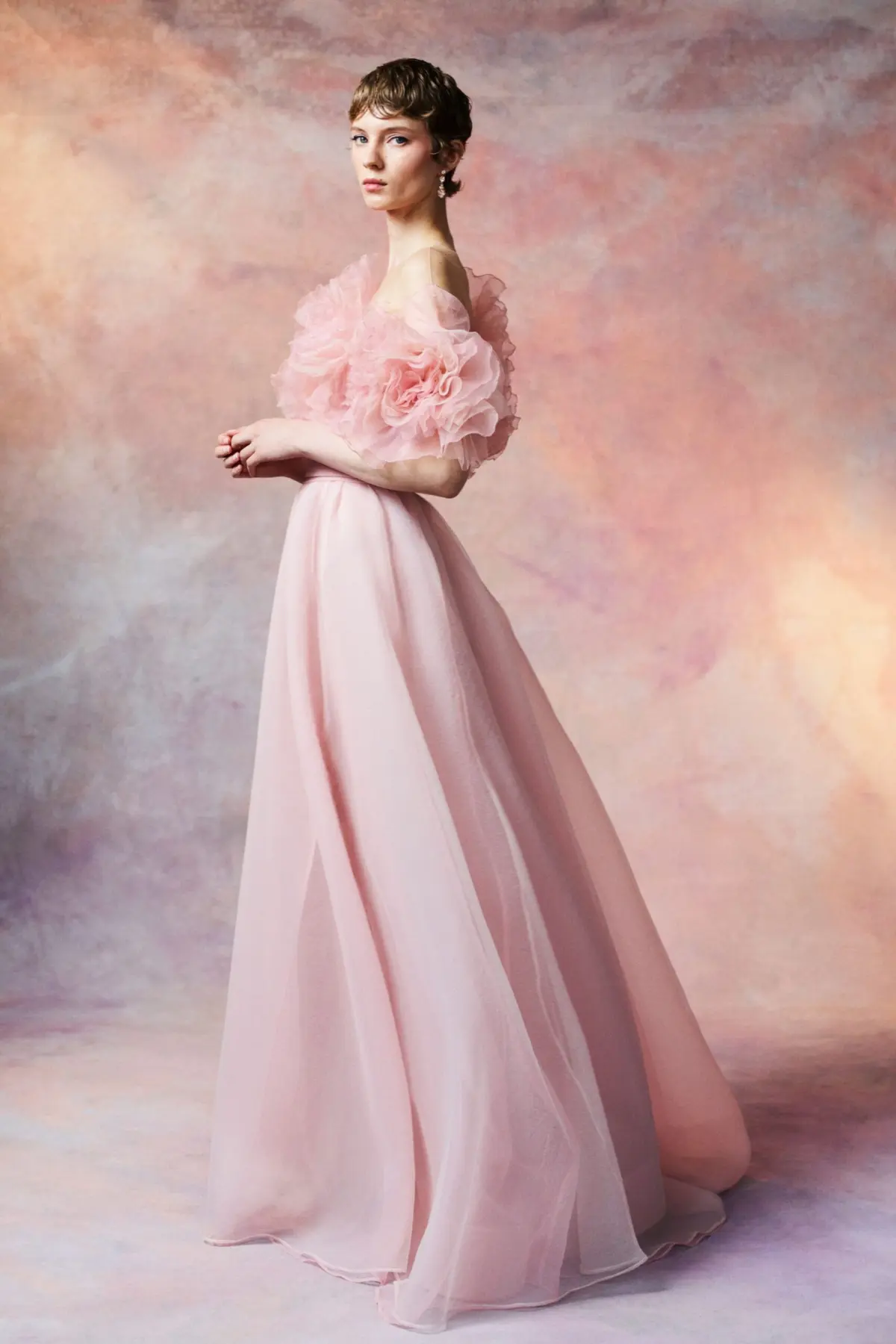
In the high-stakes world of luxury fashion, where designers often scramble to capture the fleeting essence of the zeitgeist, Georgina Chapman has opted for a different path. For the latest Marchesa collection, unveiled this spring, Chapman has chosen to tend to her own meticulously cultivated aesthetic rather than chasing the radical shifts that define ready-to-wear runways. The collection serves as a lush, floral-inspired meditation on the enduring power of evening wear, reaffirming the brand’s commitment to a specific, romantic archetype of femininity.
For Chapman, the purpose of the collection is rooted in a clear, unwavering vision of her clientele. "Evening is such a specific thing," the designer remarked during the presentation. "I think my woman always wants to feel beautiful. She wants to feel like a woman. She wants to have drama. She wants to make an entrance." This philosophy acts as the anchor for the entire collection, guiding the selection of fabrics, the complexity of the embellishments, and the silhouettes that prioritize a grand, cinematic effect over the utilitarian shifts seen in other corners of the industry.
The collection serves as a reminder that while fashion as a whole is often obsessed with the "new," the sphere of formal evening wear occupies a different temporal space. Chapman’s approach is not about breaking new ground in terms of structural innovation, but rather about refining the vocabulary of red-carpet glamour. By centering the collection around floral motifs, she taps into a timeless visual language that resonates across generations, creating pieces that feel inherently celebratory.
Perhaps the most head-turning piece on offer is a shimmering blue gown that captures the eye immediately. The dress is meticulously crafted with silver spangles that mirror the flickering intensity of stars in a night sky, a design choice that leans into the ethereal quality often associated with the Marchesa brand. The dress is designed not just to be worn, but to be observed, catching the light with every movement to ensure that the wearer remains the focal point of any room. It is a masterful example of the brand’s ability to balance technical precision with a sense of wonder.
Another standout piece, which highlights the brand’s mastery of texture and depth, is constructed from draped gray tulle layered over a soft, beige base. The gown is brought to life by intricate vines of clipped feather flowers that seem to grow across the fabric. The use of feathers, a recurring element in Chapman’s work, adds a tactile, organic quality to the dress, blurring the line between garment and art piece. The interplay of the gray tulle against the nude foundation creates a sophisticated, muted palette that allows the complexity of the floral applique to take center stage, proving that drama does not always require bold, neon colors.
Moving away from the literal, ethereal florals, the collection also incorporates crepe dresses that offer a more structural, architectural take on the season’s theme. One particular fuchsia gown is a testament to the brand’s versatility, featuring a sharp peplum and a draped flower made from the same crepe material, crowning a one-shoulder silhouette. The choice of fuchsia provides a necessary pop of color, contrasting with the softer, earthier tones found elsewhere in the collection, while the silhouette maintains a clean, modern line that feels sophisticated and poised.
In the same vein, a strapless black gown serves as a masterclass in balanced proportions. The garment features a bloom-bedecked ruffled neckline, which draws the eye upward, while deep cuts under the arms introduce an element of unexpected edge. This gown, in particular, encapsulates the "Marchesa woman" that Chapman described: someone who demands a silhouette that is simultaneously classic and provocative. By blending the delicacy of the ruffled flowers with the bold, exposed geometry of the arm cut-outs, Chapman demonstrates that traditional evening wear can still feel contemporary.
While much of the collection leans into the romantic and the classical, there is also a distinct acknowledgment of modern trends, albeit interpreted through the brand’s signature lens. The collection features a flirtatious, see-through gold lace column dress, accented with wire-edged 3D blooms that appear to be in mid-blossom. This piece serves as a bridge between the sheer and lace trends that dominated the ready-to-wear runways and the more conservative, tradition-bound world of couture evening wear. The use of wire-edged petals allows for a sense of movement and volume that static lace cannot achieve, giving the gown a lively, tactile presence.
This inclusion of sheer elements highlights a tension that Chapman is keenly aware of. While many designers are currently pushing transparency to its limits, Chapman notes that the evening wear category is inherently more resistant to the rapid, often jarring, cycles of seasonal trends. For her, the "see-through" trend is not a mandate to be followed for the sake of relevance, but a tool to be utilized when it serves the narrative of the gown.
The core of Chapman’s design philosophy is the "photogenic" quality of her garments. In an era where fashion is consumed almost as much through a smartphone screen as it is in person, the ability of a dress to translate perfectly into a digital image is paramount. Chapman is clear about what defines the success of a collection: a dress that has no expiration date. She designs with the intention that these pieces will be as relevant and striking ten years from now as they are today. This "no expiration date" philosophy is a bold stance in an industry that relies on the concept of obsolescence to drive sales. By focusing on longevity, Chapman positions her brand as a purveyor of investments rather than disposable items.
The collection as a whole presents a cohesive narrative. By focusing on the garden—a classic, even archetypal, source of inspiration—Chapman allows herself the freedom to focus on execution rather than reinventing the thematic wheel. The success of the collection lies in the details: the precise way a feather is clipped, the weight of the tulle, and the way a ruffle frames the shoulder. It is an exercise in restraint and refinement.
Ultimately, the spring Marchesa collection serves as a reaffirmation of the designer’s long-standing relationship with her audience. She is not attempting to alienate her base with avant-garde experiments that sacrifice comfort or grace. Instead, she is doubling down on the fantasy of the entrance. Every gown, from the star-spangled blue number to the gold lace column, is designed to facilitate a moment of transformation for the wearer.
As the fashion industry continues to grapple with the pressures of sustainability and the demand for constant novelty, Chapman’s approach offers a moment of respite. By prioritizing the "beautiful," the "dramatic," and the "timeless," she reminds us that the primary function of evening wear remains unchanged: to empower the individual to take center stage. Her garden may not be breaking new ground in terms of horticultural shock, but it is a garden that is perfectly tended, vibrant, and undeniably designed for those who wish to be seen. In this collection, Chapman has successfully balanced the ephemeral nature of a spring bloom with the permanent allure of high-fashion craftsmanship.