
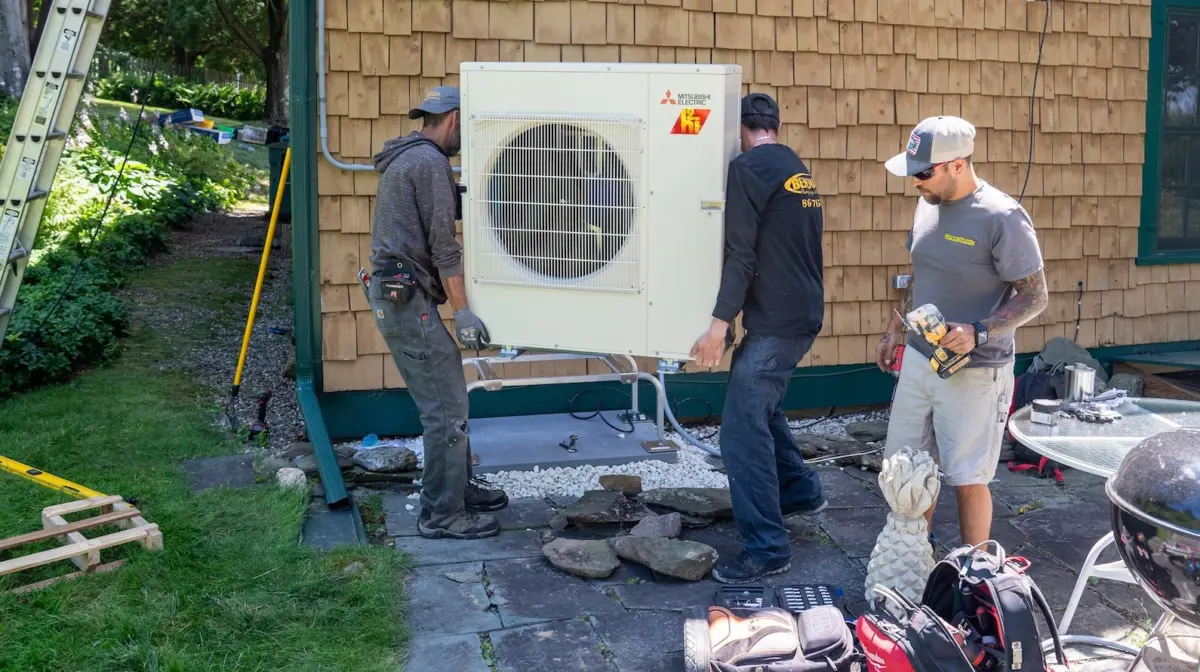
For years, a pair of stubborn myths has dogged one of the most promising climate technologies available: the modern heat pump. Critics have long argued, first, that these systems fail when temperatures plummet into the single digits, and second, that mass adoption of electric heating appliances would inevitably overwhelm and collapse the nation’s power grid.
According to new research, both claims are entirely incorrect.
Modern heat pumps—which transfer warmth from outdoor air into indoor spaces rather than generating heat from scratch through combustion—are engineered to perform in frigid climates. Far from being a novelty for temperate zones, they keep homes comfortable even in the dead of winter. Skeptics need look no further than the Nordic countries, which have fully committed to heat pumps despite winters that are decidedly far from balmy.
Now, a new report from the energy think tank RMI tackles the second major misconception head-on: the fear that an influx of electric heat pumps will trigger widespread grid failure. In reality, thanks to a seasonal phenomenon known as "headroom" in the electrical grid during the winter months, roughly three-quarters of U.S. homes—representing an estimated 109 million households—could adopt the technology without requiring any emergency infrastructure overhauls. Doing so would significantly slash greenhouse gas emissions while cutting electric bills by more than 20 percent in some states.
"A substantial number of homes can upgrade to heat pumps within the headroom today," said Ryan Shea, a manager on RMI’s buildings team. "We’d be better utilizing the grid capacity that’s already there, that essentially spreads those costs across more kilowatt-hours, and everyone benefits with a lower electricity rate."
Understanding Grid Headroom
To understand how millions of new heat pumps can safely plug into the existing electrical network without tripping breakers or overloading transformers, one must look at seasonal demand cycles. Across much of the United States, electricity demand reaches its annual peak during the scorching summer months, when millions of residential and commercial air conditioners draw tremendous amounts of power simultaneously to cool buildings.
In contrast, during the winter, many homeowners rely on natural gas furnaces for space heating. Because that thermal energy is drawn directly from gas pipelines rather than the electrical grid, it relieves tremendous strain on local power networks. This seasonal divergence creates a substantial operational buffer: a surplus of generation capacity and transmission headroom during the colder months.
"That’s where we see moving to heat pumps, adding that electrical load in the winter, where there is all that available grid capacity, is a way to add load to the grid without needing to build it out more," Shea explained. In practical terms, keeping 109 million heat pumps running smoothly through the winter months would not require constructing heaps of new fossil-fuel-fired power plants.
However, this thermal and electrical buffer is not distributed uniformly from state to state or region to region. Local climates vary dramatically. Phoenix experiences scorching summers that demand heavy air conditioning use, paired with much milder winters requiring relatively little heating. Conversely, northern regions face prolonged winter heating seasons.
The way local utilities generate electricity also plays a critical role in how the transition unfolds. While traditional gas power plants can run reliably year-round, the rapid expansion of solar power means that generation naturally dips during the winter as daylight hours shrink. To compensate for these seasonal fluctuations, utilities across the country are actively investing in sprawling battery farms designed to store excess energy, while experimenting with utilizing electric vehicles as a vast, decentralized network of backup power storage. Some energy developers are even turning to the Earth itself as a giant thermal battery for longer-duration energy storage.
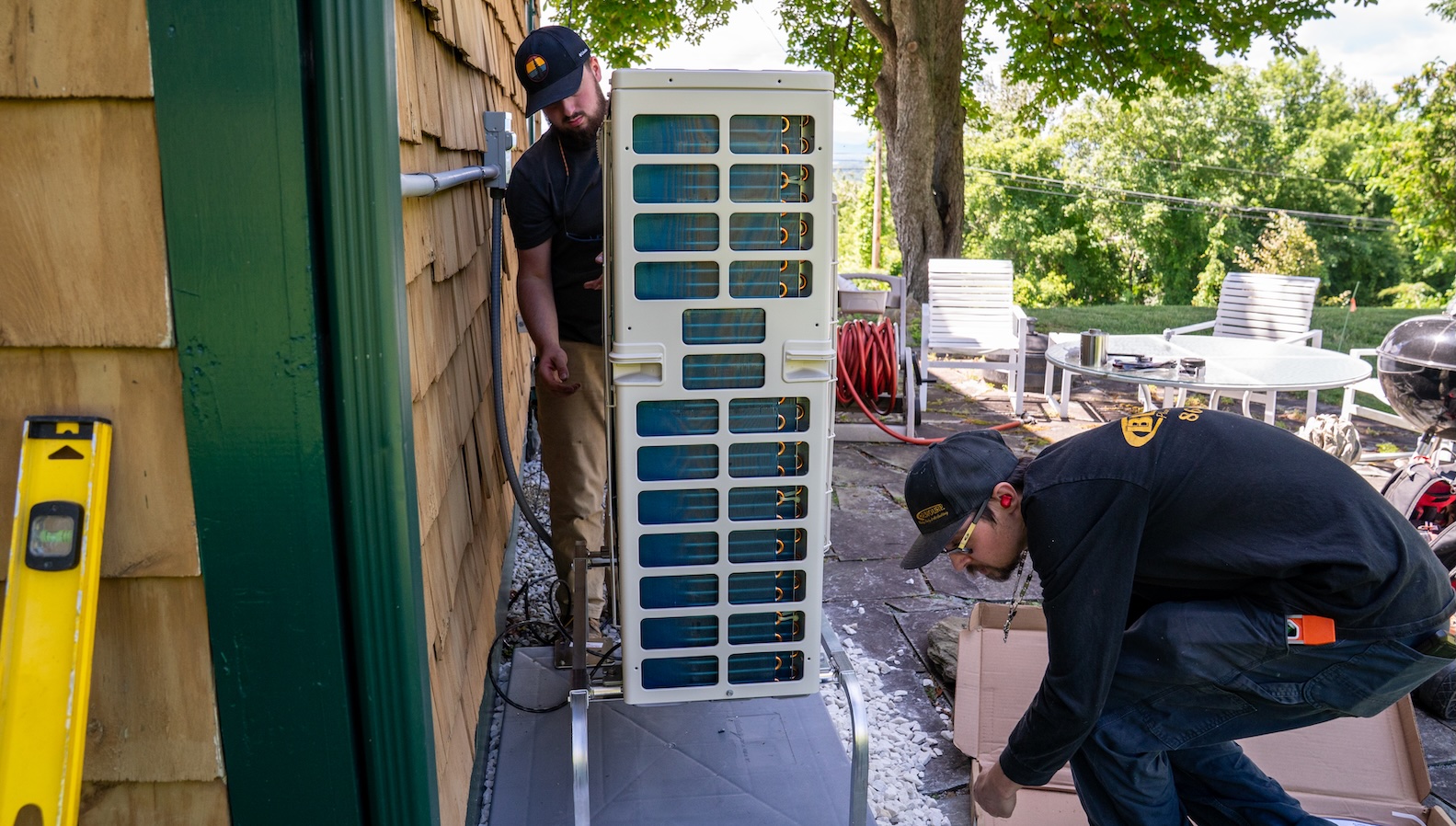
Together, these expanding renewable generation sources and advanced battery technologies are combining to make the power grid far more flexible and reliable than it has historically been under a fossil-fuel-exclusive model, further driving down costs for everyday ratepayers.
Outperforming Space Heaters and Transforming Housing
The ultimate objective of energy policy and decarbonization initiatives is for heat pumps to replace fossil fuels as the dominant mechanism for both warming and cooling homes. (It is worth noting that heat pumps are entirely capable of cooling indoor spaces during the summer months by simply reversing their operational cycle, transferring warmth from the interior to the outdoors.)
Beyond replacing gas furnaces, heat pumps also need to displace inefficient electric resistance heating appliances, such as baseboard units and portable space heaters. These forms of electric heating are particularly common in regions like the Pacific Northwest and the Southeast, which experience less punishing winters than the Northeast.
While electric resistance heaters are cleaner than gas furnaces because they do not burn fossil fuels or release toxic indoor air contaminants, they are inherently far less efficient than heat pumps. Heat pumps deliver roughly three to four times more thermal energy per unit of electricity consumed. This massive efficiency advantage means they require significantly less electricity overall, easing pressure on the grid while offering dramatic financial relief to consumers. According to previous research conducted by RMI, households that switch from traditional electric resistance heating to modern heat pumps could save an average of $1,530 a year on utility bills.
Accelerating this transition nationwide will require strategic policy interventions. Most immediately, when existing residential air conditioning units break down beyond repair, homeowners should be encouraged—and financially assisted—to replace them with dual-function heat pumps. State and federal governments can deploy targeted consumer rebates to lower the upfront purchase and installation barriers.
When regional jurisdictions commit fully to these efficiency goals, transitions can occur with surprising speed. Maine, a state hardly renowned for a mild climate, famously surpassed its ambitious target of installing 100,000 heat pumps two full years ahead of schedule, prompting state leadership to set even higher benchmarks.
Interestingly, addressing the broader socioeconomic landscape can also yield climate dividends. Simply building more multi-family apartments and tackling the acute housing shortage—an issue that occasionally generates bipartisan political agreement—serves as a surprisingly effective vehicle for integrating more heat pumps into newly constructed residential units.
Affordability and the Path Forward
Rather than crashing the electrical grid, integrating efficient heat pumps across diverse American climates—ranging from bustling metropolitan areas to northern outposts like Juneau, Alaska—promises to reduce electricity expenses for individual owners while driving down utility rates for everyone. By making the power grid more flexible and better utilizing existing winter capacity, the technology addresses both environmental and economic concerns.
As the issue of household affordability continues to dominate political discussions across the country, the heat pump is well-positioned to emerge as an unlikely superstar of the clean energy transition.
"We really think there’s a reason to include heat pumps within those affordability plans," Shea said, "and try to really establish some heat pump installation goals."