
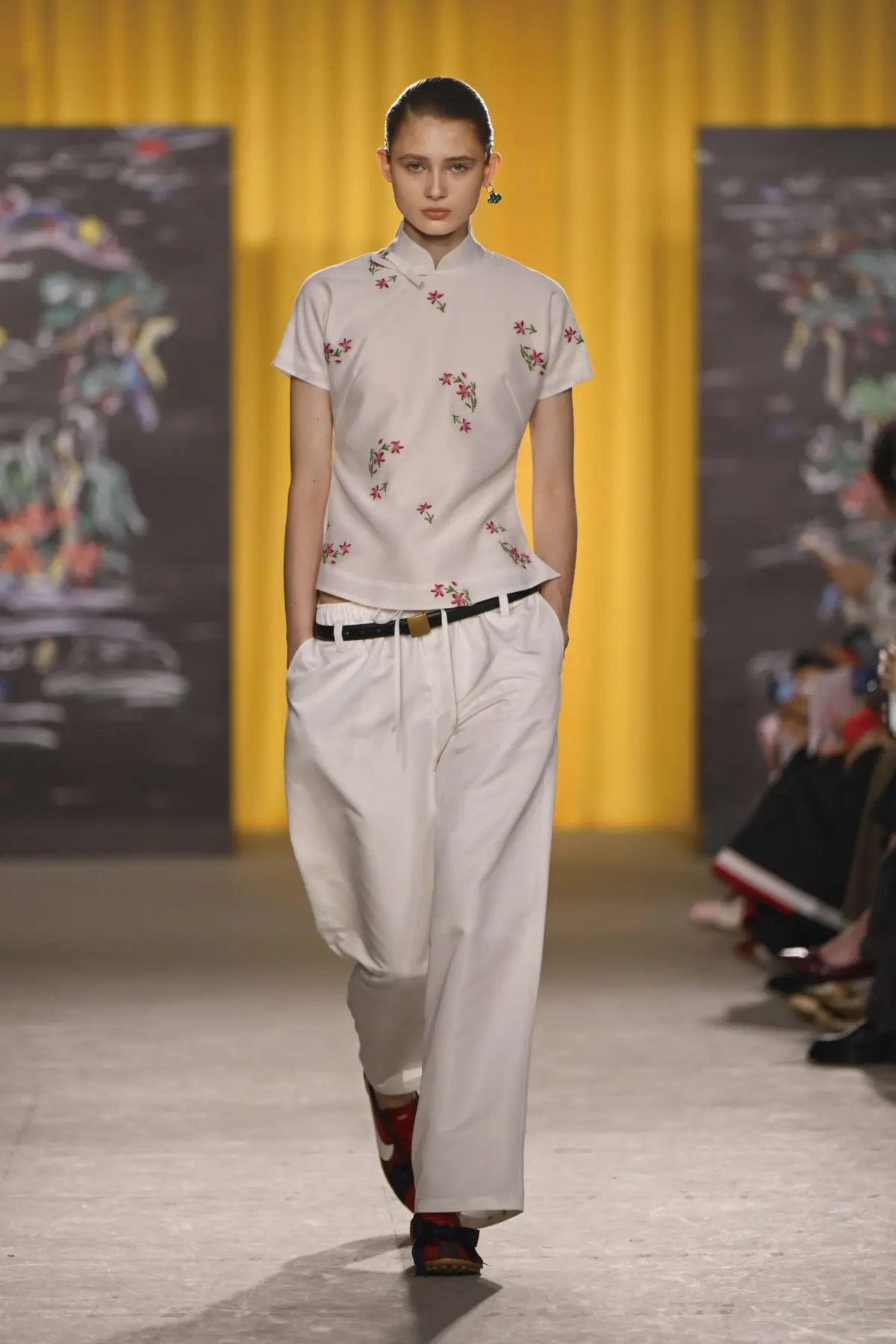
For an emerging generation of Chinese designers, the relationship with tradition is undergoing a profound transformation. Rather than viewing the rich tapestry of their cultural heritage as a rigid set of rules to be meticulously preserved, a new wave of creative talent is embracing the past with a lighter, more inventive hand. At the forefront of this movement is the design duo Austin Wang and Yansong Liu, the creative force behind the label Ao Yes. Their latest spring collection serves as a poignant manifestation of this shift, demonstrating that cultural identity can be fluid, joyful, and deeply personal.
The collection was built around the evocative theme of reflection—a concept that Wang and Liu explored through the interplay of mirrors, sunlight, shadows, and the rippling, kinetic surfaces of water. By translating these ephemeral elements into wearable art, the designers crafted a series of pieces that felt both ethereal and grounded. The collection was characterized by a distinct sense of "unforced appeal," a term that captures the ease with which the garments balanced intricate cultural references with modern, accessible silhouettes. Polka dots danced alongside jagged, geometric patterns, while whimsical, cartoon-like illustrations of traditional Chinese landscapes—mountains and seas—lent a lively, youthful energy to the runway.
The silhouettes themselves leaned into a lighthearted ease, moving seamlessly between uncomplicated, everyday dresses and more deliberate, body-conscious shapes. There was a particular focus on movement, evidenced by flowing tiered capes that seemed to mimic the fluidity of water, and delicate, modern reinterpretations of the classic qipao. By deconstructing the traditional qipao and reassembling it with contemporary sensibilities, Wang and Liu managed to pay homage to a garment of immense historical significance without allowing it to feel like a costume. Instead, it became a piece of a larger, modern wardrobe, demonstrating how traditional garments can evolve alongside the people who wear them.
Central to the collection’s success was the designers’ ability to weave in subtle traditional references without succumbing to the weight of historical solemnity. The brocades used throughout the show were inspired by the refined court textiles of the Song dynasty—a period renowned for its aesthetic sophistication. Yet, even when drawing from such a high-water mark of Chinese art history, the collection never felt burdened by its roots. The presence of red, a color deeply entrenched in Chinese culture as a symbol of happiness, good fortune, and celebration, was incorporated with a sense of deliberate joy. The designers approached these heritage markers with a sensibility that was both cheerful and delicate, giving familiar items a youthful inflection that felt entirely current.
Since the inception of their brand, Wang and Liu have been on a quest to define what a "new Chinese style" might look like. They recognize that their generation is largely uninterested in the inherited dress codes of the past, which often prioritize formality and tradition over personal expression. Instead, these younger consumers are seeking ways to make the culture their own, integrating their history into a modern lifestyle that is global in outlook but rooted in a specific sense of place. For Ao Yes, this ambition manifested not as a grand, declarative statement on national identity, but as an inviting proposition: that heritage should be a source of personal pleasure rather than a civic or social obligation.
This perspective is central to the brand’s mission. By reframing cultural memory as a set of possibilities to play with rather than an inheritance to uphold, Wang and Liu are carving out a space for a more dynamic and inclusive form of design. The collection suggests that tradition, when stripped of its restrictive layers, can become a vibrant tool for creative exploration. It is a philosophy that resonates with a demographic that values authenticity and individuality above all else.
The international casting of the runway show provided further insight into the brand’s evolving vision. By looking beyond their home market and presenting their work to a diverse global audience, the designers signaled an ambition that is both outward-looking and confident. The choice of models underscored the idea that the "new Chinese style" is not a closed circuit; it is a conversation between different aesthetics and perspectives. It suggests that while the brand remains deeply anchored in its roots, it is not confined by them. The collection felt like a bridge—a way to translate the complexities of Chinese cultural memory into a visual language that is understood and appreciated on a global scale.
Throughout the show, the audience was presented with a vision of heritage that felt remarkably light, yet intellectually rigorous. It is no small feat to incorporate Song-dynasty motifs alongside cartoon-like illustrations without losing the cohesion of the collection. However, Wang and Liu achieved this balance by prioritizing the emotional resonance of the pieces. The clothing felt personal, designed for a person who enjoys the act of dressing and who finds delight in the details. Whether it was the subtle ripples of a fabric mimicking water or the deliberate, joyful application of traditional embroidery, the collection encouraged a sense of curiosity.
This approach speaks to a broader trend within the Chinese fashion industry, where young designers are increasingly comfortable with the contradictions of modernity. They are no longer choosing between "East" and "West" or "Traditional" and "Contemporary." Instead, they are synthesizing these elements into a singular, cohesive aesthetic that reflects the multifaceted nature of contemporary life. Ao Yes has positioned itself as a leader in this transition, demonstrating that one can honor the past while simultaneously pushing the boundaries of what is possible in the present.
As the industry continues to evolve, the work of labels like Ao Yes will likely become even more influential. Their ability to treat heritage with such a light touch—and yet maintain such a clear sense of identity—offers a compelling blueprint for how brands can navigate the complex landscape of cultural representation. The collection was not merely a display of clothing; it was a demonstration of a mindset. It suggested that when we allow ourselves to play with the symbols and stories of our past, we open up new avenues for creative expression that are not just beautiful, but deeply meaningful.
The spring collection concluded with a sense of optimism. By successfully stripping away the pressure of "upholding" culture, the designers have created a space where that culture can breathe, grow, and adapt. For the generation of young people that Ao Yes creates for, the message is clear: history is not a static object to be kept behind glass. It is a living, breathing component of their lives, one that is as much about the future as it is about the past. In the hands of Wang and Liu, cultural memory becomes a vibrant, playful, and deeply personal resource—a source of inspiration that feels as fresh and relevant today as it ever has.
As the show came to a close, the prevailing feeling was one of lightness. The audience had been taken on a journey through the mirrors, water, and textiles that define the Ao Yes brand, and they had arrived at a destination that felt both familiar and entirely new. It was a testament to the power of design to shift perceptions, turning the heavy weight of tradition into something that can be worn with grace, style, and a sense of genuine joy. In this latest outing, Ao Yes did more than just present a collection; they invited their audience to reconsider their relationship with heritage, suggesting that in the act of playing with the past, we might just find the most authentic versions of ourselves.