

(Note: This reporting is made possible through a collaborative partnership between Grist and WABE, Atlanta’s NPR station.)
In a significant regulatory decision that underscores the growing intersection between big tech infrastructure and public utility management, the Georgia Public Service Commission voted last week to approve a novel agreement between Georgia Power and tech giant Google. Under the terms of the newly approved arrangement, Google will begin helping to pay for crucial upgrades to the state’s aging nuclear reactors starting in 2028.
The move marks a creative financial pathway for utility companies trying to accommodate surging power demands driven by massive data centers without placing the entire financial burden on residential ratepayers. State regulators expressed immediate enthusiasm for the arrangement, which is designed to channel corporate capital directly into carbon-free generation infrastructure.
"So, around 100 megawatts of carbon-free energy, paid for by somebody else," PSC Commissioner Stan Wise remarked to staffers shortly before the commission cast its vote. "Why don’t you bring us some more of those deals?"
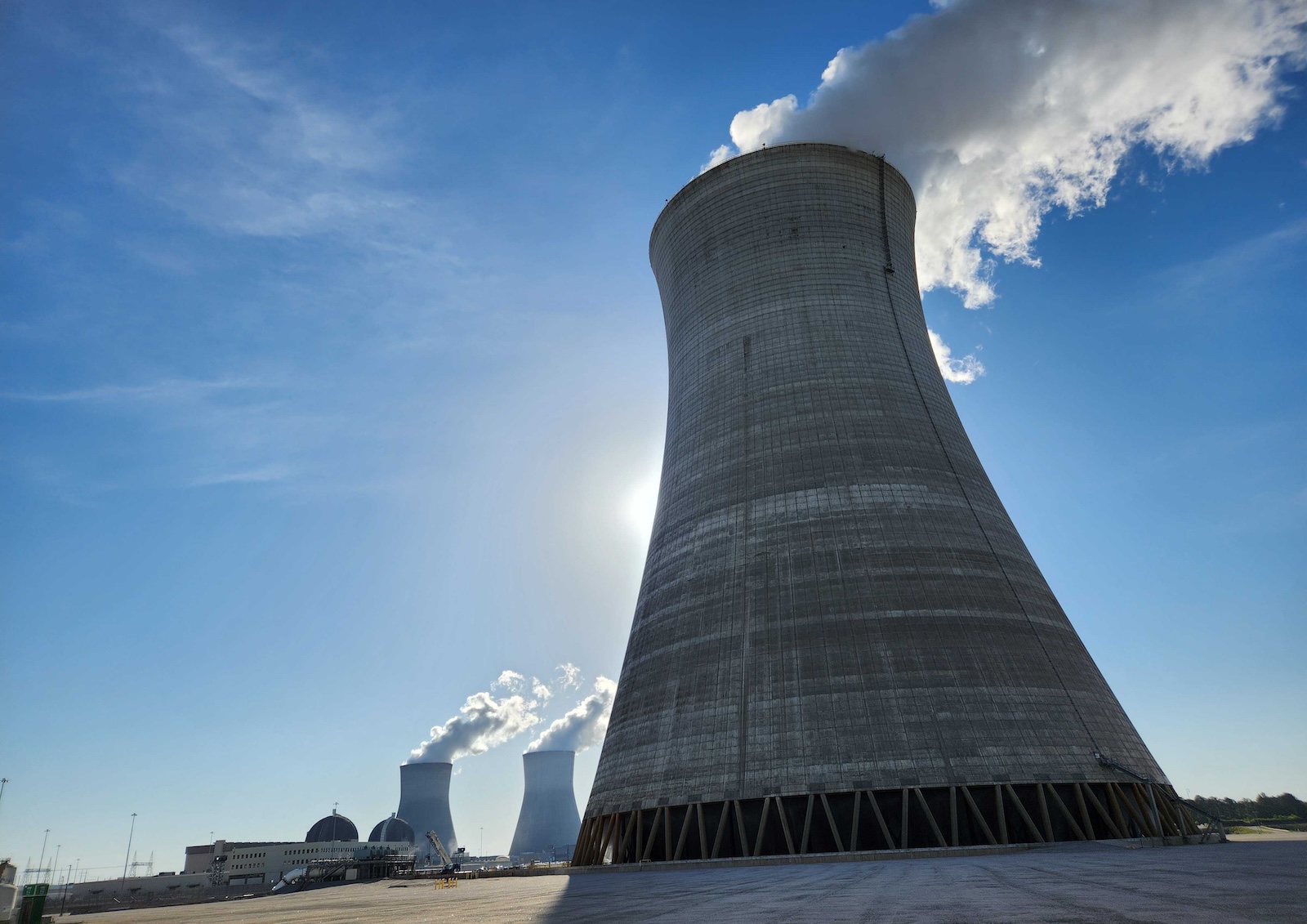
The background of the agreement stems from Georgia Power’s broader initiative to upgrade four of the state’s older nuclear reactors located at Plant Vogtle and Plant Hatch. The primary goal of these engineering updates is to increase the energy output of the existing facilities. While state regulators approved the Vogtle upgrades last year, the precise mechanics and financial structures for how to pay for the expensive infrastructure work had not yet been finalized.
With the recent vote, the commission has officially moved ahead with approving identical updates at Plant Hatch. More importantly, the decision greenlights a new subscription program designed specifically to allow large energy customers like Google to directly finance these capital-intensive reactor enhancements.
Utility executives have lauded the program as a model for how major industrial and technological growth can coexist with—and even benefit—traditional electric ratepayers.
"We appreciate Google’s continued leadership in this space and partnership in developing this program, which we see as the latest example of how large-load growth can benefit all electric customers," said Aaron Mitchell, senior vice president of strategic growth for Georgia Power, in an official statement following the vote.
Under the framework of the newly approved subscription program, Google will pay a recurring subscription fee on top of its standard electricity bill. This supplemental funding goes directly toward covering the capital costs associated with the nuclear upgrades. In return, Google receives valuable credits toward its corporate sustainability targets, chief among them its ambitious goal of running entirely on carbon-free energy by 2030.
Because nuclear power generation does not involve the combustion of fossil fuels, the electricity it produces qualifies cleanly under corporate environmental accounting standards. Furthermore, nuclear energy offers a distinct operational advantage over intermittent renewable sources like wind and solar: nuclear plants can generate steady, reliable electricity around the clock, regardless of weather conditions or time of day.
While the exact, line-by-line financial details of the private agreement between Google and Georgia Power have not been fully disclosed to the public, the utility projects that the arrangement will successfully add 96 megawatts of reliable nuclear capacity to the regional grid. Furthermore, Georgia Power estimates that the partnership will yield approximately $900 million in projected financial benefits to customers over the operational lifetime of the upgraded units.
Corporate representatives from the tech sector have similarly championed the deal as a win-win for regional economic development, environmental protection, and grid stability.
"This collaboration with Georgia Power ensures that digital infrastructure growth goes hand-in-hand with positive local impact, helping to deliver hundreds of millions of dollars in direct customer benefits and supporting a more affordable, clean, and reliable energy system for all Georgia residents," said Lucia Tian, director of advanced energy technologies for Google, in a statement.
The Georgia agreement is part of a broader, rapidly accelerating trend of technology companies partnering with nuclear energy providers to secure clean, round-the-clock power for their energy-intensive operations. Just last week, Google announced a separate major partnership with Constellation Energy to fund similar nuclear capacity upgrades at reactors situated in Illinois, New Jersey, and Pennsylvania. That multi-state initiative is slated to add a massive 890 megawatts of clean energy directly to the grid managed by PJM Interconnection, which stands as the largest grid operator in the country. Similarly, e-commerce and cloud computing giant Amazon recently announced a parallel deal designed to add fresh capacity to a Constellation nuclear facility located in Maryland.
Across the United States, utility companies are grappling with an unprecedented boom in electricity demand, driven largely by the massive expansion of hyperscale data centers that power artificial intelligence, cloud computing, and modern digital infrastructure. To keep pace with this soaring demand, many utilities have turned to building new natural gas-fired generation plants or extending the operational lifespan of existing coal-fired power facilities. In some cases, data center operators themselves have attempted to construct localized fossil-fuel generation plants to secure dedicated power.
However, industry experts note that agreements like the one forged between Google and Georgia Power present a viable, clean alternative to fossil-fuel expansion. Priya Barua, speaking on behalf of the Corporate Energy Buyers Association—an organization that actively advocates for non-fossil energy solutions on behalf of corporate customers—emphasized the growing necessity of creative financial and technological tools.
"A number of large energy customers are looking kind of across the board at what are all of the tools in the toolkit in order to actually support a reliable, affordable grid," Barua said. "I do think we’re going to see a lot more of those types of innovations and thinking across the board."
Beyond heavy investments in nuclear improvements like those currently underway in Georgia, Barua pointed out that corporate funding can be channeled into a diverse array of complementary solutions. These include targeted energy efficiency programs, high-voltage transmission line upgrades, and demand-response initiatives designed to temporarily reduce energy consumption during periods of peak grid stress. Because these solutions can be scaled up relatively quickly when backed by the substantial financial resources of a large technology company, they offer a nimble way to address immediate capacity crunches.
Speed has become a critical factor for utilities and corporate buyers alike. Building a brand-new nuclear power plant from scratch is a massive undertaking that can take decades of planning, regulatory approval, and construction. By contrast, performing technical upgrades and power-uprates on existing nuclear plants typically takes around five years, making it a much faster route to securing large blocks of clean energy.
That timeline is particularly crucial given current market conditions. Utilities like Georgia Power are currently facing significant supply chain delays for natural gas turbines and other essential components required for the traditional fossil-fuel expansion projects they had initially planned to meet data center demand. Upgrading existing nuclear assets bypasses many of those specific supply chain bottlenecks.
"It can mitigate delays in projects coming online," said Katie Southworth, also representing the Corporate Energy Buyers Association, when discussing the strategic value of programs modeled after the Google-Georgia Power deal.
Describing the competitive pressure facing modern grid planners and corporate sustainability officers, Southworth added, "You’ve got a relay race, and who is going to get to the commercial operation date first? In order to have the resources to sort of run a competitive relay race, you have to have a lane for them to go into."