
As the luxury division of Toyota, Lexus has long carved out its reputation in the global automotive market by championing durability and mechanical reliability. While European and American luxury competitors frequently battle a reputation for temperamental electronics, complex powertrains, and high maintenance overheads, Lexus has consistently positioned itself as the sensible, stress-free alternative for buyers seeking long-term ownership without the workshop anxiety. However, even within a lineup celebrated for longevity, certain models and generation spans stand out as exceptionally robust. Automotive experts, master technicians, and long-term industry tracking data highlight specific older Lexus models that promise years of trouble-free driving when properly maintained.
Insights shared by YouTube’s "The Car Care Nut" (CCN)—a seasoned Toyota Master Diagnostic Technician—provide a detailed breakdown of the best-performing used models. When combined with vehicle longevity analytics from automotive research firms like iSeeCars, which studies vehicles most likely to cross the 250,000-mile threshold, a clear picture emerges of which pre-owned luxury vehicles offer the absolute highest reliability return on investment.
2013-2025 ES 350
Out of all the luxury passenger cars produced by Lexus over the decades, the ES sedan is arguably one of the most conservative and least emotionally evocative choices on the market. Yet, automotive analysts point out that this very lack of unnecessary complication is precisely what makes the platform so mechanically stout. CCN specifically highlights the ES 350—noting its mechanical lineage is shared with the robust Toyota Avalon rather than the Camry—and has gone as far as labeling it the "king for reliability" within the brand’s passenger car portfolio.
Powered by a naturally aspirated 3.5-liter V6 engine, the ES 350 first debuted during the fifth-generation ES run in 2007 and continued through successive iterations up to the seventh-generation models. Online automotive communities, including enthusiast forums and discussion boards on Reddit, heavily reflect this sentiment. When prospective buyers inquire about the reliability of high-mileage ES 350s crossing the 100,000-mile threshold, community consensus frequently describes the vehicles as "pretty hard to kill" and "nearly bulletproof," with many owners emphasizing that the cars will effortlessly outlive their drivers provided basic routine maintenance is consistently observed.
According to data compiled by automotive researchers at iSeeCars, the ES 350 boasts an average projected lifespan approaching 142,000 miles, though many well-kept examples routinely push far beyond that figure. Nevertheless, experts advise caution regarding specific model years. Industry publications like CarBuzz recommend steering clear of the initial fifth-generation production years spanning from 2007 to 2012, particularly the debut 2007 model. Securing a well-documented sixth- or seventh-generation ES 350 and maintaining standard service intervals ensures drivers possess one of the most mechanically dependable sedans available.
2010-2022 RX 350
For drivers seeking the core mechanical reliability of the ES sedan packaged in a more elevated, spacious utility vehicle, the RX 350 crossover SUV serves as the natural alternative. Much like its sedan counterpart, the RX 350 family expanded significantly after entering the market in the late 2000s, though master technicians advise prospective buyers to bypass the first generation due to chronic power steering fluid leaks. Instead, experts recommend focusing attention on third-generation models and newer, dating from 2010 onward, provided the vehicle features a verified service history.
Automotive ranking guides position the third-generation RX, manufactured between 2010 and 2015, among the most reliable iterations of the nameplate. Furthermore, long-term longevity studies position both the conventional gasoline and hybrid variants of the RX among the most enduring vehicles on the market, with the standard gasoline RX 350 recording an impressive average lifespan of approximately 174,200 miles.
Utilizing a reliable 3.5-liter V6 engine through the 2022 model year and sharing a robust chassis platform with the Toyota Highlander, the RX 350 delivers a blend of utility, plush ride quality, and mechanical resilience. For motorists prioritizing comfort and cargo capacity in a luxury wrapper, second- and third-generation models offer dependable service for years.
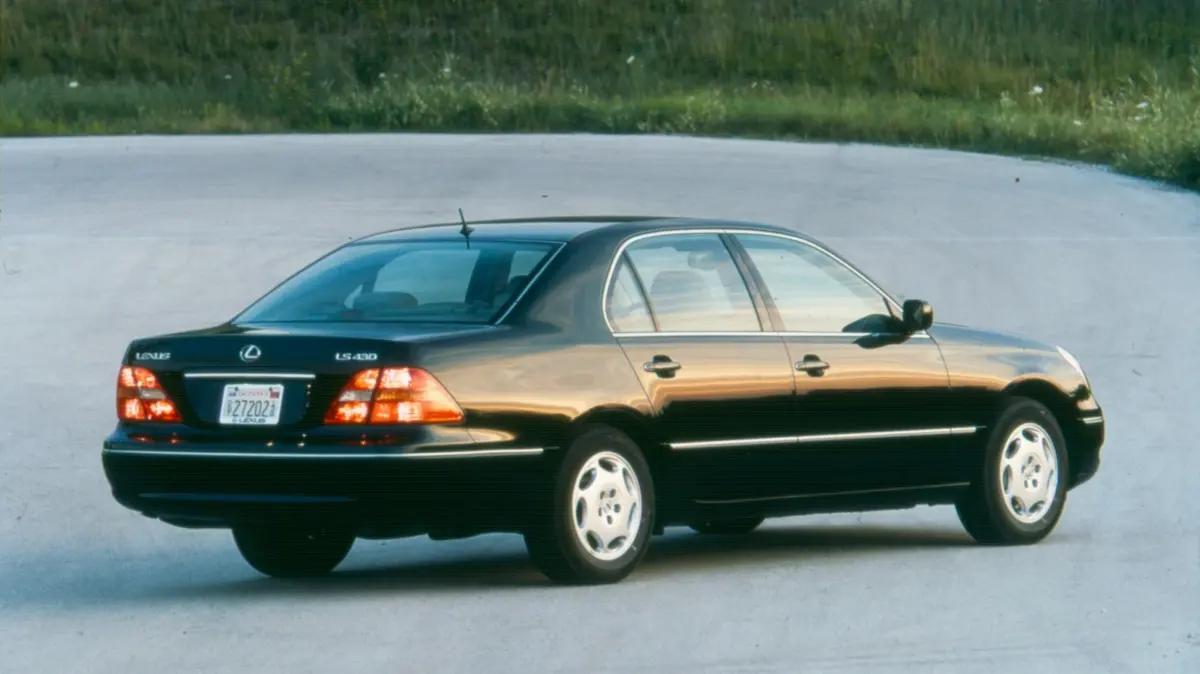
2001-2006 LS 430
For buyers drawn to the classic aesthetic and prestige of an early-2000s luxury flagship sedan without the punishing repair bills typical of German competitors, the third-generation Lexus LS 430 stands out as a premier choice. Manufactured between 2001 and 2006, the full-size executive sedan was engineered during an era when manufacturers prioritized over-engineered mechanical components ahead of heavy reliance on complex digital interfaces and restrictive emissions hardware.
Technicians and brand purists frequently praise the LS 430 as a high-water mark for the company. Beyond offering executive-level appointments and introducing advanced technologies to the American market—such as adaptive cruise control—the vehicle earned a reputation for exceptional durability. Long-term owners on dedicated enthusiast forums frequently remark that the LS 430 is "just breaking in at 100k miles," frequently citing it as one of the most robustly constructed passenger cars ever built.
However, automotive analysts do offer a caveat regarding specific equipment, advising buyers to avoid versions equipped with optional air suspension systems, which can become costly to service or replace as the vehicle ages. Independent vehicle studies place the average lifespan of the LS 430 well above 228,000 miles, cementing its status as an enduring classic from a period widely regarded by automotive enthusiasts as the peak of modern engineering balance.
2003-2009 GX 470
In the realm of body-on-frame luxury utility vehicles, the first-generation Lexus GX 470, produced from 2003 through 2009, has earned a legendary status for mechanical endurance. Sharing its foundational architecture with the fourth-generation Toyota 4Runner and the internationally marketed Land Cruiser Prado, the GX 470 was built to withstand punishing environments while wrapping its occupants in premium leather and wood trim.
At the heart of the vehicle’s durability is the 2UZ-FE 4.7-liter V8 engine, an iron-block powerplant widely regarded by master technicians as one of the finest engines ever developed by the Toyota-Lexus enterprise. This exact motor powered the brand’s heaviest utility trucks and premium SUVs of that era, including the larger LX 470, the Land Cruiser, the Sequoia, and the Tundra pickup.
Market analysts at iSeeCars document the average lifespan of the GX 470 at nearly 205,000 miles, while specialized automotive outlets have frequently lauded it as one of the most reliable luxury SUVs ever constructed. Its combination of rugged four-wheel-drive capability and understated luxury has fostered a dedicated following among long-term vehicle owners who value mechanical longevity above fleeting technology trends.
2006-Present IS 350
For drivers seeking a more dynamic driving experience paired with legendary bulletproof reliability, automotive specialists point toward the IS 350 sport sedan. Experts emphasize the importance of selecting the 350 variant specifically, noting that smaller-displacement engines from the same era, such as the IS 250, are known to be susceptible to carbon buildup issues over time.
Even with the more robust 350 powertrain, technicians note that a performance-oriented luxury sedan will naturally incur higher consumable maintenance expenses—such as replacement tires and brake components—compared to its softer ES or RX counterparts. Nevertheless, for buyers willing to absorb those standard running costs, a properly maintained IS 350 represents an exceptionally dependable compact executive car.
The vehicle relies on a naturally aspirated 3.5-liter V6 engine that has remained a staple of the lineup from the debut of the second-generation IS in 2006 through models found in contemporary showrooms. Independent industry studies estimate the average lifespan of the IS 350 exceeds 184,000 miles, and historical reliability ratings from consumer advocacy organizations have frequently placed it at the top of its class. Backed by a proven powertrain that has been refined over two decades of production, the IS 350 offers a reliable option for motorists looking to combine daily usability with engaging rear-wheel-drive dynamics.