
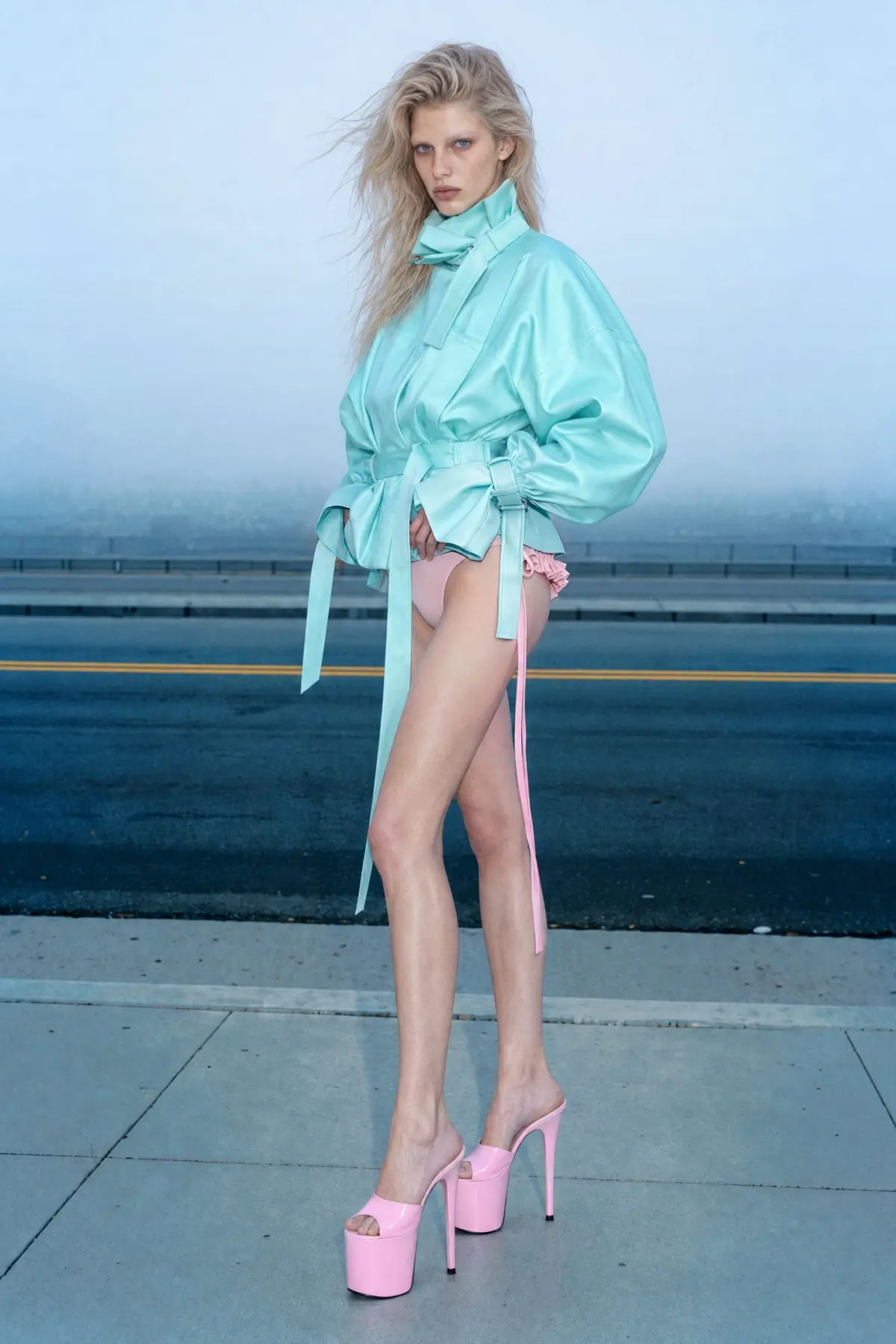
David Koma has long been celebrated for a specific, razor-sharp brand of glamour—one defined by architectural precision, high-octane embellishment, and a profound understanding of the female silhouette. For his Spring 2027 collection, however, the designer looked toward an unexpected source of inspiration: the high-stakes, theatrical, and fiercely competitive world of 1990s figure skating. It was a conceptual pivot that allowed Koma to explore the intersection of discipline and performance, translating the icy, high-pressure environment of the rink into a wardrobe that balances technical mastery with a newfound sense of movement.
At the heart of the collection was a meditation on the concept of the "cool summer." This internal contradiction—the idea of freezing temperatures within a warm-weather season—led Koma to revisit the imagery of the ice rink. While the aesthetic of the era was often associated with rhinestones, sequins, and exaggerated femininity, Koma was particularly drawn to the psychological underpinnings of the sport. He pointed specifically to Tonya Harding as a primary character reference, though he was quick to clarify that his interest lay not in the tabloid spectacle that defined her career, but rather in the raw, palpable determination that characterized her presence on the ice. This grit, combined with the extreme physical demands of professional skating, provided the foundational energy for the collection, resulting in a series of garments that feel as prepared for a performance as they do for the demands of modern life.
The Spring 2027 runway show followed the trajectory of a skater’s daily routine, moving fluidly from the utilitarian layers of a warm-up session to the dramatic reveal of a rink-side performance. Throughout this progression, Koma maintained his signature commitment to sharp-edged tailoring, ensuring that even the softest or most athletic-inspired pieces retained an unmistakable Koma edge.
The color palette served as a narrative device, effectively bridging the gap between the icy, technical requirements of the rink and the sugar-coated aesthetics of competitive skating costumes. The collection was anchored by a base of inky black and milky ivory, providing a stark, sophisticated foundation. These neutral tones were punctuated by an array of satiny, sugary shades—minty blues, candyfloss pinks, and metallic accents—that prevented the collection from veering into the overly saccharine. By allowing these contrasting colors to cut across one another, Koma created a visual tension that mirrored the complexity of his inspiration.
The garments themselves were a testament to this thematic exploration. A minty blue bomber jacket, featuring a technical neckline, served as a prime example of Koma’s ability to elevate athletic wear, while skirts fringed or gathered to resemble oversized scrunchies offered a nod to the nostalgic hair accessories of the 90s. These were paired with delicate candyfloss pink knickers, metallic column gowns, and sculpted, boned bodysuits that effectively abbreviated the sport’s most recognizable silhouettes, stripping them down to their most essential, structural forms.
Beyond the aesthetic of the rink, Koma became deeply fascinated by the concept of "compulsory figures"—the painstaking, precise circles and figure-eights that skaters were once required to trace onto the ice. These patterns served as a literal design motif, seen most notably on a black minidress where concentric forms were rendered in hand-beaded crystals. The inclusion of mother-of-pearl centers, inserted into the garment with the precision of high jewelry, elevated the piece, turning the fabric into a canvas for technical artistry.
This focus on geometric precision extended throughout the collection. In some instances, these shapes manifested as hipbone cutouts, which bloomed with fringe to add a sense of kinetic energy. In others, they were achieved through internal metal constructions—a hallmark of Koma’s technical approach—designed to pull and gather fabric around the body, thereby bolstering the dynamism of the garments.
Even when the models were at rest, the clothes seemed to vibrate with a latent energy. This was achieved through a series of gowns and skirts featuring internal boning that extended away from the body, providing a structural scaffold for shimmering layers of silk fringe and feather plumes. By animating the body through these carefully engineered shapes, Koma successfully translated the centrifugal force of a skater in motion into a tangible, wearable reality. "I like to animate the body and create this organic movement," the designer remarked, reflecting on his desire to capture the fluidity of skating while maintaining his signature structural integrity.
The shift in this collection was not merely aesthetic, but strategic. For Spring 2027, Koma demonstrated a clear intent to move the David Koma woman beyond the confines of the red carpet, where his work has traditionally lived. While the high-glamour hallmarks that have built the brand’s reputation were certainly present, they were increasingly embedded into ready-to-wear separates, sophisticated knitwear, and modular layering pieces. This evolution suggests a desire to provide his clientele with a more versatile wardrobe, one that allows the wearer to experience the Koma vision across a broader spectrum of occasions and lifestyle requirements.
For Koma, this is a necessary step in the brand’s maturation. He spoke at length about the importance of allowing the wearer to inhabit his world in a more holistic way, moving away from the idea that his designs are reserved solely for moments of spectacle. At its core, the David Koma proposition remains one of glamour as a form of strength—a philosophy that has remained constant even as the brand’s aesthetic vocabulary has expanded.
As the runway show concluded, the message was clear: the definition of the "David Koma woman" is becoming intentionally harder to pin down. In a fashion landscape that often demands rigid categorization, Koma sees this ambiguity as a virtue. By embracing a diverse range of characters and translating his vision through different lenses, he hopes to see how his work resonates with the varied lives of his audience. "It’s becoming harder to define the David Koma woman, and I think that’s important," the designer noted, "to see how characters across the world translate my vision."
Ultimately, the Spring 2027 collection represents a successful balancing act. By looking back at the raw intensity and aesthetic codes of 1990s figure skating, Koma has managed to inject a new sense of life into his brand. He has successfully taken the theatricality of the rink and distilled it into something both functional and high-fashion, proving that glamour does not have to be static. As the rink closed and the scores were tallied, it was evident that Koma’s latest performance had successfully stuck the landing, bridging the gap between his heritage of red-carpet dominance and his future as a versatile, modern luxury label. Whether through the meticulous beading of a minidress or the engineered structure of a feathered gown, the collection reaffirms that for David Koma, the most compelling form of strength is the kind that moves with you.