
Sitting inside the opulent ballroom of a historic Roman villa, industry executives, automotive engineers, and an international press corps gathered recently for what was billed as a monumental day for one of the world’s most recognized tire manufacturers. After promotional videos illuminated display screens with sweeping corporate imagery, the company’s chief executive stepped up to the stage to pull the shroud off a brand-new product—a tire.
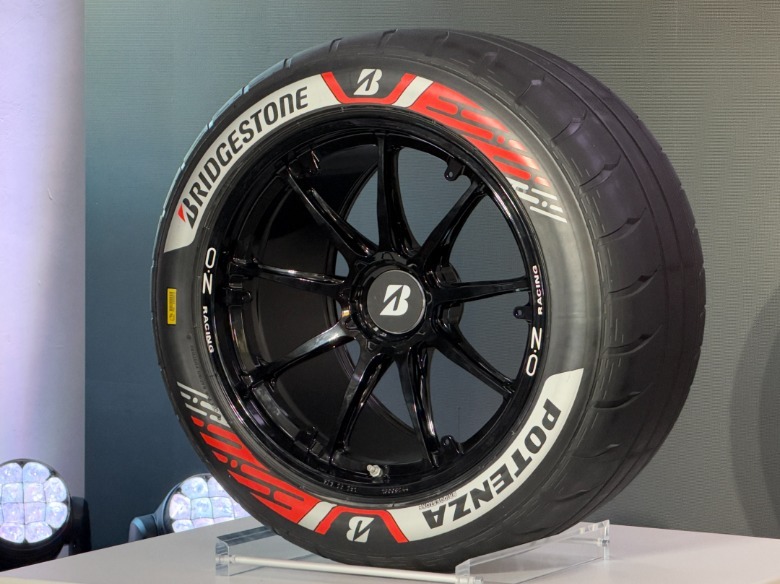
Specifically, this was the unveiling of Bridgestone’s new tire line for the FIA Formula E World Championship. The 95-year-old Japanese tire giant is officially returning to top-tier international motorsport after a 16-year hiatus, taking over as the sole official tire supplier for the championship starting with the 2026–27 season. While this return is a significant milestone on its own—especially given Bridgestone’s deep involvement in developing the upcoming Gen4 race car alongside the series—the announcement that generated the most immediate intrigue was the debut of the "Typhoon," Formula E’s first-ever dedicated heavy-rain tire.
Hiroshi Imai, vice president of motorsport for Bridgestone, described the new partnership as a "proper showcase of technology, both performance and sustainability," expressing absolute confidence in the engineering behind the rubber. Bridgestone brings a formidable racing pedigree to the table, including 242 starts and 175 victories during its historic tenure in Formula 1. The company is treating its Formula E comeback with the exact same gravity, a commitment underscored by briefings held at Bridgestone’s Technical Center Europe, where the specialized race tires are brought to life.
Partners from the Start
The forthcoming Gen4 Formula E car represents a massive leap forward for the all-electric championship. Featuring advanced aerodynamics, a maximum output of 815 horsepower, and permanent all-wheel drive—a step up from the Gen3 car, which only utilized front-axle power in specific scenarios like qualifying or during Attack Mode activations—the new machine is exceptionally fast. It accelerates from zero to 62 mph in a staggering 1.8 seconds, matching the quickest hypercars on the market and clocking in half a second faster than a modern Formula 1 car, with a projected top speed of 208 mph.
The performance envelope is so extreme that James Rossiter, a former racing driver and current Formula E development driver, admitted his initial test runs were overwhelming. During a round-table discussion with journalists, Rossiter recalled climbing into the Gen4 chassis for the first time, noting that his "consciousness was left behind when I left the pit lane." He added that it felt like he was "one step behind the car my first few laps," remarking that he could never have imagined the generational technological gap between the series’ inaugural Gen1 cars and this new iteration.
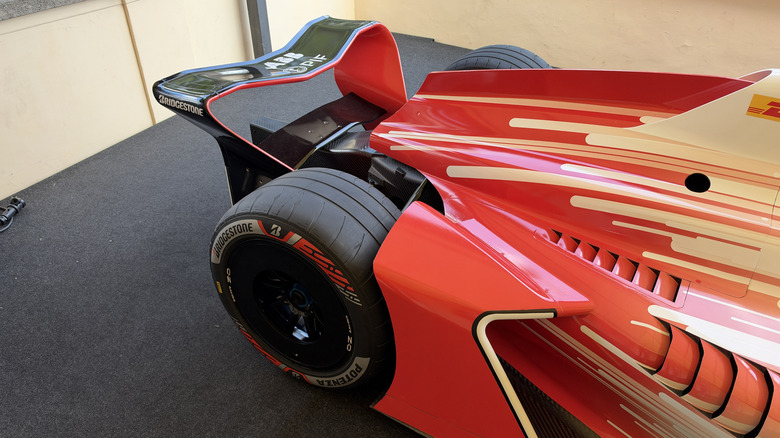
This astronomical jump in performance forced Bridgestone to design the new Potenza Gen4 tires completely from scratch, initiating development long before the Gen4 chassis was even finalized. The near-slick tire has been engineered to deliver exceptional initial grip and broad adaptability across diverse road surfaces and weather environments worldwide. Marco Adami, research and development program manager, explained that immense effort was dedicated to ensuring the tires achieve rapid thermal warm-up while maintaining consistent grip levels throughout an entire race stint. Unlike Formula 1, where tire management and mid-race compound changes dictate strategy, Formula E drivers cannot swap tires during a Grand Prix. According to Rossiter, the Potenza Gen4 can endure well over 100 laps at maximum racing intensity with virtually zero performance degradation, lasting far beyond the distance of a standard race.
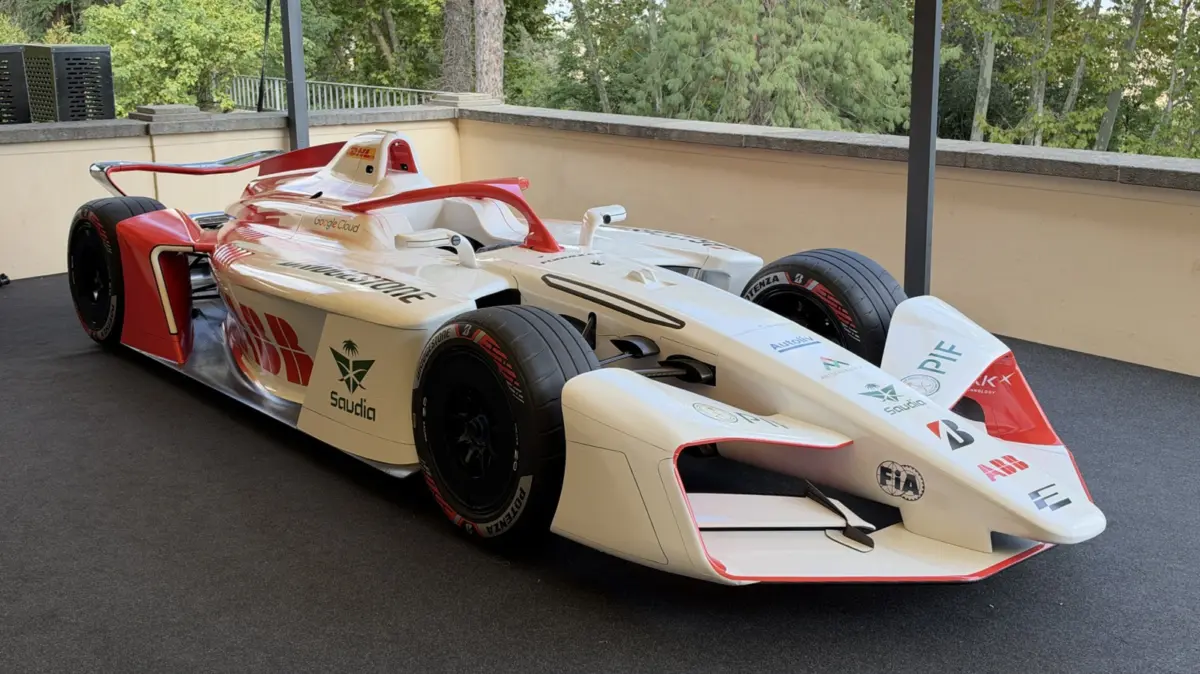
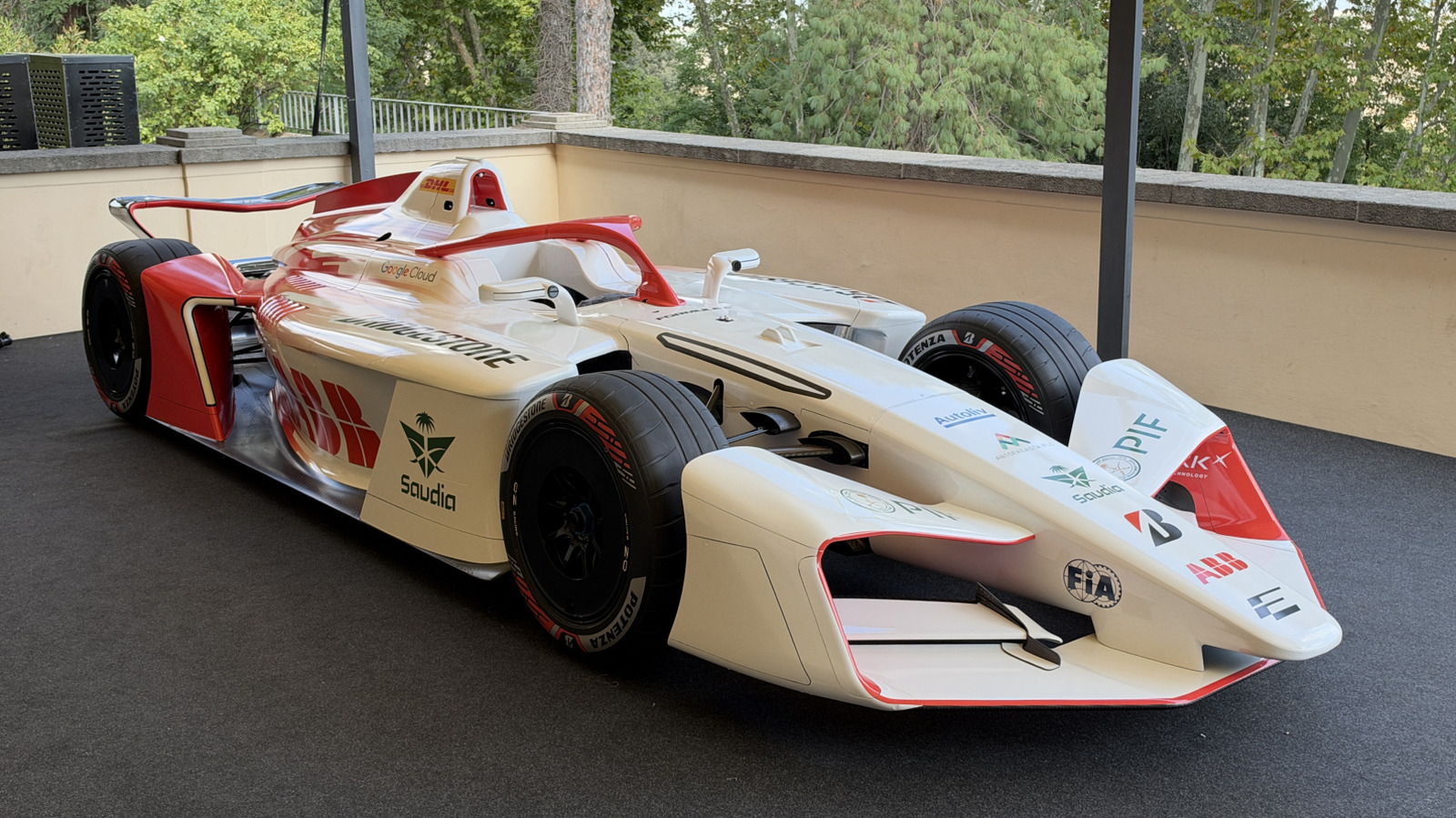
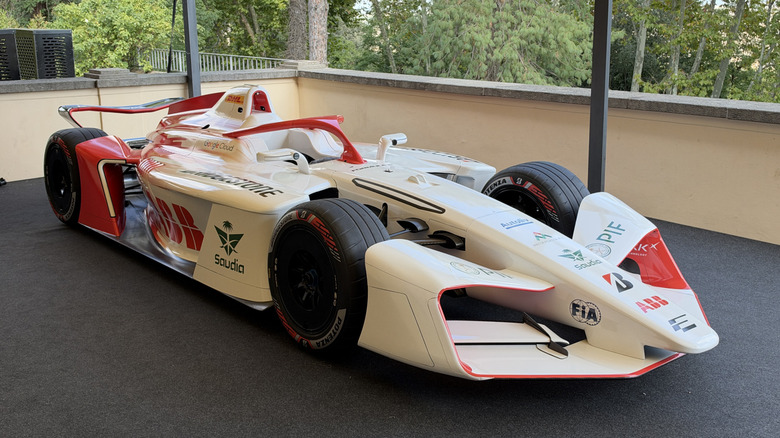
Alongside the tire engineering, Bridgestone Motorsport launched refreshed corporate branding and logos, which have been integrated into the tire sidewalls, team merchandise, and the showcase vehicle’s striking livery.
With All the Force of a Great Typhoon
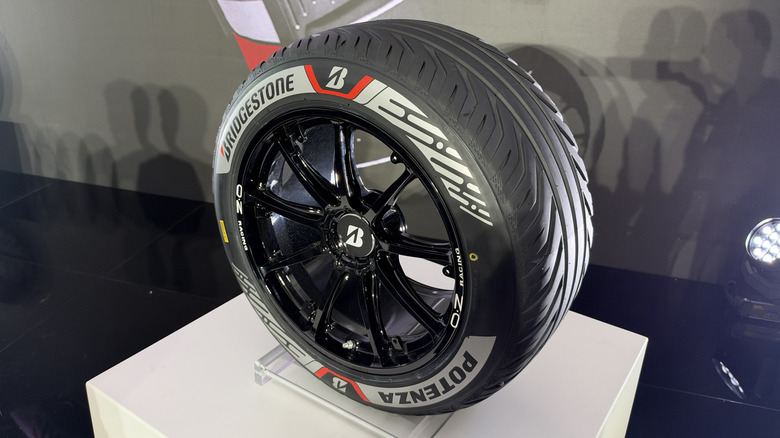
While the standard dry and all-weather tires are engineered for durability and longevity, the real headline of the launch is the Potenza Gen4 Typhoon tire, designed specifically for severe wet-weather racing. Formula E historically managed to avoid running in heavy rain for the vast majority of its early existence, with its first true wet-weather race not occurring until Paris in 2019, more than 50 races into the series’ history. In previous seasons, inclement weather often prompted race delays or cancellations. However, shifting global climate patterns and the evolving geographic footprint of the Formula E calendar have made wet conditions a much higher probability for upcoming rounds.
To prepare for these scenarios, Bridgestone subjected the Typhoon tire to rigorous real-world testing. Imai noted that engineers took the Gen4 development car to a dedicated test track in Spain equipped with a built-in sprinkler system. Testing ranged from fully flooded track surfaces down to completely dry conditions to evaluate the tire’s thermal operating window and establish precise crossover points where swapping to the Typhoon becomes necessary. Because wet weather can fluctuate rapidly during a race weekend, developing a wet tire that maintains predictable behavior across a drying track is an immense engineering challenge.
Rossiter was effusive in his praise of the Typhoon during wet-weather testing, stating that he was able to drive the car "almost flat out" and brake five to eight meters earlier while traveling at 200 mph and still hit the apex cleanly. Comparing its performance to standard all-weather options in the rain, he described the experience as "exciting and rewarding when you can drive in those conditions, outside of reality and exceeding expectations." Rossiter even went so far as to suggest that a Formula E car equipped with the Typhoon tire could potentially outperform a wet-weather-equipped Formula 1 car in torrential conditions.
The Circle of Life
Following the morning presentations, attendees were transported to Bridgestone’s European Technical Center, located roughly an hour outside of Rome. The corporate entity reportedly invests more capital into research and development annually than any other tire manufacturer, allocating roughly 800 million euros globally across a network of seven research centers and ten proving grounds. While the Italian facility houses wind tunnels, administrative offices, and testing laboratories, the specific Formula E production line is so new that the asphalt outside still appeared freshly laid for the delegation’s arrival.
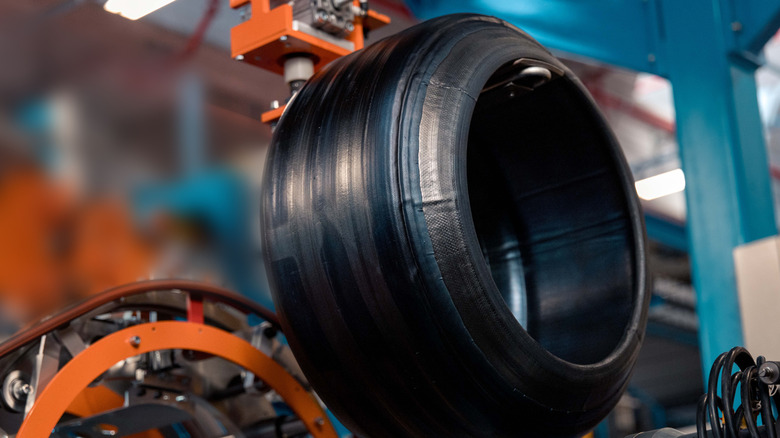
A guided tour of the factory floor revealed technicians manufacturing the bespoke race tires by hand alongside advanced, brightly colored automated machinery. Strips of raw rubber compound were processed through specialized extrusion equipment, resembling traditional artisanal methods on an industrial scale. In keeping with the zero-emissions philosophy of the racing series, Bridgestone has integrated sustainability deeply into the manufacturing process. Approximately 65% of the tire’s composition is derived from recycled or renewable materials, including carbon black recovered from end-of-life consumer tires. Furthermore, rather than sourcing traditional silica derived from sand, Bridgestone utilizes rice husk waste, which yields a tougher molecular polymer structure. At the end of their operational lifecycle, these race tires are slated to be recycled back into raw materials for future production runs.
Logistics have also been carefully optimized to reduce environmental impact. One hundred percent of the electricity utilized in the production facility comes from renewable sources. Eschewing the conventional motorsport practice of air-freighting race tires across the globe, Bridgestone is utilizing ocean freight for shipping the majority of its inventory. While this requires strict forward-planning—eliminating the possibility of last-minute specification changes—the manufacturer is also leveraging its factory in Japan to efficiently supply races scheduled across Asia, the Middle East, and the Americas. Production runs will be kept strictly limited to the exact quantities required for each event to minimize excess waste.
The First Race Is in Two Months
The visit concluded with a demonstration of Bridgestone’s advanced "driver-in-the-loop" simulator. The setup features the forward cockpit of a real race car mounted atop a sophisticated electro-mechanical motion platform. The driver faces a massive wraparound digital display projecting a virtual racing circuit, while the rig rapidly tilts and translates across a five-meter range of motion in response to driver inputs and telemetry. Observers watched from an adjacent control room lined with monitors displaying live vehicle telemetry and simulation data.
The Gen4 car and its newly developed Bridgestone tires are scheduled to make their competitive debut at the opening round of the upcoming season: the Jeddah ePrix in Saudi Arabia, which will host a double-header event on December 18 and 19. The championship calendar will subsequently move to Mexico City on January 16, Austin on February 6, and Miami on February 20, before continuing through a total of 20 races and concluding with a double-header in Tokyo on July 24 and 25, 2027.
With the introduction of the Gen4 machine and the highly capable Typhoon wet-weather tire, the upcoming Formula E season promises entirely new dynamics on the track. Whether drivers and fans will genuinely root for rainy weekends remains to be seen, but the technological foundation has certainly been laid for unprecedented wet-weather performance.