
By Staff Reports
This coverage is made possible through a partnership between Grist and Verite News, a nonprofit news organization with a mission to produce in-depth journalism in underserved communities in the New Orleans area.
Louisiana’s offshore wind industry has a single, definitive date circled on calendars across the state: January 21, 2029. That marks the first day after President Donald Trump is officially scheduled to leave office, and for the state’s burgeoning renewable energy sector, it represents a distant horizon of potential recovery.
Across the United States, the Trump administration’s aggressive policy maneuvers have brought offshore wind development to a near standstill. Rather than relying solely on traditional regulatory hurdles or drawn-out court battles, the administration has deployed a novel financial strategy, paying developers roughly $4 billion in federal funds simply to walk away from multi-gigawatt projects. But in Louisiana, leaders in the maritime, manufacturing, and energy sectors are adopting a posture of survival. They are attempting to preserve their hard-won expertise, specialized supply chains, and trained workforces in the hope of reviving offshore wind development under the next presidential administration.
“Come January 21st, 2029, we all get to wave goodbye,” said state Representative Joe Orgeron, a Republican from southeastern Louisiana who previously worked in the offshore wind industry. “The current administration has been a one-man stopping show. I’m pretty confident, and I’m hopeful that it’ll change.”
Orgeron later summarized the industry’s current, holding-pattern strategy with striking simplicity: “Just wait for the clock to run out.”
His perspective was shared by other wind energy experts who gathered on a panel at Tulane University’s Future of Energy Forum. Panelists detailed the systematic dismantling of a sector that, only a few years prior, had been viewed as a historic economic engine for Gulf Coast shipyards and engineering firms.
“The Trump administration has been pretty openly hostile to seeing the advancement of the offshore wind industry,” said Madelyn Smith, a program manager with the Southeastern Wind Coalition, a nonprofit organization that supports the development of wind power across 11 states.
The federal campaign to halt the growth of domestic offshore wind began on day one of Trump’s second term last January. Through a series of executive orders, the administration withdrew vast stretches of federal waters from new offshore wind leasing opportunities and immediately halted the permitting process for any projects still awaiting final federal approval. When these actions sparked swift legal pushback and challenges from industry advocates, the administration shifted tactics, introducing lucrative federal buyout offers designed to entice offshore wind developers to relinquish their leases entirely.
“For many reasons, it’s very compelling,” Smith said of the administration’s financial payout offers. She noted that developers faced a stark reality under current federal policy, adding, “There’s no real pathway for progress in the next two to three years, and some of these leases are quite expensive.”
According to Smith, developers have already relinquished 12 major offshore wind leases in exchange for these federal payouts. Among the casualties is a massive, highly anticipated 2-gigawatt wind farm planned for the Gulf of Mexico in federal waters south of Lake Charles, Louisiana.
“About $4 billion of taxpayer money has been spent to remove those from the pool,” Smith said. “And those projects also represented about 21 gigawatts of potential capacity.”
That lost generation capacity equates to enough clean electricity to power more than 5 million American homes, striking a major blow to national renewable energy targets and regional economic diversification efforts.
For years, Louisiana’s economic identity was defined almost exclusively by offshore oil and gas exploration. However, as the energy transition gained momentum nationally, several Louisiana companies that historically served fossil fuel operations successfully pivoted to help plan, engineer, and build offshore wind farms along the East Coast.
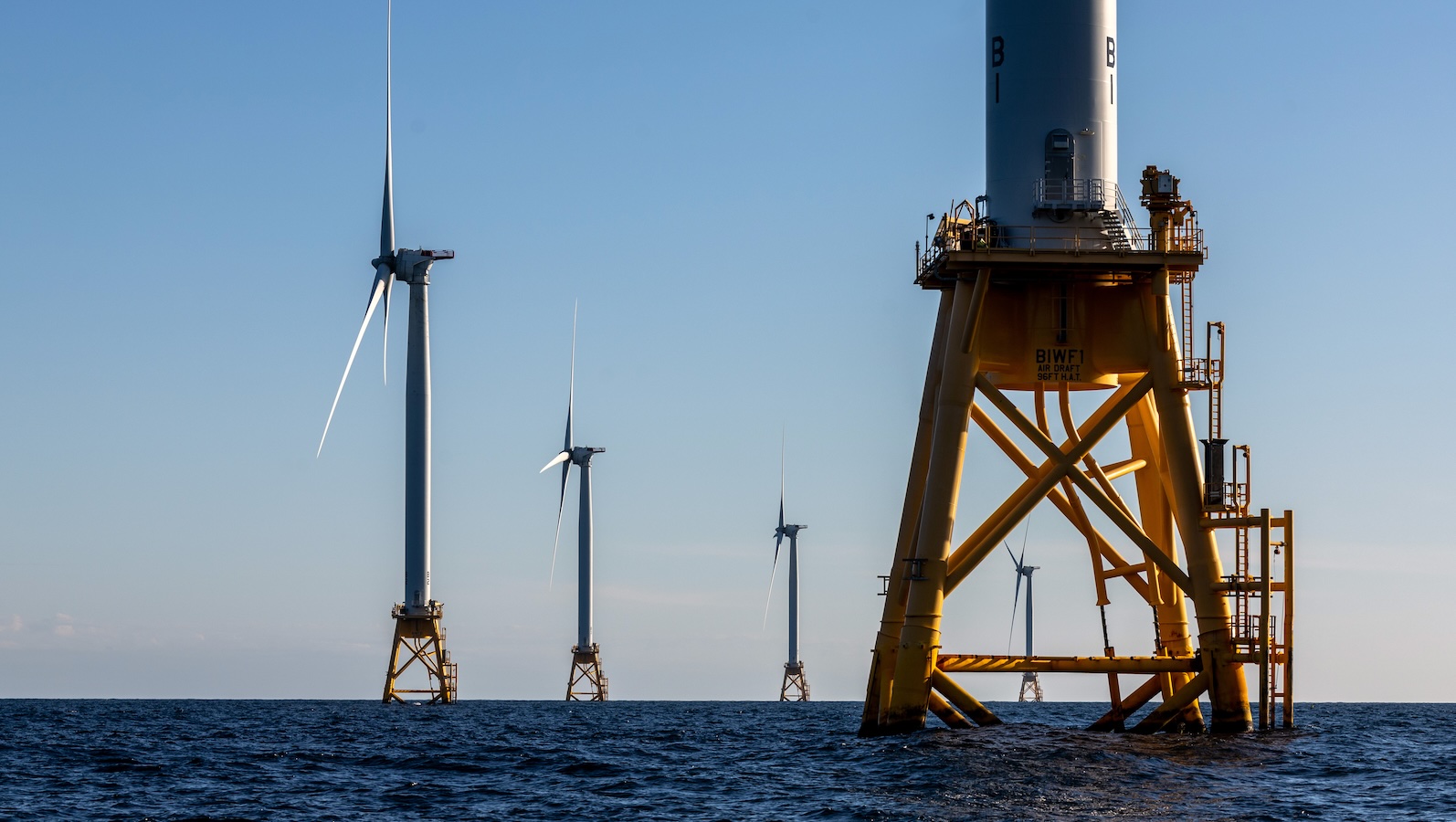
Representative Orgeron’s own family-owned supply boat business, alongside a network of Louisiana-based marine engineers and metal fabricators, played a direct role in constructing the United States’ very first commercial offshore wind farm near Block Island, Rhode Island, back in 2016.
For these Gulf-based enterprises, the work steadily expanded over the following decade. By 2024, nearly a quarter of all offshore wind work contracts in the United States had been awarded to firms rooted in the Gulf Coast region. According to data from the Oceantic Network, an industry trade group, approximately $1 billion in direct investments had flowed into the region’s specialized shipyards and fabrication yards to accommodate the booming sector.
Educational institutions across the state quickly recognized the economic shifts and moved to adapt their curricula to meet the surging demand for skilled labor. Nunez Community College in Chalmette launched a specialized two-year turbine technician training program, while the University of New Orleans established its dedicated Wind Energy Hub, offering targeted engineering scholarships and professional internships with offshore wind developers.
One of the crown jewels of this regional expansion was RWE, a major German energy company that had laid ambitious plans to develop the 2-gigawatt wind farm located roughly 44 miles south of Lake Charles, with an anticipated completion date by 2035. RWE had already secured a crucial local customer for the project’s future output, having finalized an agreement with Entergy to deliver emissions-free electricity to an estimated 350,000 homes across Louisiana and Texas.
However, as the offshore wind industry expanded rapidly under the Biden administration, Donald Trump became an increasingly vocal and prominent opponent, eventually making the complete cessation of new wind projects a central policy pledge. Trump’s personal opposition to wind energy dates back nearly two decades to at least 2006. At that time, he initiated a contentious, decade-long legal and political fight against the Scottish government in an unsuccessful bid to block an offshore wind farm that he argued would spoil the scenic ocean views from a luxury golf course he was developing in Scotland.
In the years since, Trump has repeatedly derided wind energy in public appearances. He has frequently portrayed offshore and onshore turbines as severe threats to property values and local wildlife, while also making unconventional claims that the technology drives up consumer food prices, causes cancer, and can somehow negatively impact human mental stability.
These persistent political attacks and policy roadblocks have managed to stall, and in some cases deeply disrupt, Louisiana businesses that invested heavily in pivoting toward the green energy sector, according to James Martin, CEO of Gulf Wind Technology, an Avondale-based company specializing in the design, construction, and testing of wind turbine blades.
“It is a shame,” Martin said during his remarks at the Tulane energy forum. “It’s been a big pause button on what was a sleeping giant of an industry.”
In response to the sudden market freeze, Martin’s company has attempted to stay afloat by redirecting its advanced engineering capabilities toward alternative sectors, including aerospace and defense. Other supply chain businesses throughout the region have not had as much flexibility, forcing them to drastically trim operating budgets, cancel expansion plans, and implement painful workforce reductions.
“There’s huge layoffs in the wind space, and some of the best engineers on the planet — they’re giving up,” Martin said, lamenting the potential permanent loss of specialized human capital that took years to cultivate in the Gulf region.
Despite the current regulatory blockade, financial buyouts, and institutional setbacks, industry leaders in Louisiana maintain that the foundational assets—the shipyards, the skilled marine workforce, the engineering talent, and the geographic advantages—remain intact. For now, however, those assets are locked in place, waiting out the remainder of the federal administration’s term with their eyes firmly fixed on January 2029.