
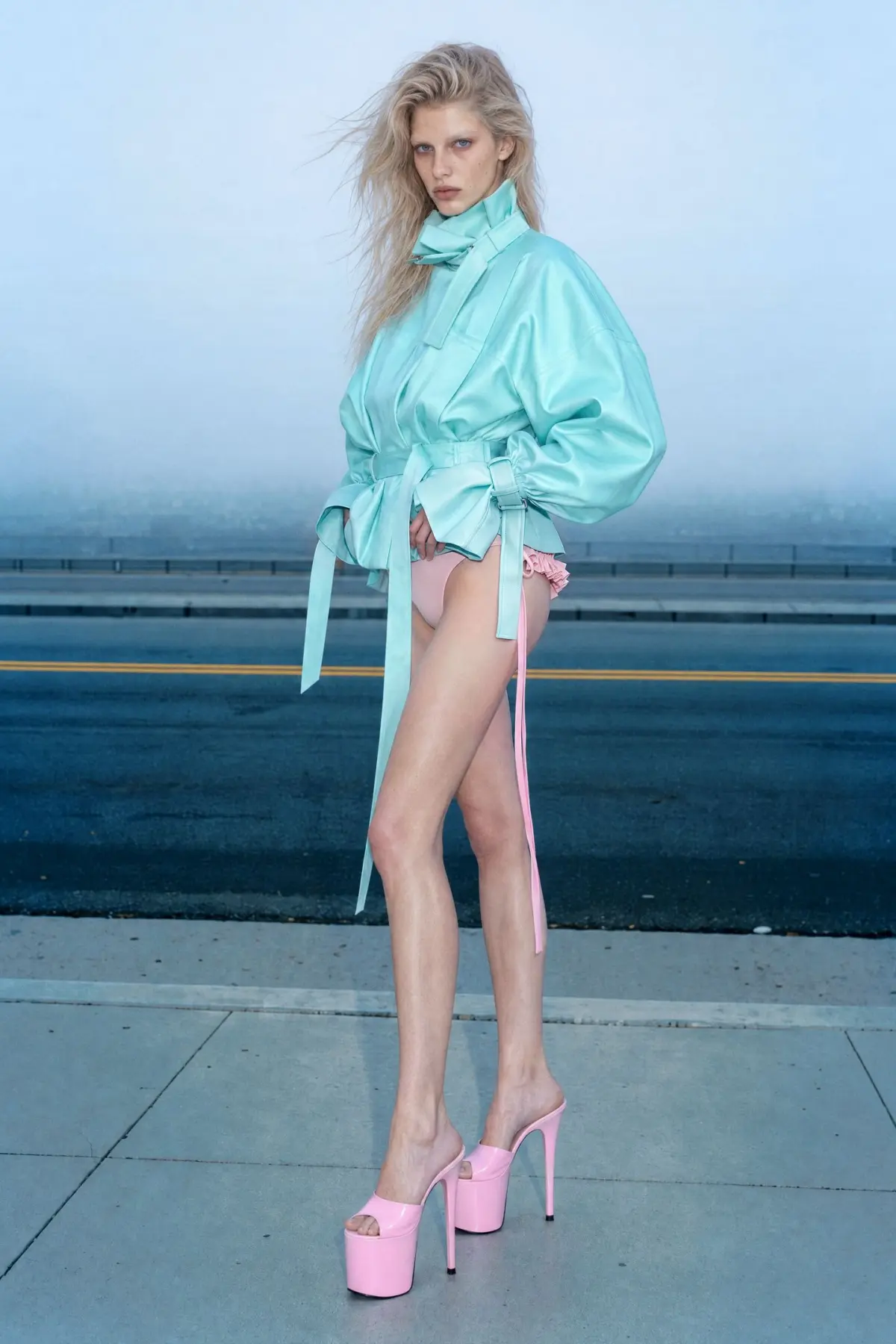
David Koma has long been celebrated for a specific brand of hyper-feminine, sharp-edged glamour, but for his Spring 2027 collection, the designer chose to pivot toward a theme that bridged the gap between chilly aesthetics and fiery performance. The inspiration for the season arrived through the unlikely lens of the 1990s competitive figure skating world—a domain characterized by a paradoxical blend of intense discipline, theatrical artifice, and the high-stakes pressure of the rink. It was a study in contradictions: the way rhinestones and sequins are utilized to mask the sheer physical strain of athletic excellence, creating an illusion of effortless grace.
At the heart of this collection was a particularly potent, if unconventional, muse: Tonya Harding. Koma was quick to clarify that his interest in the polarizing figure was not rooted in the tabloid spectacle of her narrative, but rather in the raw, unvarnished determination that defined her presence on the ice. By focusing on that specific "rawness," Koma sought to translate the grit of competitive training into the language of high fashion. The resulting collection, presented for the Spring 2027 season, navigated the arc of a skater’s life, moving seamlessly from the functional necessity of warm-up layers to the high-octane drama of the rink reveal, all while maintaining the sharp, architectural precision that has become synonymous with the David Koma label.
The color palette of the collection served as the primary narrative device, effectively balancing the cool, clinical atmosphere of the ice rink with the vibrant, artificial energy of professional skating costumes. The collection was anchored by deep, inky blacks and soft, milky ivories, which provided a stark foundation for accents of sugary, satiny hues. This juxtaposition was deliberate, intended to prevent the collection from sliding into a saccharine or overly nostalgic territory. A minty blue bomber jacket, featuring a technical neckline that hinted at sportswear, sat comfortably alongside skirts gathered or fringed to mimic the playful aesthetics of a scrunchie. Candyfloss pink knickers, metallic column gowns, and sculpted, boned bodysuits further defined the collection, each piece abbreviating the traditional silhouettes of the sport into something distinctly modern and wearable.
Beyond the immediate visual references, Koma delved into the technical minutiae of figure skating, specifically the tradition of "compulsory figures." These are the painstaking, geometric patterns—circles and figure-eights—that skaters once had to trace onto the ice with absolute precision under the watchful eye of judges. For Koma, these patterns became a primary design motif. One striking black minidress featured these concentric forms meticulously rendered in hand-beaded crystals, with mother-of-pearl centers inserted into the fabric like precious jewelry. This dedication to craftsmanship underscored the designer’s commitment to his theme; the geometry was not merely decorative, but structural.
Geometric shapes appeared elsewhere in the collection, serving both aesthetic and functional purposes. Hipbone cutouts, for instance, were accented with blooming fringe that seemed to ripple with every movement. In other instances, internal metal constructions were employed to pull and gather fabric against the body, effectively bolstering the "showtime" dynamism of the garments. Even when the models were at rest, many of the pieces appeared to vibrate with kinetic energy. A succession of gowns and skirts utilized internal boning to extend the fabric away from the body, providing a rigid yet elegant framework to support shimmering layers of silk fringe and delicate feather plumes.
"I like to animate the body and create this organic movement," Koma explained, describing his desire to capture the essence of a skater in motion. This focus on movement was his way of translating the centrifugal force of the sport—the tension, the speed, and the eventual release—into an elegant, wearable format. By manipulating the construction of the garments, Koma ensured that the clothing functioned as an extension of the wearer, reacting to the body’s natural rhythm.
Perhaps the most significant development in this collection, however, was the subtle shift in focus regarding the David Koma woman. While the brand has historically been synonymous with red-carpet glamour and eveningwear, the Spring 2027 season represented a deliberate move toward integrating those high-glamour hallmarks into a broader, more versatile wardrobe. The collection featured an increased emphasis on ready-to-wear separates, refined knitwear, and thoughtful layering pieces that suggest a life well beyond the glare of flashbulbs or the constraints of formal events.
Koma spoke candidly about his intention for this season, expressing a desire for the wearer to experience his creative world across a wider spectrum of occasions. This is not to say that the glamour has been stripped away; rather, it has been embedded into the core of the garment, repositioning it as a form of daily strength rather than a costume for a singular night. The transition from evening-specific pieces to items that can be integrated into a daily wardrobe marks a maturation of the Koma aesthetic, allowing for a more nuanced expression of style.
"It’s becoming harder to define the David Koma woman and I think that’s important," the designer noted. "To see how characters across the world translate my vision is key." By broadening the scope of the collection to include pieces that function as both statement items and wardrobe staples, Koma is inviting a diverse range of women to participate in his vision. The collection serves as a testament to the idea that glamour, when approached with the right level of technical rigor and thematic depth, can be as functional as it is spectacular.
As the presentation concluded, the overarching sentiment was one of evolution. By pulling inspiration from the disciplined, often brutal world of 1990s figure skating and refining it through the lens of modern tailoring, David Koma managed to deliver a collection that felt both nostalgic and forward-looking. The sharp-edged tailoring, the feather details, and the intricate beadwork remained, but they were now placed in service of a woman whose life is as dynamic and varied as the sport that inspired the collection. Whether on the ice or in the street, the Koma aesthetic remains rooted in the belief that glamour is not merely an accessory, but a core component of personal expression and, ultimately, a display of strength. The collection effectively closed the gap between the theatricality of the rink and the reality of the contemporary wardrobe, proving that even the most niche inspirations can be transformed into a cohesive, highly relevant fashion statement.