
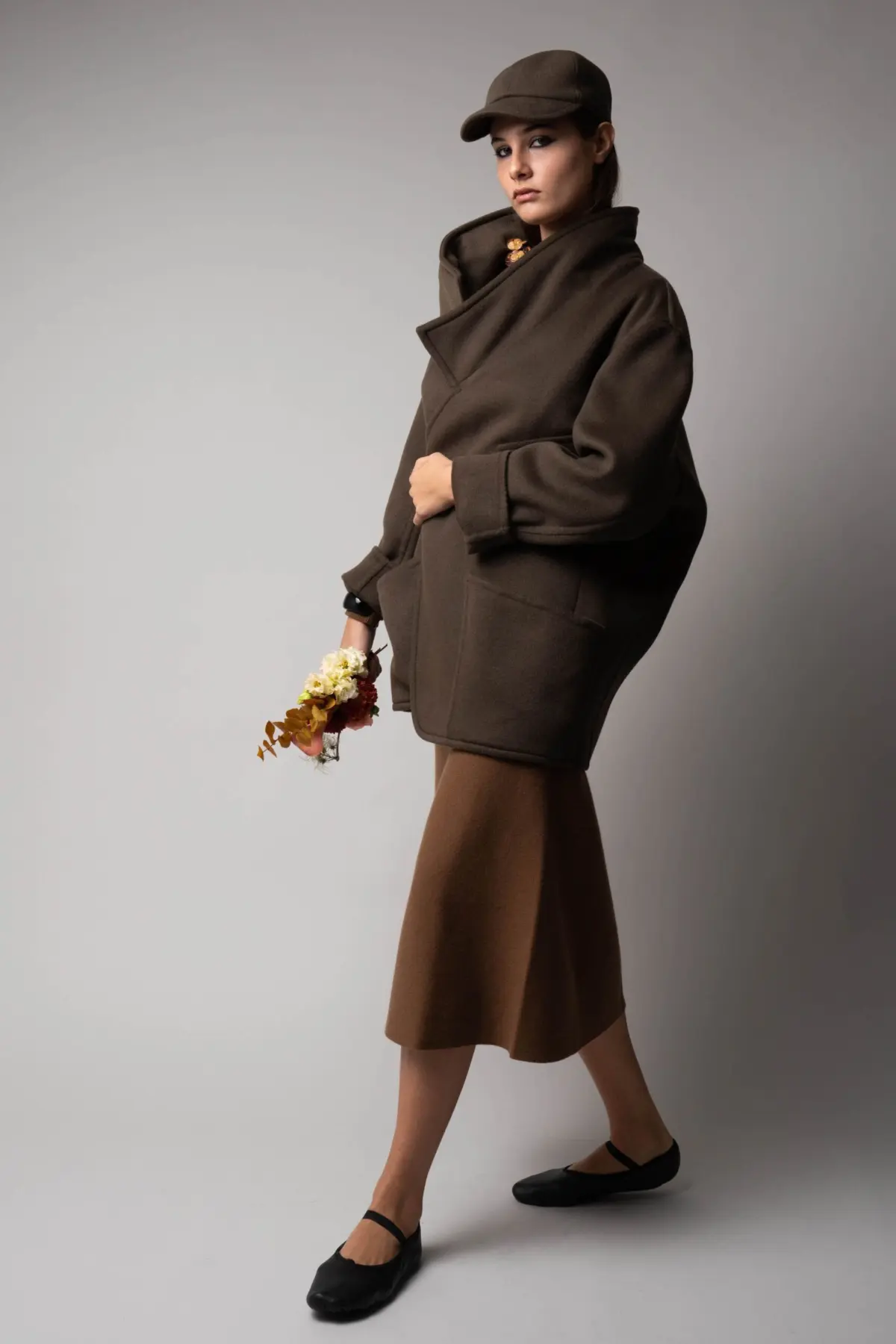
While Julie de Libran has long been a fixture of the high-octane couture calendar, the designer has been quietly but deliberately cultivating a robust ready-to-wear business. Far from the ephemeral nature of seasonal runway spectacles, her current focus is anchored in the intimacy of her Left Bank boutique—a jewel-box space that serves as both a showroom and a sanctuary for her private clients. It is here, by appointment, that de Libran is redefining the modern woman’s wardrobe, offering not just garments, but a cohesive philosophy of dressing that marries the precision of couture with the utilitarian demands of a global, travel-heavy lifestyle.
On a recent visit to this boutique, the designer presented a concise, highly edited selection of pieces she describes as “travel-ready.” The collection feels remarkably intuitive, designed for a client who requires clothes that transition seamlessly across time zones and social calendars without losing their integrity. Among the standout offerings are separates crafted from hammered silk in vibrant shades of marigold and blue. These are pieces sourced from a specialist fabric maker in Lyon, chosen specifically for their impossible-to-wrinkle quality—a hallmark of the collection’s functional ethos. The selection also includes a sophisticated, fitted pantsuit rendered in rich, chocolate-colored corduroy, and a series of garments in a crinkled summer wool check, complete with delicate silk lining.
This emphasis on functional elegance is not merely a stylistic choice; it is deeply rooted in de Libran’s professional lineage. As she inspected a fine, caramel-colored sweater and skirt set, she reflected on her tenure at Louis Vuitton under the mentorship of Marc Jacobs. It was there, she recalled, that she truly learned the vital importance of utilitarian design. “He taught me why a uniform is so important—something you reach for because it makes you feel good, you know it fits properly, and you never have to overthink it,” she explained.
For de Libran, this philosophy represents her “American side”—a pragmatic, problem-solving approach to fashion that prioritizes the wearer’s comfort and confidence. However, she balances this with what she calls her “French side,” an aesthetic sensibility defined by effortless poise and the art of the mix. This duality is expressed through styling choices that prioritize balance: a delicate halter blouse paired with a lace-trimmed black skirt, or a crisp white denim gilet worn alongside a safari jacket. The collection also features Supima denim vests and trousers, available in both dark wash and stark white, further bridging the gap between high-end tailoring and casual, everyday wear.
While her separates offer a foundation of versatility, it is in her outerwear that de Libran has truly staked her claim. The designer’s coats have become the backbone of her brand, characterized by a mix of architectural rigor and unexpected material combinations. This season, the collection features a range of silhouettes, from a spare, single-breasted car coat in anthracite double-faced cashmere—material sourced from Nona Source Paris—to a reimagined pea coat that cleverly juxtaposes dark denim with a leftover swath of couture jacquard. This jacquard, featuring a stylized floral motif in deep, satiny shades of burgundy and forest green, serves as a testament to her commitment to utilizing archival and high-quality surplus materials, a practice that adds a layer of depth and history to her contemporary designs.
Hybridization is a defining theme for the spring season, and de Libran has leaned into this with characteristically sharp execution. A prime example is her beige bonded cotton coat, which features couture-inspired sleeves in a camo print punctuated by bronze lamé. Beyond its striking visual appeal, the piece is a marvel of engineering; it is fully reversible, revealing a practical khaki lining that allows for a quick change in aesthetic depending on the wearer’s mood or environment.
The collection also emphasizes the longevity of design through the inclusion of carry-over pieces that have already become staples for her clientele. Among these is a signature cashmere coat with a distinct drop collar, available in black, coffee, or moss green. The coat is designed to be highly adaptive, serving as a layer that can be cinched tightly over an evening dress or worn loose and unstructured over jeans.
This versatility is not incidental; it is central to how de Libran herself navigates the world. Now that she maintains an office in New York, the designer has found that her own creations double as travel companions. The cashmere coat, in particular, often serves as a blanket during her frequent transatlantic flights. “I love the styling part,” she said, noting that her approach to the collection is inherently personal. “Everything I have folds and travels so well; my sister calls me Mary Poppins. I love that it’s not about a destination, it’s about how you feel.”
By focusing on this internal sense of comfort and the ease of the wardrobe, de Libran is successfully expanding her footprint beyond the traditional confines of the couture house. She is proving that high fashion need not be reserved for the runway; when stripped of its pageantry and distilled into its most essential, functional elements, it becomes a powerful tool for the modern woman. Her boutique, nestled in the heart of Paris, continues to function as a laboratory for this vision, where the designer’s American pragmatism and French sensibility converge to create a wardrobe that is as much about the journey as it is about the destination.
As she continues to develop her ready-to-wear business, de Libran remains committed to the idea that clothing should be a source of constant, reliable pleasure. Whether it is the drape of a hammered silk skirt or the weight of a double-faced cashmere coat, each item is crafted with the intent of making the wearer feel prepared, refined, and, most importantly, entirely themselves. In an industry that often obsesses over the next trend, de Libran is carving out a space that prioritizes the enduring relationship between a woman and her clothes. It is a quiet, steady growth, built on the strength of her craftsmanship and a deeply felt understanding of what it means to be well-dressed in the modern age.