
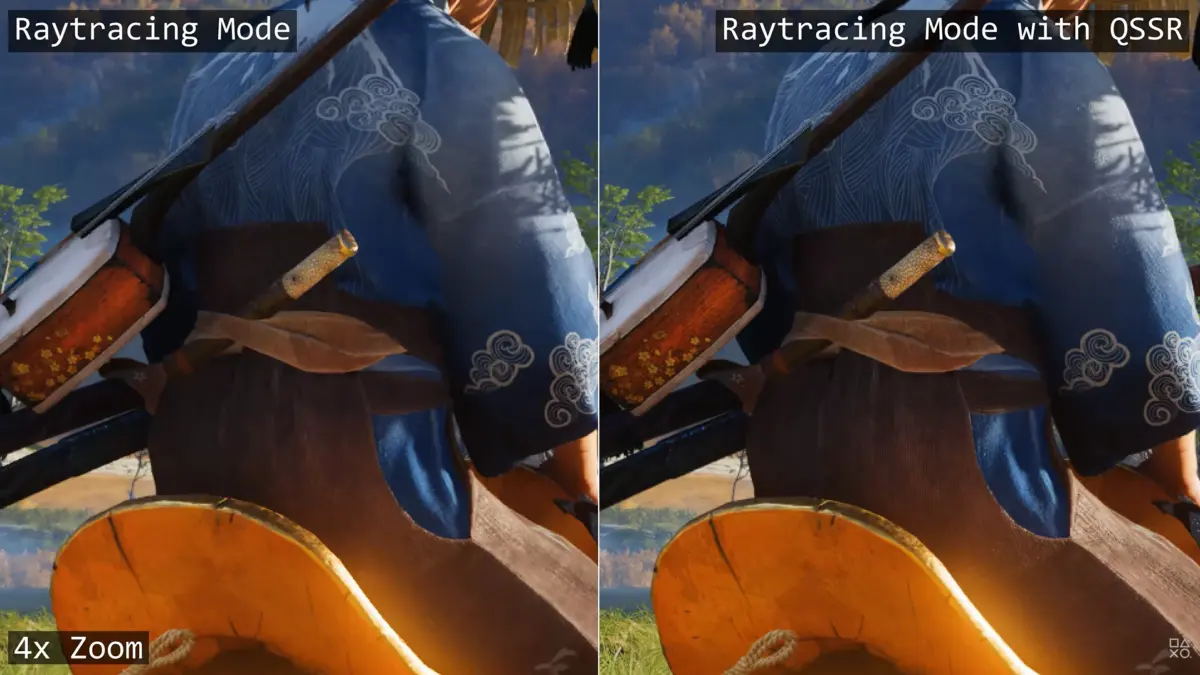
In a significant mid-generation development for the PlayStation 5 ecosystem, Sony Interactive Entertainment (SIE) has officially unveiled "Quick Spectral Super Resolution" (QSSR), a new artificial intelligence-driven upscaling technology designed specifically for the base model of the PlayStation 5. This announcement marks a major shift in how the company approaches image reconstruction and performance optimization, effectively bringing AI-enhanced visual fidelity to the millions of original PS5 consoles currently in homes worldwide.
The introduction of QSSR represents the culmination of a long-standing and intensive collaboration between Sony and AMD. As the gaming industry continues to push the boundaries of graphical fidelity, the challenge of maintaining high frame rates while simultaneously increasing internal rendering resolutions has become increasingly difficult. QSSR is Sony’s answer to this challenge, utilizing a highly optimized, streamlined neural network architecture that has been hand-tuned to extract the maximum possible performance from the base PS5’s existing hardware.
While this new technology brings sophisticated AI upscaling to the standard console, Sony has been careful to clarify the positioning of its hardware tiers. PlayStation Spectral Super Resolution (PSSR), the more robust and computationally demanding version of this AI technology, remains strictly exclusive to the PlayStation 5 Pro. According to Sony, the PS5 Pro remains the "gold standard" for this technology, owing to its superior architectural capabilities and dedicated processing power.
Daniel Craig, SIE’s principal engineer for graphics research and development, provided further insight into the technical distinction between the two solutions in a recent interview with Digital Foundry. "It’s great to be improving the PS5 this far into the generation, enabling developers to make even better-looking games," Craig noted. However, he emphasized that the hardware disparity between the standard model and the Pro model dictates the limits of what can be achieved. "The reality is that the PS5 Pro has 300 TOPS of dedicated hardware for this purpose and is free to pick a much more generous spot on that cost-versus-quality curve."
The engineering hurdle for the base PS5 was significant. Unlike the Pro, which was purpose-built with AI-specific hardware, the original PS5 requires a more creative approach to achieve similar results. QSSR relies primarily on FP16 (16-bit floating-point) mathematics, a departure from the more specialized pathways available on the newer hardware. "It’s true that PS5 Pro was purpose-built for the task, so QSSR relies primarily on FP16 math," Craig explained. "A streamlined neural network architecture got us close, but from there, we leveraged a variety of less obvious hardware features to maximize efficiency—as console developers tend to do. Packed math instructions are used extensively. The real challenge is keeping the pipeline full and reducing or amortizing the costs around the math."
This approach demonstrates the maturity of the current console generation. By moving away from brute-force rendering and toward intelligent, AI-assisted reconstruction, developers can effectively "do more with less," squeezing additional performance out of the base hardware that has been on the market for several years.
Sony has confirmed that QSSR will be offered broadly to the PlayStation development community. Crucially, the technology has been designed as a drop-in replacement for titles that already support the more advanced PSSR, which should significantly lower the barrier to entry for developers looking to implement the feature in existing or upcoming projects. While the integration process is relatively straightforward, it is not entirely "plug-and-play." Developers will need to dedicate a small amount of time to fine-tuning the implementation to suit their specific titles. Craig suggested that this process might take a few days of development time, noting that teams may need to adjust streaming settings to ensure that higher-quality mipmaps—the various resolutions of textures used to optimize performance—are resident in memory to support the upscaling process effectively.
The impact of this update is already being felt in some of the most anticipated titles currently in production. The first games confirmed to implement this AI-driven upscaling on the base PS5 include Insomniac Games’ highly anticipated Marvel’s Wolverine and Sucker Punch Productions’ upcoming open-world title, Ghost of Yōtei.
For studios like Sucker Punch, the ability to utilize QSSR on the base console is a game-changer. Jasmin Patry, the lead rendering engineer at Sucker Punch Productions, expressed optimism about what this technology means for the future of their titles. "QSSR excels at resolving the fine details in our characters and environments, and it does so with a level of temporal stability that hasn’t been possible on the PS5 console until now," Patry stated. "We’ve long wished that all PS5 players could experience the incredible image quality that PSSR brings to PS5 Pro, and QSSR is a positive step towards that goal."
The rollout of QSSR highlights an interesting trend in console gaming: the extension of a console’s lifecycle through software-driven innovation. By providing developers with more efficient tools, Sony is effectively extending the viability of the base PS5 hardware. This ensures that as games become more visually demanding, the standard console can still offer a competitive experience that aligns with the modern expectations of high-definition, high-frame-rate gaming.
As the industry moves forward, the relationship between hardware capabilities and AI software will likely become the defining characteristic of console development. The distinction between the "gold standard" performance of the PS5 Pro and the optimized, efficient performance of QSSR on the base PS5 provides a clear roadmap for how Sony intends to manage its hardware ecosystem. For the average player, this means that the longevity of their hardware is being extended, and they can look forward to seeing the benefits of AI-assisted graphics in their favorite franchises without necessarily needing to upgrade their hardware to experience the latest visual fidelity improvements.
The adoption of QSSR by major first-party studios indicates that Sony is confident in the technology’s ability to bridge the gap between hardware generations. As more developers begin to integrate these tools, the visual floor for console gaming is expected to rise, setting a new benchmark for what players can expect from their existing consoles in the years to come. Through this blend of dedicated neural network architecture and clever, optimized software engineering, Sony aims to ensure that the PlayStation 5 remains a formidable platform, capable of delivering cutting-edge visual experiences well into the latter half of its generation.