
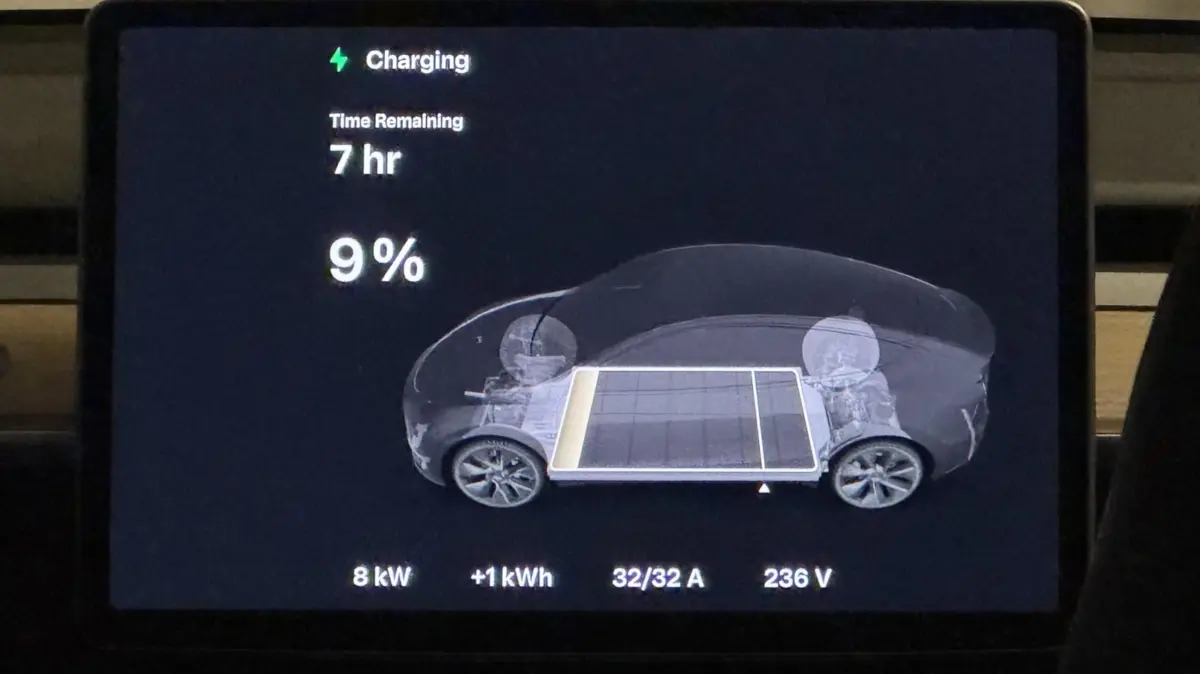
Much like traditional gasoline-powered automobiles, modern electric vehicles are constantly performing background calculations to estimate remaining travel distance. If drivers reframe how they conceptualize an EV powertrain, the similarities become clear: the energy stored in a high-voltage lithium-ion battery is functionally identical to the gasoline sitting in a traditional fuel tank. Both mediums simply supply the necessary power to propel the vehicle forward down the highway.
Yet, understanding how that energy translates into remaining miles introduces a different set of mental gymnastics. EV manufacturers typically display battery charge as a percentage, mirroring the familiar full-to-empty gauges found in legacy internal combustion engine vehicles. In a traditional car, watching the fuel needle dip down to an eighth of a tank only provides meaningful context if the driver possesses a rough mental estimate of the vehicle’s fuel economy and total tank capacity.
With an electric vehicle, calculating remaining range requires knowing both the total usable capacity of the battery pack and the current per-mile efficiency, usually measured in miles per kilowatt-hour (kWh). While drivers can easily check their current efficiency metrics on the instrument cluster—such as averaging four miles per kWh—determining exact remaining travel distance on the fly requires constant mental math.
To simplify this process, modern EV makers generally display estimated range in miles right alongside the battery percentage. However, as the vehicle draws closer to a true 0% state of charge, unexpected software and hardware behaviors kick in. The car frequently enters a specialized "limp mode," intentionally restricting vehicle performance to preserve whatever microscopic amount of energy remains in the cells.
Official manufacturer documentation outlines various precautionary measures implemented during these critical low-charge scenarios. For instance, the owner’s manual for the Chevrolet Equinox EV explicitly warns drivers that they will experience reduced acceleration, though it reassures them that braking and steering assist will continue to operate normally. Meanwhile, documentation for the Hyundai Ioniq 5 notes that driving speed may be severely limited and cautions that the vehicle may struggle to properly navigate uphill terrain. More ominously, the Kia EV6 manual bluntly instructs motorists to navigate to a safe location immediately and request roadside assistance.
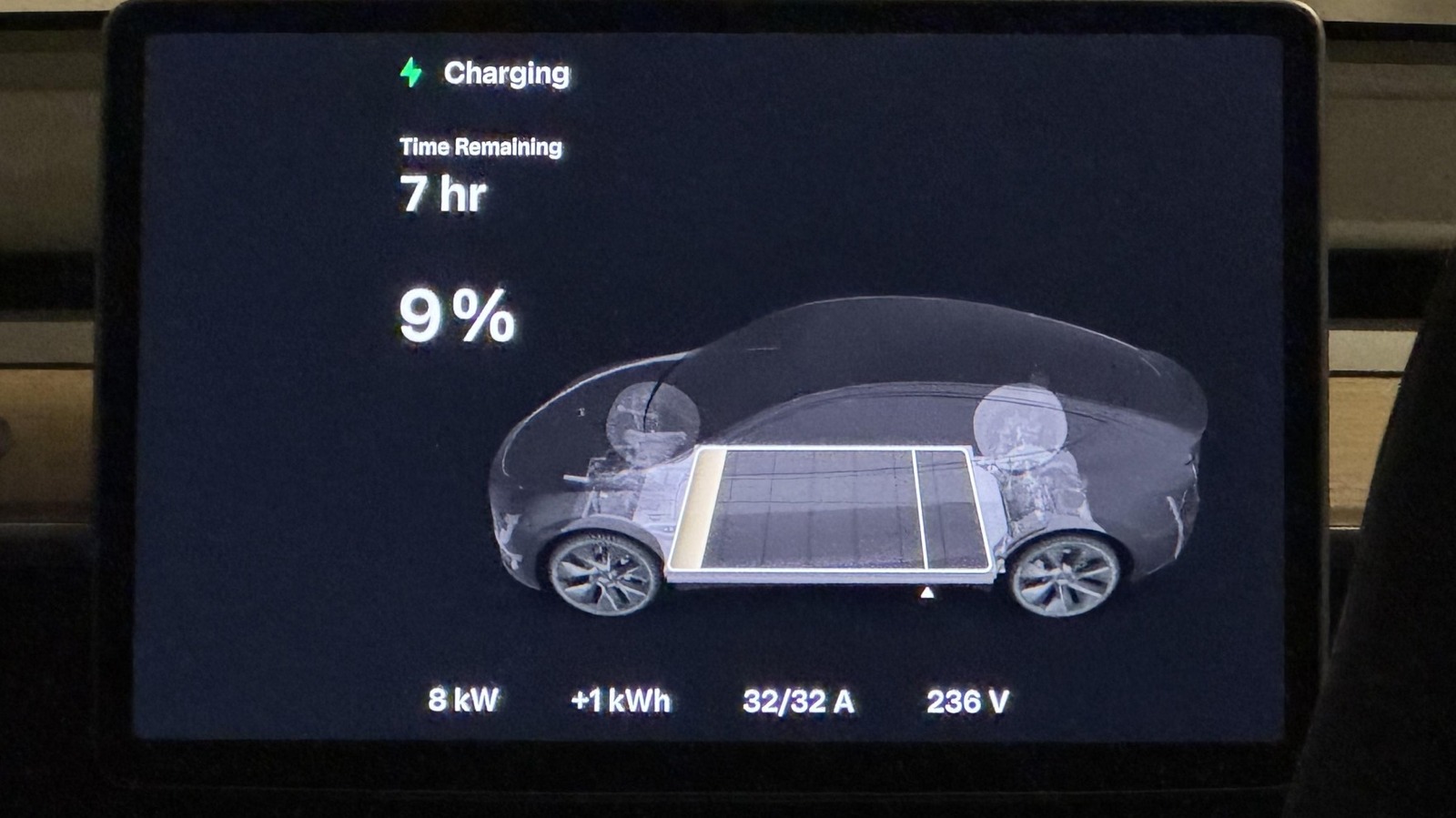
Beyond these software-mandated performance curbs, the situation grows even more complex. As automotive engineers and roadside technicians have discovered, one of the most unexpected challenges of reaching zero charge involves the vehicle’s secondary 12-volt battery rather than the massive high-voltage pack beneath the floorboards.
Your 0% Mileage Will Vary
A growing subculture of automotive enthusiasts and online content creators have demonstrated through extensive road tests that many electric vehicles can continue rolling for a short distance even after the dashboard display stubbornly reads 0% charge. However, just how far a vehicle can travel in this twilight zone varies wildly by make and model.
Investigative reporting by Reuters previously revealed that Tesla engineered a protective buffer into its battery management systems, retaining an estimated 15 miles of hidden range even after the dashboard indicator hit absolute zero. In contrast, official guidance from Hyundai regarding the Ioniq 5 takes a different approach. The manufacturer’s manual informs owners that when a low-range warning light illuminates at 10% charge, the vehicle typically possesses between 18 and 31 miles of remaining range. At the same time, the company includes the caveat that actual remaining distance can fluctuate unpredictably based on driving conditions, climate control usage, and terrain.
For motorists who lack firsthand experience watching an EV battery deplete completely, the sequence of events follows a predictable trajectory. As documented by automotive testing groups running depleted Teslas and other modern platforms, the vehicle will eventually begin losing power in subtle fits and starts before coming to a complete, permanent halt.
Manuals across the industry—spanning the Kia EV6, Hyundai Ioniq 5, Chevy Equinox EV, and Tesla Model 3—incorporate similar warnings explaining that power output will be restricted, top speeds slashed, and the driver compelled to pull over. In purely functional terms, this cessation of movement closely mirrors a traditional gasoline car running completely dry.
Yet, an electric vehicle introduces a compounding layer of vulnerability that cannot be solved with a simple red plastic jerrycan of fuel. Alongside the heavy high-voltage traction battery, modern EVs rely on conventional 12-volt automotive batteries to power onboard computers, door locks, lighting, and internal electronics. Simply put, an electric car cannot operate without its 12-volt system.
Documentation from manufacturers such as Chevy, Ford—covering both the Mustang Mach-E and F-150 Lightning—Tesla, and Volvo warns that once the primary traction battery is fully exhausted, the continuous charging mechanism that keeps the 12-volt battery healthy is placed in jeopardy. If the traction battery drops below a critical threshold, the 12-volt system can quickly drain as well, plunging the vehicle into a total electrical blackout that can complicate recovery and recharging efforts.
Route Planning to the Rescue
These intertwined electrical dependencies have recently drawn scrutiny from federal regulators. Following an investigation by the National Highway Traffic Safety Administration into the Kia EV6 regarding reports of sudden power loss, and similar reliability concerns involving its corporate sibling, the Hyundai Ioniq 5, both automakers issued safety recalls to address system failures associated with charging their respective 12-volt batteries.
The National Highway Traffic Safety Administration has also pursued separate inquiries into Tesla Model Y vehicles experiencing isolated 12-volt power anomalies. These regulatory actions highlight a perplexing operational hurdle: determining how to safely manage a vehicle when both the primary propulsion battery is entirely exhausted and the secondary 12-volt electrical system has gone completely dead.
That small auxiliary battery performs critical duties when an EV is disabled, powering accessory modes and enabling functions like releasing an electronic parking brake. Crucially, a functioning 12-volt system is required to shift a bricked electric vehicle into a specialized tow mode, which functions similarly to neutral in an automatic transmission car. Engaging this mode prevents severe mechanical damage to the drivetrain if the vehicle must be winched onto a transport vehicle. Industry standards dictate that disabled EVs should almost exclusively be transported on flatbed tow trucks to safeguard internal components.
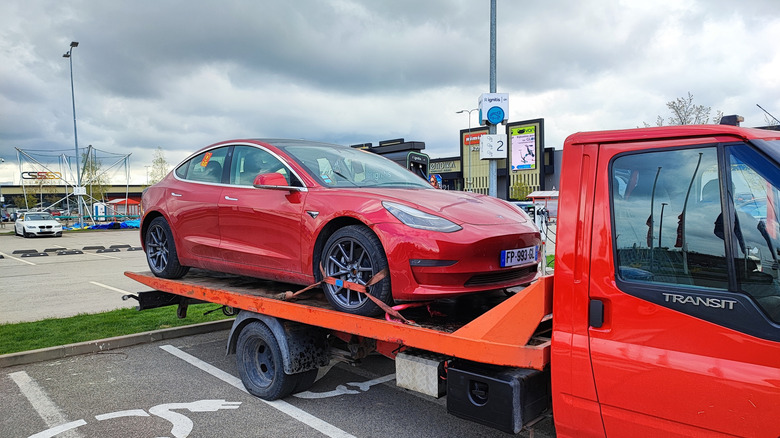
Complicating matters further, certain EV models require their 12-volt batteries to be physically jump-started using an external power source or portable booster pack before the vehicle’s onboard computers will recognize a charger and allow current to flow back into the main high-voltage battery pack.
To steer clear of these compounding complications and avoid the headaches of a complete roadside shutdown, automotive experts recommend fully utilizing built-in vehicle navigation and route-planning software. In the vast majority of modern electric vehicles, factory GPS systems do more than simply estimate the current state of charge; their sophisticated route algorithms are purposefully designed to monitor energy consumption and direct drivers toward functioning charging stations long before the battery pack runs dry.
For additional peace of mind, some long-distance EV owners choose to carry a portable Level 1 charging adapter compatible with standard household electrical outlets. While plugging into a standard wall socket delivers agonizingly slow charging speeds—often netting only around three miles of driving range for every hour plugged in—it provides a vital safety net. Given enough time connected to any standard electrical outlet, a stranded motorist can eventually accumulate enough charge to crawl slowly to a nearby high-speed DC fast charger and resume their journey.