
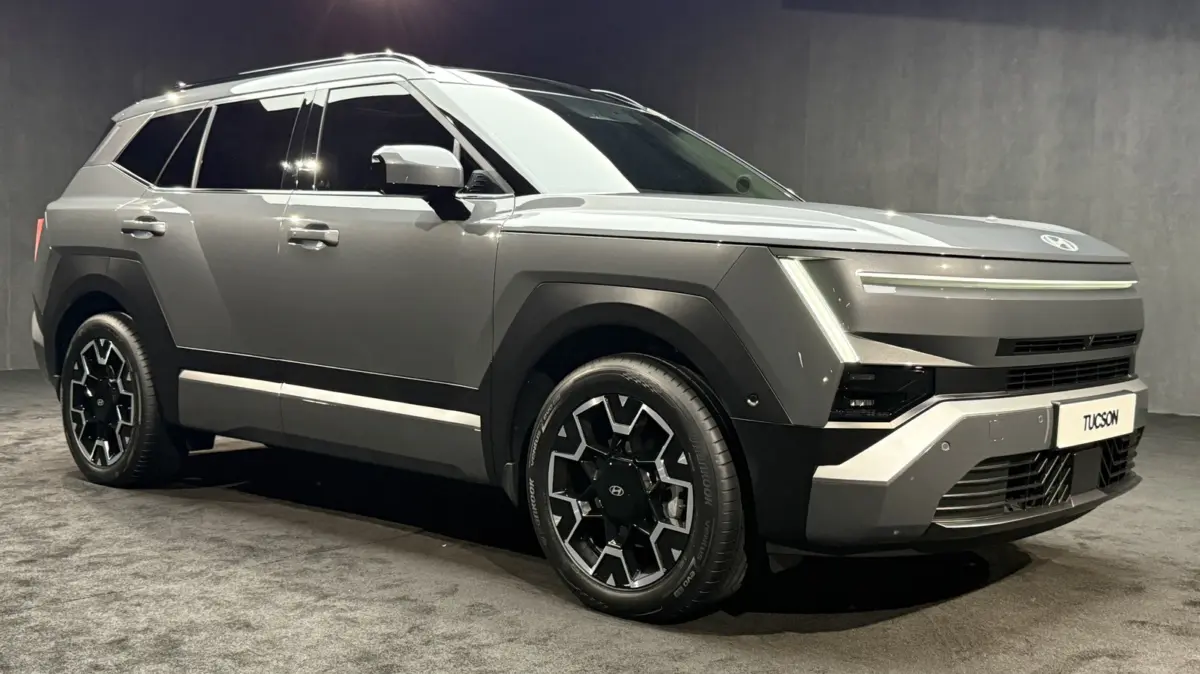
The compact crossover segment remains the undisputed battleground of the modern automotive industry. Practically every mainstream manufacturer offers an entry in this fiercely contested class, and virtually all of them are striving to stand out from the pack with the ultimate goal of dethroning the reigning segment king: the Toyota RAV4. While the outgoing generation of the Hyundai Tucson leaned toward a fluid, flowing design language that proved divisive among buyers who preferred a more rugged aesthetic, the South Korean automaker is completely shifting gears for its fifth-generation model.
Unveiled during a special media preview in Jersey City, New Jersey, the completely redesigned 2027 Hyundai Tucson arrives with a striking new appearance, a comprehensively overhauled cabin, updated powertrain options, and a host of advanced technology features. Hyundai is clearly swinging for the fences with this latest iteration, aiming to solidify its standing in a market segment where competition has never been more intense.
Looks, Maxxed
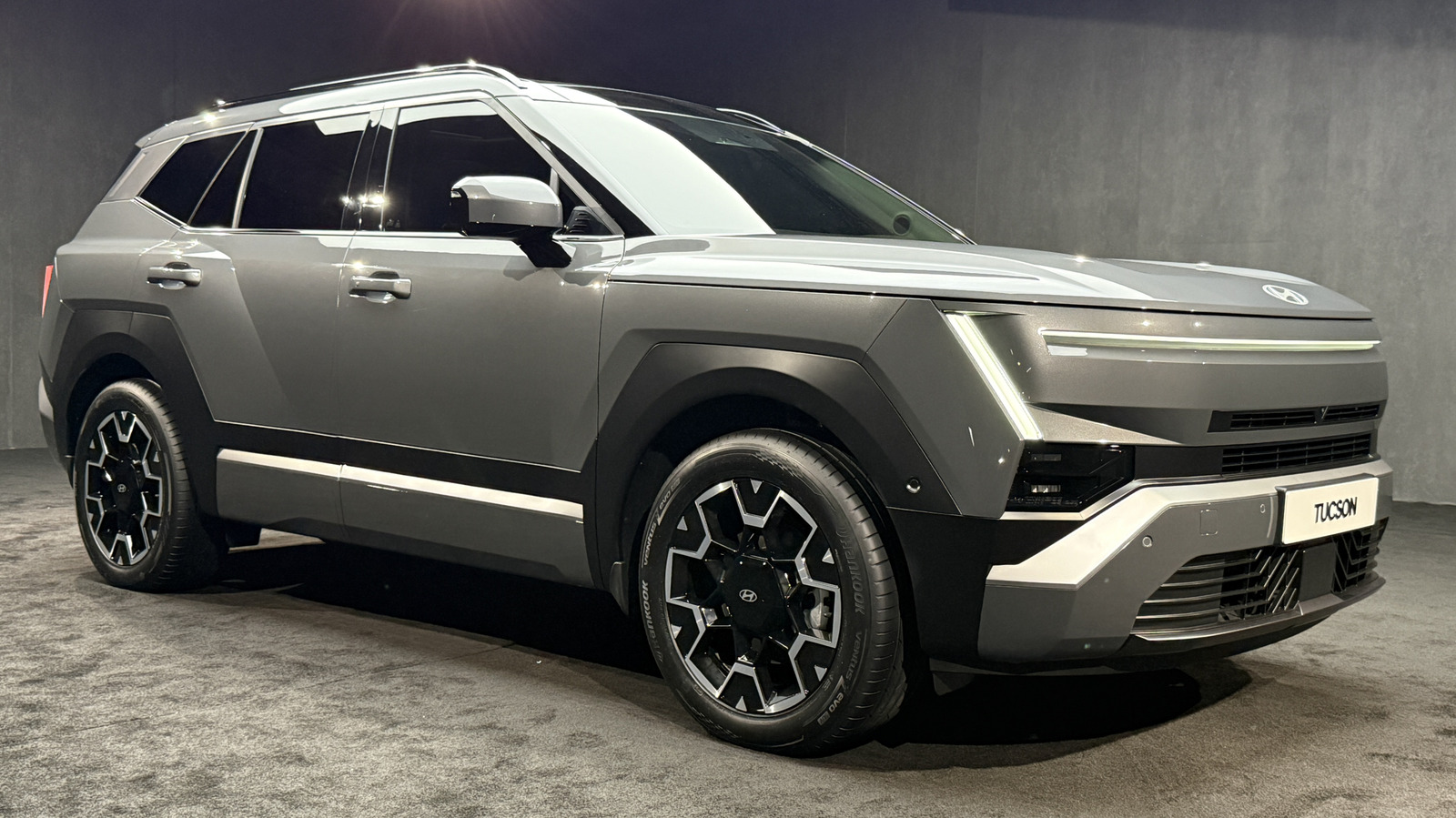
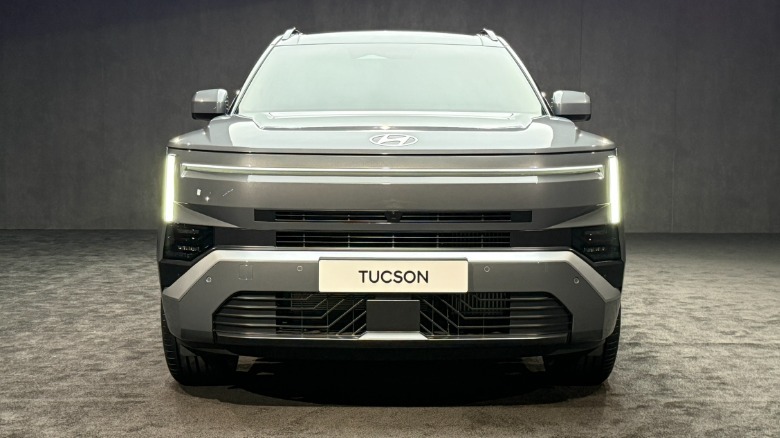
Unlike many competitors that rely on incremental styling changes or conservative evolution between generations, Hyundai is known for dramatic shifts in design ethos. The fifth-generation Tucson is vastly different from the vehicle it replaces, serving as a prime showcase for the brand’s new "Art of Steel" design language. The new aesthetic trades soft lines for sharp angles, a boxy profile, muscular proportions, and slim lighting elements arranged in distinct H-patterns at both the front and rear.
This bolder appearance draws clear inspiration from the larger Santa Fe, resulting in a much more imposing stance on the road. Despite its rugged, squared-off silhouette, the Tucson achieves an impressively low drag coefficient of 0.30, balancing visual aggression with aerodynamic efficiency.
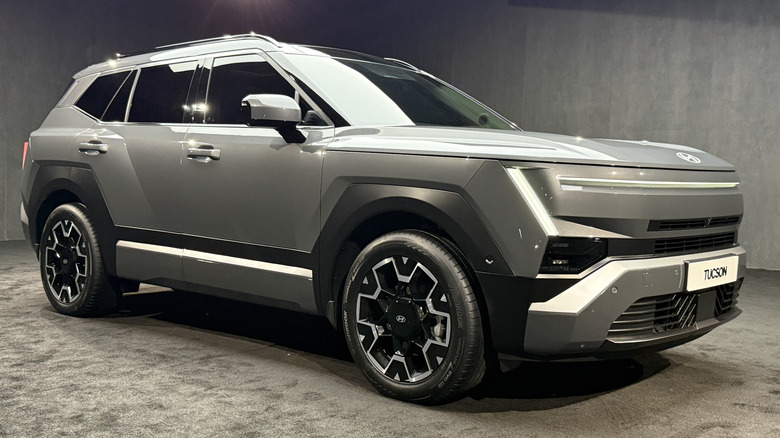
Dimensionally, the fifth-generation crossover has grown. It measures 2.4 inches longer, 1.6 inches wider, and 0.8 inches taller than its predecessor. Furthermore, its wheelbase has been extended by 1.2 inches, with the vast majority of that added length dedicated to improving rear-seat legroom. Up front, an upright nose frames available Micro Pixel headlights composed of 25,600 individual LEDs, while the rear fascia features unique taillights that are see-through from the sides.
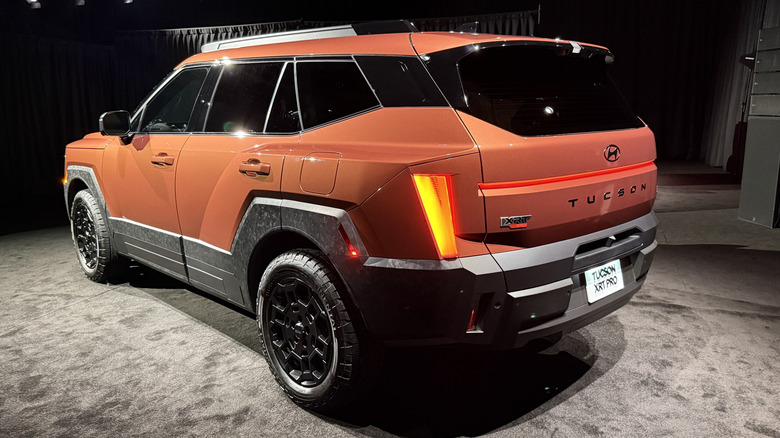
Hyundai is also expanding its exterior color palette beyond the traditional monochrome spectrum of black, white, gray, and silver. Four fresh hues join the lineup: Kodiak Blue Pearl, Ranger Green in Pearl or Matte finishes, Driftwood Gray in Metallic or Matte, and Red Rock Orange Pearl or Matte, a standout color that can shift between pink and purple depending on the ambient lighting. This vibrant shade serves as the hero color for the rugged, U.S.-exclusive XRT Pro trim, which features distinct mechanical modifications designed to enhance the vehicle’s capability.
Comfy, Cozy Cabin
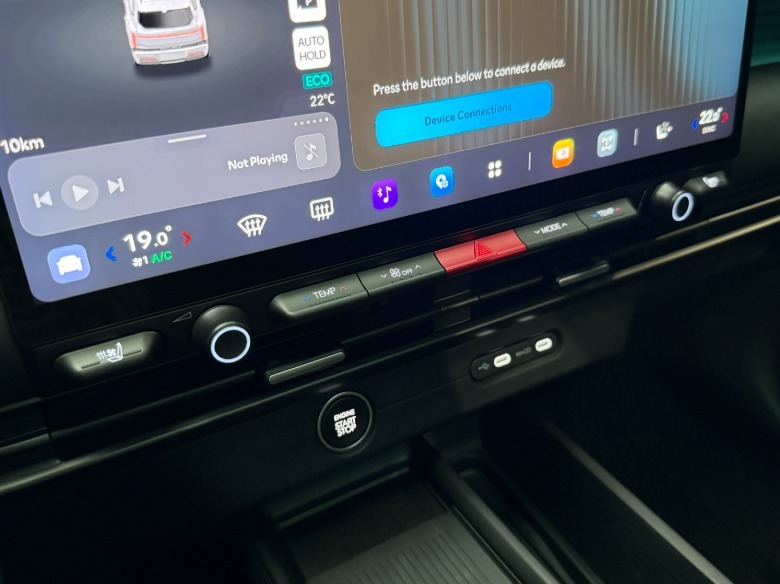
Hyundai’s redesign efforts extended far beyond the sheet metal, resulting in a plush, highly inviting interior space for the 2027 model year. Described by the automaker as a "software-defined vehicle," the cabin successfully balances digital integration with practical ergonomics, retaining physical switches and controls for frequently used functions like climate management and audio adjustments on the steering wheel and center console.
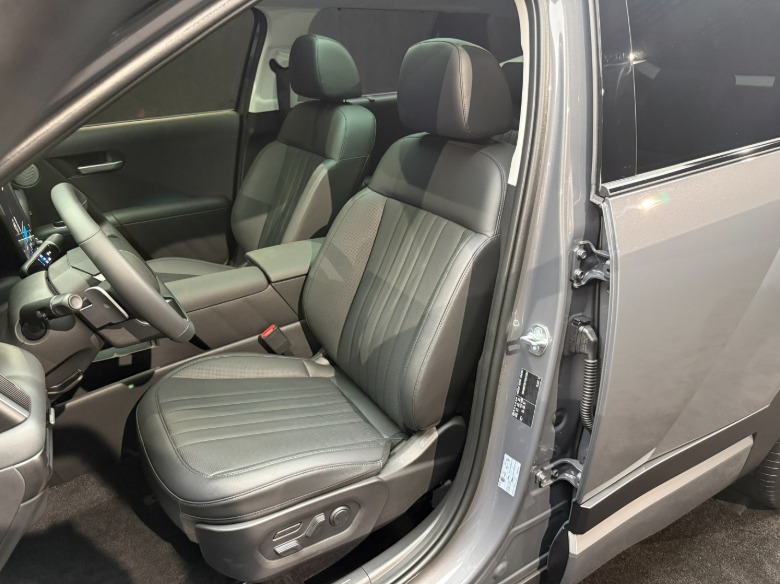
Drawing inspiration from contemporary home furnishings, the interior emphasizes soft cushioning and ergonomically shaped surfaces designed to promote passenger relaxation. This sense of calm is further enhanced by available massaging ErgoMotion front seats.
The cabin’s enhanced spatial dimensions create a genuine feeling of openness. Rear-seat passengers benefit from generous gains in head, room, legroom, and shoulder room, allowing taller adults to sit comfortably behind one another. Entering and exiting the rear is also significantly easier thanks to rear doors that now open up to an 83-degree angle.
The dashboard and center console feature minimalist, slim designs that reduce visual clutter while implementing what Hyundai calls a "two-layered instrument panel design." This architecture separates form from function, placing the horizontal upper layer for visual comfort while the lower area houses practical storage spaces and optional dual 15-watt wireless smartphone charging pads.
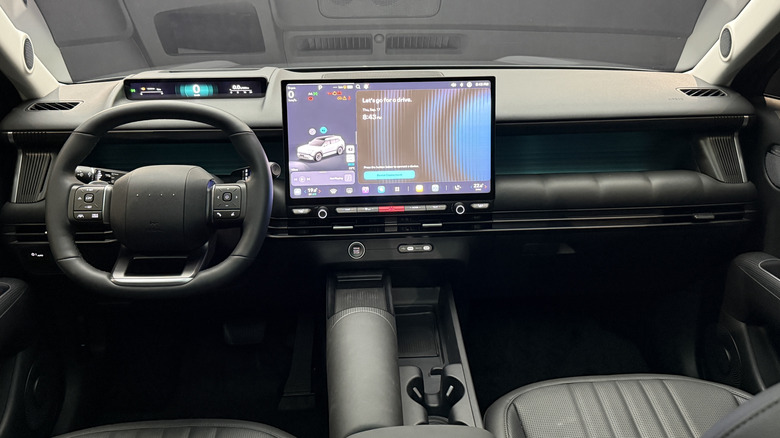
At the center of the dash sits a traditional 12.9-inch touchscreen running Hyundai Motor Group’s Pleos operating system. The left section of the display functions as a driver information cluster showcasing speed and essential vehicle data, while the remainder serves as a customizable infotainment hub complete with configurable widgets and support for third-party application downloads. Behind the squircle-shaped steering wheel, a slim 9.9-inch display provides critical driving metrics in the driver’s direct field of vision, functioning similarly to a built-in head-up display.
Drivetime
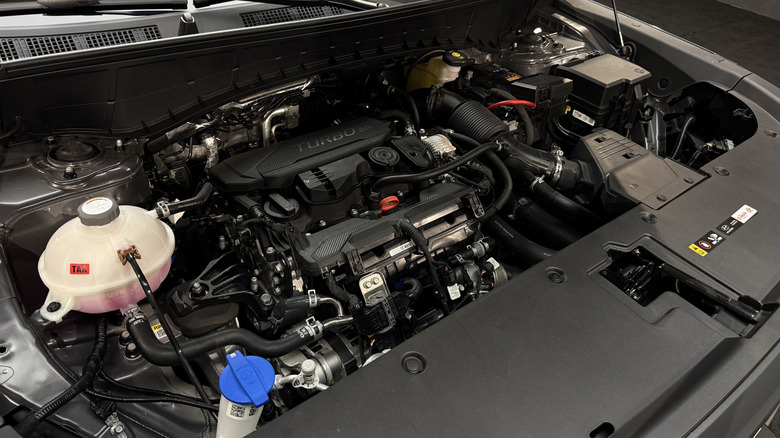
When the 2027 Tucson officially arrives at dealerships in the United States, buyers will have two distinct powertrain options. The lineup features a turbocharged 1.6-liter inline-four engine and an electrified hybrid variant utilizing the same base motor. Hyundai has elected not to bring a fifth-generation plug-in hybrid to the U.S. market due to slower sales of the previous iteration, though an extended-range electric version could arrive at a later date. Meanwhile, the naturally aspirated 2.5-liter inline-four has been dropped entirely from the lineup.
The new base turbocharged four-cylinder engine produces 187 horsepower and 195 pound-feet of torque. Power is routed through an eight-speed automatic transmission to either the front wheels or an optional all-wheel-drive system, enabling the crossover to accelerate from 0 to 60 mph in 9.5 seconds. In terms of efficiency, front-wheel-drive models achieve an EPA-estimated 28 mpg, while all-wheel-drive variants return 26 mpg. This configuration will be available across the SE, SEL, and Limited trim levels.
For buyers seeking maximum efficiency, the returning hybrid powertrain receives notable performance upgrades. Output rises to 233 horsepower and 280 pound-feet of torque, managed by a six-speed automatic transmission available in both front-wheel and all-wheel-drive configurations. When properly equipped with front-wheel drive and 17-inch wheels, the hybrid delivers an impressive EPA-estimated 42 mpg combined, dropping to 38 mpg in its least efficient configuration. The hybrid variant achieves a 0-60 mph sprint in 8.5 seconds.
The hybrid model also introduces practical features like Stay Mode, which powers interior climate and comfort accessories using the high-voltage battery rather than idling the internal combustion engine. Additionally, an E-Traction system actively distributes torque between individual wheels when slippage is detected. The hybrid powertrain is offered on the SE, SEL, and Limited trims, and it serves as the exclusive powerplant for the rugged XRT Pro model to offset its increased weight and aerodynamic drag.
Advanced driver assistance systems remain a cornerstone of the Tucson experience. New safety and convenience features include navigation-linked adaptive cruise control that preemptively reduces vehicle speed for upcoming roadway curves and speed bumps. Additional technologies include Smart Terrain Assist, Target Speed Control, Memory Reverse Assist, Ground View Monitor, and Trailer Reverse Assist.
Never Rest
Hyundai’s compact crossover has been a commercial juggernaut since its debut in 2004, with global sales surpassing 10 million units. The nameplate recently achieved its best sales year ever in the United States during 2025, moving more than 235,000 units. Despite this massive success, the automaker shows no signs of slowing down or resting on its laurels.
Company executives note that the fifth-generation Tucson was styled to be "bold on purpose," marking a dramatic departure from conservative industry design trends. As Hyundai continues to push boundaries with its vehicle lineup, the redesigned Tucson positions the brand to challenge segment leaders more aggressively than ever before.