
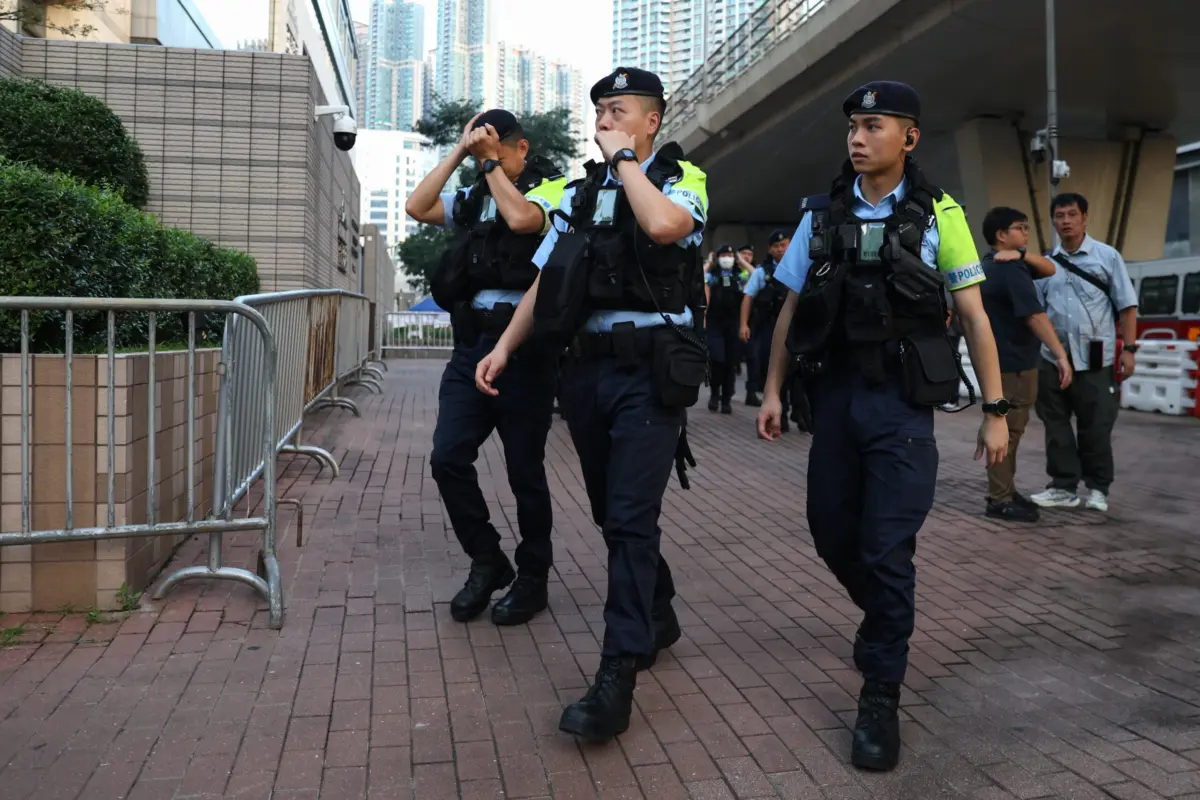
Hong Kong authorities have arrested the founder of an independent local media outlet on suspicion of incitement through the spreading of disinformation, according to local media reports. The latest detention has reignited international and domestic anxieties regarding the erosion of press freedom and freedom of expression in the semi-autonomous territory.
Tang Ho-wing, the founder of the online news outlet Boom News, was taken into custody by law enforcement officers on Wednesday morning, as reported by Hong Kong publication Sing Tao. The local news outlet also displayed a photograph capturing what it reported to be the precise moment of Tang’s arrest.
The detention stems from coverage produced by Boom News regarding an incident that occurred on August 31. The gathering marked the seventh anniversary of the infamous Prince Edward station clash, a violent confrontation between antigovernment protesters and police that took place during the massive civil unrest of 2019. During that historical episode and its subsequent commemorations, various protesters and online commentators claimed that some individuals had lost their lives inside the subway station during the police clearing operations.
According to digital records, Boom News—which boasts a robust online following of more than 66,000 users on Instagram—posted a video featuring an interview with a woman recounting her personal perspective and account of the 2019 events.
Government and law enforcement authorities have consistently denied these allegations. On Wednesday, following the arrests, the Hong Kong police reiterated their stance, stating that ongoing rumors and claims of deaths occurring inside the Prince Edward station during the 2019 clash are entirely baseless and unfounded.
The arrest of the independent media founder highlights the increasingly perilous environment that local journalists and digital content creators navigate in Hong Kong. Reporters and media organizations face mounting restrictions under sweeping political changes triggered by Beijing’s imposition of a sweeping national security law in 2020, which has since been reinforced by a stringent local security statute enacted in 2024.
The chilling effect that these legislative measures have cast over the local press became starkly visible earlier this year. In February, media mogul Jimmy Lai, the founder of the now-defunct pro-democracy newspaper Apple Daily, was sentenced to 20 years in prison following a high-profile national security trial. The crackdown extended deeply into Lai’s organization, with several of his former staff members receiving harsh prison sentences ranging from nearly seven to 10 years, sending a powerful signal to the broader media landscape.
Police officials disclosed on Wednesday that they had arrested a total of two individuals on suspicion of committing seditious acts under the provisions of the 2024 national security law. While law enforcement authorities initially did not publicly name the suspects in their official briefings, the South China Morning Post identified the second arrested individual as activist Lee Ying-chi.
According to details provided by authorities, the joint arrests stemmed directly from the August 31 gathering held outside the Prince Edward subway station. During this public gathering, participants reportedly carried flowers, chanted slogans that have since been banned by the government, and allegedly disseminated disinformation intended to incite hatred against the central government, local authorities, and the police force.
The investigation into the August 31 gathering appears to be wide-ranging. Authorities confirmed that six other individuals who had been previously arrested in connection with the same alleged offense were subsequently released on bail while police continue their inquiries.
The latest developments have drawn swift reactions from press freedom advocates and civil society groups, who warn that the continued targeting of independent journalists, small-scale digital outlets, and online video publishers further narrows the scope for alternative narratives and public discourse in Hong Kong. As law enforcement agencies continue to enforce the parameters of the 2020 national security law and the 2024 local statute, the future of independent reporting and grassroots digital media in the territory remains deeply uncertain.