
Amid the ongoing devastation and massive loss of life in the Gaza Strip, a quiet, desperate battle is being fought to preserve the Palestinian enclave’s ancient soul. Beyond the human toll—with at least 74,022 Palestinians killed and 84 percent of all structures damaged or destroyed since October 2023—there has been a profound and systematic erasure of cultural heritage. According to UNESCO, at least 164 cultural sites across Gaza have suffered varying degrees of damage during the relentless military operations that have spanned nearly three years.
Among the ancient landmarks devastated by waves of heavy bombing are some of the region’s most irreplaceable historical touchstones: the Great Omari Mosque, Hamam al-Sammara, Qasr al-Basha in Gaza’s ancient Old City, and the al-Qarara Cultural Museum located near Khan Younis. Beneath the sprawling fields of debris lie precious artifacts and antiquities that once told the story of Gaza’s rich, multifaceted history. Situated at the historic crossroads of multiple empires, civilizations, and peoples over millennia, the enclave holds layers of a 5,000-year-old heritage that is now at risk of vanishing entirely.
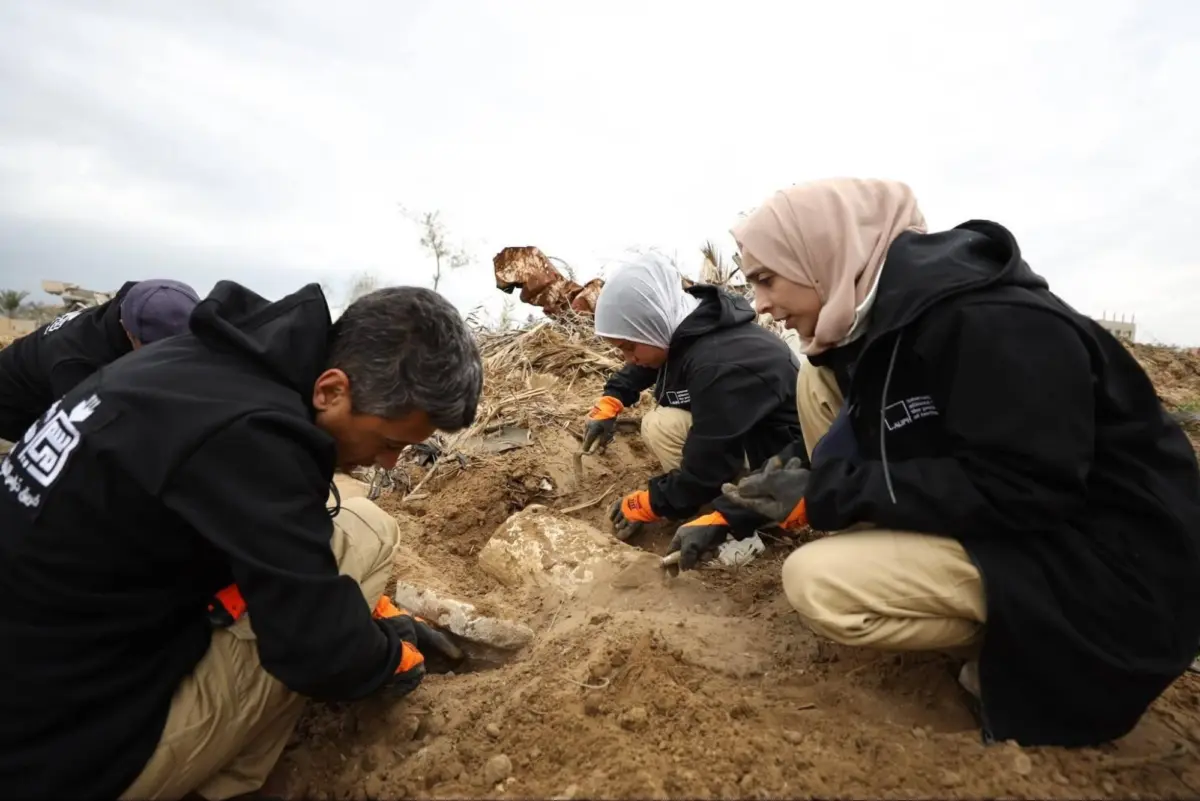
Yet, amid the disorder and ongoing crisis, a dedicated local initiative is fighting back. The Mayasem Association for Culture and Arts has deployed its "Guardians of Heritage" team, racing against the clock to recover historical items that are in immediate danger of deteriorating, being destroyed, or falling victim to looting.
Shaimaa Mohammad al-Natour, the assistant coordinator of the programme, shared the scope of their mission with Al Jazeera, noting that her team has successfully rescued more than 1,700 historical pieces from four different museum collections since their painstaking work began.
The High Cost and Danger of Recovery
Despite these remarkable early successes, the "Guardians of Heritage" face immense, near-insurmountable challenges on a daily basis. Chief among them are continued displacement, a severe shortage of specialized restoration equipment, and restrictive measures imposed by the Israeli military.
Perhaps the most perilous aspect of their mission involves recovering items located near the heavily restricted "Yellow Line"—a volatile dividing zone where the Israeli military maintains complete control. The dangers of operating near this frontier are stark; as of April, 196 Palestinians have been killed in this specific area alone since a ceasefire came into effect in October 2025.
"The nature of the areas used to be manageable, but their current locations are completely inaccessible," al-Natour explained to Al Jazeera. "The main difficulty in continuing our work with these collections is their location behind the ‘Yellow Line,’ which poses a grave risk to the team. One of our core principles is: human life comes first."

Operating from a makeshift base inside a tent in the al-Mawasi area of Khan Younis, what began as a self-initiated effort has evolved into a vital field operation carrying the heavy burden of safeguarding Gaza’s historical memory. The team conducts extensive field surveys across the southern and central regions of the enclave to document the widespread damage inflicted on both private and public museum collections.
This initiative stands as the first organized local response to address the war’s devastating impact on the region’s historical landmarks. Working hand-in-hand with local residents and displaced families who stumble upon artifacts amidst the dust and rubble, the team has built an informal yet effective early-warning and recovery network.
"We handle notifications by first filling out a comprehensive survey containing the informant’s details, the artefact’s location, and its condition," al-Natour said. "The team then heads to the site to rescue the items, after which the processing stages begin: cleaning, archiving and photography."
Meticulous Protocols in a War Zone
To ensure that every salvaged piece retains its historical and spatial context, the team adheres to a strict protocol. From the moment an item is retrieved, it is assigned an independent digital identity.
"After rescuing the pieces from their locations, the documentation and archiving process begins. We try as much as possible not to bring any artefact into storage without a record and basic information to help us identify its origin," al-Natour noted. "We start by logging the location and photographing it from multiple angles and link the images to a unique number or code for the artefact to prevent any mix-up."
The physical fragility of the recovered items adds another layer of complexity. Archaeological treasures—particularly ancient pottery and delicate glassware—have sustained immense physical stress from nearby explosions and the crushing weight of collapsing building debris, resulting in widespread fractures.
Recognizing these vulnerabilities, the team enforces a policy of minimal intervention, prioritizing basic stabilization and conservation first aid. They are acutely aware that attempts at permanent restoration under current conditions could cause irreversible damage or permanently alter original features.

The technical tools at their disposal are rudimentary. Armed primarily with mobile phones for high-resolution photography and parallel paper records to guard against potential data loss from digital spreadsheets, the team painstakingly logs every piece. Identification tags, basic packaging materials, and simple wooden crates are used for storage, while soft brushes gently sweep away surface dust from fragile pottery without compromising original markings.
While these improvised methods serve as a vital short-term solution, true professional conservation remains out of reach without specialized equipment—resources that are exceedingly difficult to acquire inside an active war zone.
"In times of war, sometimes the greatest achievement is simply halting the deterioration of an artefact and keeping it intact as much as possible until suitable conditions for specialised treatment become available," al-Natour reflected.
Environmental Threats and the Need for Long-Term Solutions
Operating out of a tent in a coastal environment brings its own set of trials. The recovered materials are routinely exposed to volatile weather, insects, rodents, and destructive environmental factors such as humidity, mold, and vibrations that threaten both the antiquities and their wooden storage crates.
"The wooden crates themselves require continuous monitoring because humidity and temperature fluctuations can rot the wood or foster mold growth, which in turn damages the contents inside," al-Natour explained. "Furthermore, constant movement and transporting crates from one spot to another expose the items to shocks and vibration, particularly fragile or broken pieces… Working in an area housing vast numbers of displaced people makes daily movement and transport much harder, while storage space remains extremely limited."
The ideal remedy would be the establishment of a stable, climate-controlled storage environment where temperature, humidity, ventilation, and lighting can be rigorously regulated. The team also desperately requires specialized packaging materials tailored to individual artifacts, alongside monitoring devices to track environmental parameters inside the storage area.
"Our greatest need is to transition from emergency rescue to long-term professional conservation," al-Natour said. "Furthermore, we need specialised training in preventive conservation, emergency collection management, handling damaged artefacts, damage assessment and database management."

Looking ahead, the team is already planning the next phase of their operations: moving items from the temporary tents to more secure facilities. It will be a meticulous process requiring the cross-referencing of databases, condition checks before and after transit, and careful reorganization to ensure continued accessibility and tracking.
Building Community Guardians
Beyond the physical recovery of stone vessels and ancient shards, the initiative has sparked a broader cultural awakening, fostering a deep sense of community ownership over local history, oral traditions, and heritage.
"Through our activities with children, youth, women and displaced residents, we organise simplified educational and field activities, workshops, and programmes linked to antiquities, traditional crafts and oral history. We encourage participants to ask questions and document stories tied to places and artefacts," al-Natour said.
Even amid the compounding hardships, the act of rescue has proven to be a powerful educational tool for the population.
"When people see a team working under these conditions to extract a historical piece from beneath the rubble, they begin to view heritage as something worth protecting rather than something dispensable in times of crisis," al-Natour concluded. "We firmly believe that community awareness is one of the most vital lines of defence."