
Over the past two years, educators, parents, students, and school administrators have found themselves grappling with an unprecedented technological shift. As artificial intelligence systems capable of generating essays, solving complex mathematical equations, and summarizing entire book chapters in a matter of seconds become widely accessible, schools everywhere are forced to reevaluate their foundational practices. Endless hours of conversation with education stakeholders consistently circle back to a core set of urgent questions: How should schools respond to this new reality? When is it appropriate for students to use AI tools? And, perhaps most importantly, how do we preserve authentic learning and critical thinking in a world where answers are instantaneous?
While these are undeniably vital logistical and pedagogical concerns, a deeper pattern emerges beneath the surface of these discussions. Conversations among school communities rarely remain focused purely on the technology itself. Before long, dialogues drift into more profound territory, touching on the very essence of human cognition: thinking, curiosity, judgment, and the ultimate purpose of education. When a machine can produce sophisticated text and analysis almost instantly, stakeholders are compelled to ask what learning is actually for.
Oddly enough, the most illuminating perspectives on this digital dilemma do not come from contemporary artificial intelligence research laboratories, Silicon Valley conferences, or policy whitepapers. Instead, they emerge from entirely disparate experiences: a dusty road in rural Rwanda and the ecological restoration of Yellowstone National Park.
For years, these two distinct memories occupied entirely separate compartments of the author’s life. One was a transformative personal journey abroad, while the other was a fascinating ecological case study in wildlife management. It took considerable time to recognize that these seemingly unrelated experiences held the key to answering the pressing questions now facing modern classrooms regarding artificial intelligence.
A Dusty Road in Rwanda
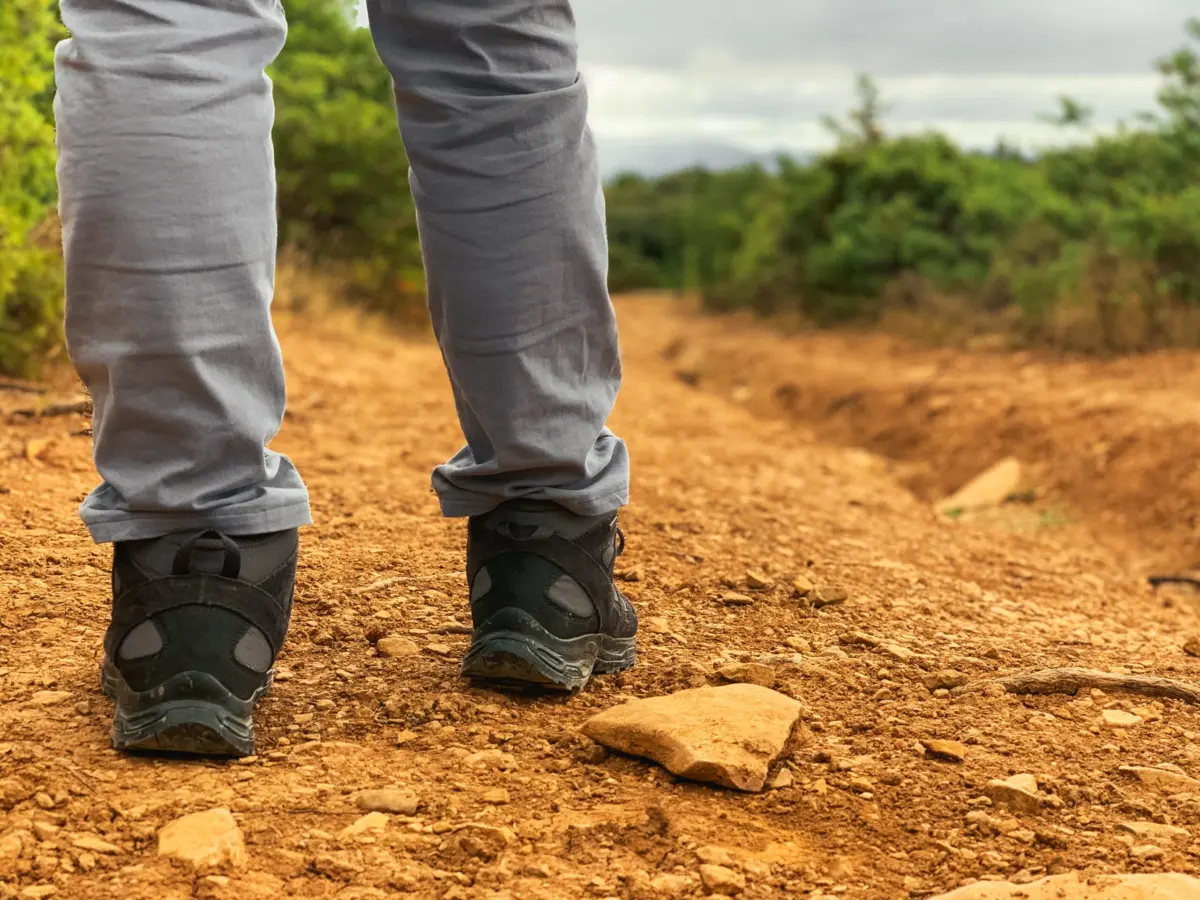
The realization began on an ordinary day along a dusty road in Rwanda. The journey was part of an international initiative aiding local schools in transitioning their primary classroom instruction from French to English. On that specific afternoon, the task involved carrying a heavy yellow jerrycan filled with water from a local watering hole back to the village, walking alongside community members who made that grueling miles-long trek daily.
Before long, physical discomfort set in. Hands ached, shoulders tightened, and the hard plastic handle dug painfully into tired fingers. With every step, the immediate thought centered on how much further the walk had to go. Yet, the local people walking side-by-side with the visitor never seemed to notice the immense physical weight. For the outsider, carrying water was an extraordinary, grueling physical challenge; for the villagers, it was simply another routine walk home.
The stark contrast of that experience lingered long after returning home. The physical journey provided few direct answers, but it left behind a lingering question that has persisted ever since: How can educators effectively help students understand realities and human struggles they have never personally lived or experienced?
That fundamental question resurfaced years later inside a middle school classroom. A teaching team had designed an ambitious interdisciplinary unit centered around Linda Sue Park’s acclaimed young adult novel, A Long Walk to Water. The educators hoped that combining literature, direct conversations with a personal friend who had emigrated from Sudan, and local field experiences would move students beyond merely learning academic facts about global water insecurity. The goal was to inspire genuine empathy and care for the real people enduring those daily hardships.
By traditional educational metrics, the lesson appeared to be a success. Students completed the assignments, engaged with the material, and participated in the discussions. However, when the teaching team sat down afterward to debrief and evaluate the unit, the consensus was strikingly different.
"I don’t think it worked," one teacher admitted candidly.
Almost immediately, heads began nodding in agreement around the conference table. Other teachers voiced the exact same sentiment, with no one rushing to defend the lesson or blame the students for a lack of effort. Instead, the faculty realized a profound truth: they had been measuring student engagement and task completion when what they genuinely cared about was deep, transformative understanding.
Looking back, that single faculty meeting transformed their approach to teaching far more than the lesson plan itself. Years of collaborative work had fostered enough professional trust for one honest observation to give everyone else permission to drop their defenses and speak truthfully. Instead of scrambling to patch up the activity or make the lesson more entertaining, the team pivoted toward a much harder question. They stopped asking how to make the activity better and instead began asking how genuine understanding actually grows.
The teaching team has spent years refining that project ever since. That crucial conversation forced the educators to confront a much larger systemic reality: if meaningful change in education does not happen simply because of a single well-designed lesson, then how does true transformation actually happen?
A Wild System in Yellowstone
To understand the mechanics of meaningful, systemic change, one can look to the ecological restoration of Yellowstone National Park.
When wildlife biologists and conservationists reintroduced gray wolves to Yellowstone National Park in 1995, they anticipated a direct impact on the local elk population. However, they did not anticipate that the rivers themselves would undergo a dramatic physical transformation. As the reintroduced wolves altered where the elk grazed and congregated, heavily browsed willow and aspen trees began to recover and thrive. The return of woody vegetation invited beavers back to the landscape, which in turn expanded wetlands, stabilized riverbanks, and altered the physical flow of the waterways. An entire complex ecosystem reorganized itself in ways few scientists had initially predicted.
Crucially, the wolves did not directly reshape the rivers. Instead, they changed the fundamental relationships and behaviors within the ecological system. And everything else followed naturally as a consequence.
Learning about the Yellowstone reintroduction profoundly shifted the perception of change itself. It demonstrated that the most meaningful transformations rarely begin by trying to isolate and fix one isolated component. Rather, they begin by altering the relationships within an interconnected system. Once that pattern became clear, it was impossible not to see the exact same dynamic at play within schools and educational institutions.
In education, there is a persistent tendency to assume that meaningful change happens simply by improving the element directly in front of us. Educators redesign a single lesson plan, adopt a newly published curriculum textbook, or draft a strict institutional AI policy, expecting significantly better student outcomes merely because one isolated part of the system has been adjusted.
Yet, just as the wolves did not change the rivers directly, educational reform does not happen through isolated tweaks. The wolves changed how elk moved through the landscape, which allowed trees to grow, brought back beavers, reshaped wetlands, and ultimately transformed the rivers. Real transformation emerged because the underlying relationships within the ecosystem shifted.
Modern schools operate under very similar systemic principles. Reflecting on the middle school water unit, the project did not ultimately succeed because the teachers discovered a slightly better classroom activity. It improved because the professional relationships among the faculty changed. Teachers built enough mutual trust to challenge shared assumptions, and students were invited to genuinely wrestle with complex ideas rather than merely check boxes on assignments. Learning shifted from a transactional delivery of educational experiences to the cultivation of true understanding.
The Relational Impact of Artificial Intelligence
Viewing educational environments through this systemic lens fundamentally alters how artificial intelligence must be approached in schools. AI is not merely another digital tool or software application being introduced into the classroom. It is actively restructuring foundational relationships: the relationship between students and independent thinking, the connection between effort and accomplishment, the dynamic between teachers and expertise, and the way human beings bridge the gap between knowing something and retrieving information instantly.
These shifting relational dynamics are likely to shape the future of learning far more profoundly than any specific artificial intelligence model, software update, or institutional school board policy.
This underlying reality explains why modern conversations among educators about artificial intelligence rarely stay focused on the technology itself. Instead, discussions invariably turn toward human values. Parents express deep anxiety over whether students will gradually lose the capacity to struggle with difficult, ambiguous ideas if an automated chatbot can instantly perform the intellectual heavy lifting for them. Classroom teachers wonder how to preserve productive struggle and critical thinking when every answer is just a single text prompt away. School administrators wrestle with an even more fundamental existential question: if artificial intelligence can execute more routine cognitive tasks, what kinds of thinking must remain unmistakably human?
There are no easy or universal answers to these questions. Yet navigating this new landscape requires returning to fundamental human experiences that initially seemed entirely disconnected from artificial intelligence.
The memory of that dusty road in Rwanda continues to resonate. Carrying a heavy jerrycan of water did not grant instant, magical insight into the daily reality of living with severe water insecurity, nor was it ever meant to. What that grueling walk truly changed was the traveler’s relationship to the people carrying that burden alongside them.
The middle school water project taught a similar lesson. The faculty eventually realized their primary goal was never to manufacture a memorable, entertaining classroom activity. Their objective was to establish the proper conditions where students could begin asking deeper, more empathetic questions about human lives vastly different from their own.
Increasingly, artificial intelligence presents schools with a similar choice. Educational institutions can utilize AI technology to systematically remove every obstacle and friction point from learning, making every academic task faster, smoother, and easier. Alternatively, schools can become far more intentional about preserving the essential forms of cognitive struggle that develop human judgment, curiosity, empathy, and discernment.
Ultimately, Rwanda, Yellowstone, and artificial intelligence are not separate, unrelated stories. Rwanda transformed a perspective on human beings whose lives were difficult to fully comprehend. The collaborative faculty meeting transformed professional relationships among educators. Today, artificial intelligence is actively transforming the relationship that students maintain with the very act of thinking.
Rwanda demonstrated that true understanding begins with intellectual humility. The middle school teaching team proved that meaningful institutional change requires the courage to question long-held assumptions. And Yellowstone showed that lasting transformation occurs by altering the relationships within a living system.
Educational technology will inevitably continue to evolve and change at a rapid pace. However, the fundamental responsibility of educators remains entirely unchanged. Schools must continue to design experiences that challenge students to think, question, struggle, and understand in ways that no machine or technology can ever replicate on their behalf. Those were the defining questions of education long before the advent of modern artificial intelligence, and they will likely remain the defining questions long after today’s technology has been replaced by innovations none can yet imagine.