
Meta has officially pulled back the curtain on a suite of innovative AI-powered tools designed to democratize game development, alongside the highly anticipated announcement of its next-generation VR hardware. Unveiled during the company’s annual Meta Connect conference, these advancements signal a significant pivot in how users engage with interactive content across social and virtual reality platforms.
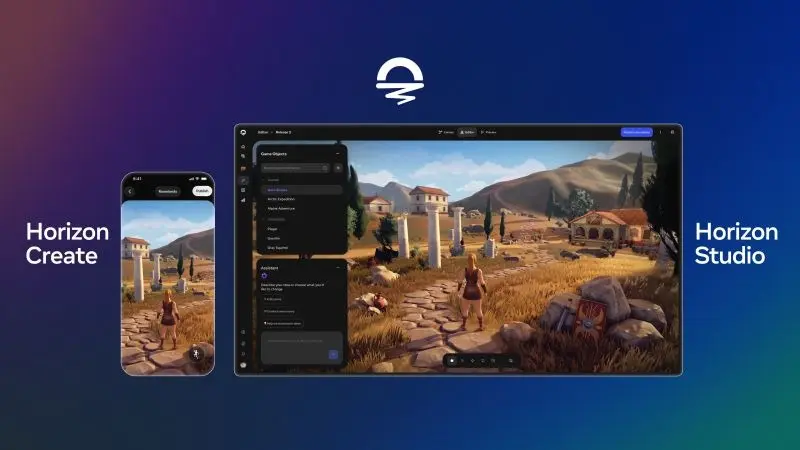
The headline feature of this announcement is the introduction of Horizon Create and Horizon Studio. These two platforms are designed to lower the barrier to entry for game design, allowing users to develop both 2D and 3D experiences simply by using text prompts on mobile devices and web browsers. Built on the sophisticated "agentic creation capabilities" of the Meta Horizon Engine, these tools are intended to strip away the traditional complexities of game development—such as the requirement for specialized coding skills, expensive hardware, and months of dedicated labor—that have historically hindered amateur creators.
Meta’s vision for these tools is rooted in accessibility. Horizon Create, optimized for mobile devices, and Horizon Studio, intended for desktop browsers, operate on a shared "common backend." This architecture ensures that assets, game systems, and iteration histories can move seamlessly between the two platforms. By utilizing a unified engine, Meta aims to create a fluid workflow where a creator can begin a project on their phone while commuting and then refine the more intricate details of their game on a browser later. Once a game is finalized, the platform enables direct, automatic distribution across Meta’s vast ecosystem, specifically targeting integration with Facebook and Instagram.
The mechanics of the system are straightforward in concept: users input text prompts detailing the specific type of game, setting, or gameplay loop they envision. The Meta Horizon Engine then processes these inputs to generate a functional, playable game. According to early reports from industry analysts at MobileGamer.biz, the tools are currently in a testing phase with a select group of creators, supported by the Meta Horizon Creator Fund. While Meta has yet to release a broad roadmap for public access, the company has indicated that it will roll out the tools gradually, with more information regarding monetization models and creator revenue sharing expected in the coming months.
This move places Meta in direct competition with other industry leaders who are similarly betting on the rise of "agentic AI." Earlier this year, Roblox integrated similar generative AI features into its own development suite, allowing users to build game environments and design documents through natural language prompts. By integrating these capabilities into the social fabric of Instagram and Facebook, Meta is positioning itself to turn its billions of active users into a new generation of game developers, potentially creating a massive library of user-generated content that could rival dedicated gaming platforms.
Beyond the software front, Meta used the Connect stage to unveil its latest foray into hardware: a pair of lightweight VR glasses. The device marks a departure from the company’s previous reliance on the bulkier Quest series. These new glasses are described as five times lighter than the Meta Quest 3, a significant engineering feat achieved by removing straps and heavy hardware components. The design focuses on comfort and aesthetics, featuring a 5K infinite display built on advanced micro-OLED panels, promising a visual fidelity that exceeds current consumer-grade headsets.
The integration of these glasses into the existing developer ecosystem is already underway. Meta confirmed that the hardware will feature day-one support for Unity 6.6 through OpenXR. This is a crucial strategic decision, as it ensures that developers currently building for the Quest platform can port their existing projects to the new glasses with minimal friction. The company is actively encouraging developers to utilize established tools such as the XR Interaction (XRI) Toolkit, XR Hands, and the XRI Simulator to design, build, and test games specifically for the new form factor.
Industry reaction has been swift, with a roster of notable studios already confirmed to be working on launch content. Companies including Animal Repair Shop, Schell Games, Amata K.K., Nerd Ninjas, Within, Soul Assembly, Marvelous Inc., and Grounding Inc. are currently in the process of developing titles that leverage the unique capabilities of the new VR glasses. By providing this developer support well ahead of the hardware launch, Meta hopes to ensure a robust library of immersive experiences is available from the moment the device hits the market.
The road to the consumer launch is set for Spring 2027, with the glasses carrying a retail price of $1,299.99. This pricing tier positions the device as a premium piece of technology, distinct from the more mass-market-focused Quest line. By offering a high-end, lightweight alternative to traditional headsets, Meta is attempting to capture a demographic that may have previously been deterred by the physical burden of wearing a heavy VR headset for extended periods.
As the industry watches, the success of these initiatives will likely depend on the stability and quality of the AI-generated games produced through Horizon Create and Horizon Studio, as well as the adoption rate of the new VR hardware. Meta’s strategy is clear: it intends to dominate both the software creation side of the metaverse—by empowering non-technical users to build games—and the hardware side, by refining the physical interface through which users experience these virtual worlds.
For the developer community, the combination of Unity support and the new AI-driven tools suggests that the future of interactive media will be defined by a blend of automated generation and human-led design. Whether this approach will successfully displace traditional development pipelines remains to be seen, but the clear direction of Meta’s investment indicates that the company believes the next generation of games will be built, shared, and played entirely within its own social and virtual ecosystems. As the launch window for the VR glasses approaches and the Horizon tools move toward wider availability, the tech giant is setting the stage for a major shift in the digital landscape.