
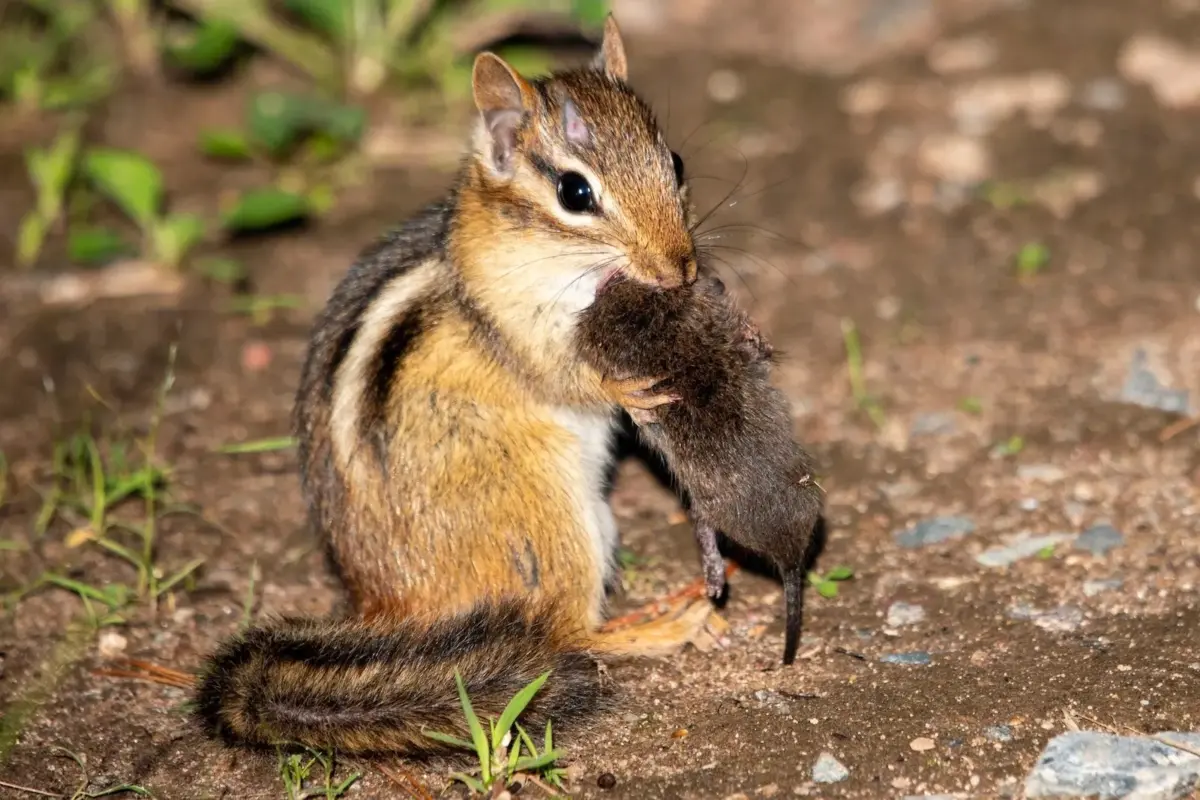
The linear food chain taught in grade-school classrooms across the world has long provided a tidy, if deceptively simple, model of nature. In this traditional textbook narrative, a rat eats garden crops, an ermine snags the rat, and an eagle swoops down to pick off the ermine. Yet, this straight-line story misses an extraordinary amount of ecological nuance and interconnected complexity. In the wild, parasites like ticks and intestinal worms feed on both the eagle and the ermine. When those apex predators eventually die, ants and various other scavengers devour their carcasses, recycling nutrients back into the earth. Even the humble rat complicates the model; these rodents are well documented to engage in cannibalism, eating their own young and functioning, in a sense, as predators of themselves.
Capturing the extraordinary complexity of these real-world species interactions has historically been a time-honored, painstaking, and deeply time-consuming process. Traditionally, field ecologists have had to spend countless hours hiding in brush, spying on bird nests to meticulously record what parent birds feed their young. In less glamorous moments, researchers have been forced to sift through animal scat by hand, hunting for the tiny bones and indigestible fragments of prey animals to reconstruct dietary habits.
Today, however, researchers have gained access to a vastly more powerful and far less odorous tool in the form of a newly detailed citizen science initiative known as "Who Eats Whom." The platform harnesses the immense reach of iNaturalist, a nonprofit social network where everyday users upload and geotag photographs of flora and fauna from around the globe. By searching the database for a specific species, such as the "brown rat," users can pull up remarkable field observations, including an image of an American ermine carting a rat away near Monty Drive in Ottawa, Canada. For those seeking even more dramatic glimpses into predatory behavior, searching for the "red-tailed hawk" reveals raptors subduing snakes and squirrels across the United States.
While Who Eats Whom offers an endlessly engrossing window into wildlife, its developers emphasize that it could profoundly inform vital conservation efforts on a rapidly warming planet. To date, the platform has successfully incorporated approximately 17,000 ecological interactions involving some 5,700 species spread across more than 100 countries. Bradley Allf, an ecologist who developed the platform while at North Carolina State University and who is now based at Colorado State University, points out that this expansive reach highlights the unique advantages of crowdsourcing. Generating this sheer volume of interconnected data would be nearly impossible for individual scientists attempting to single-handedly track animals through the wilderness, waiting endlessly for a snake to hunt or for droppings to analyze.
Although the database primarily offers discrete snapshots frozen in time, the overarching scientific vision is to amass this user-generated data over the coming years, ultimately revealing how entire ecosystems are transforming in tandem with a changing global climate. Aditi Mallavarapu, a computer scientist at North Carolina State University and co-author of a new research paper describing the platform in the journal PLOS Biology, notes that looking backward even a short span reveals measurable shifts in dietary patterns. Researchers can now examine not only what is actively being observed in the wild, but just as importantly, what is not being observed, providing early clues about environmental stress and population declines.
Who Eats Whom functions as far more than a digital repository of captivating wildlife photography. Users navigating to the interactive food web feature at the top right of the site can explore a sprawling, intricate network of ecological relationships. A search for the red-tailed hawk uncovers a plethora of small mammals documented by amateur photographers as prey, with visual arrows on the interface indicating the direction of energy flow into a given species. Looking even closer at these webs reveals cascading connections—such as the American robin, one of the hawk’s prey items, feeding on common buckthorn and yaupon holly.
The platform also illuminates the vital, often overlooked roles of pollinators and lower trophic levels. Searching for the Western honey bee within the interactive food web reveals how the insect frequently ends up as a meal for the goldenrod crab spider, an ethereal, ghostly white arachnid. At the same time, the search maps out the vast array of plants that the honey bee visits for sustenance—including honeysuckles, thistles, and buttercups—while facilitating plant reproduction by distributing pollen. Allf, who serves as the lead author of the new research paper, emphasizes that energy moves through real food webs in deeply complicated ways, and the platform seeks to document that ecological messiness as thoroughly as possible.
The database is frequently punctuated by astonishing and rare wildlife encounters. Contributors have captured New World vultures feeding on diverse carcasses ranging from wild boars and raccoons to groundhogs. In one striking observation along a beach in California’s San Luis Obispo County, a vulture was documented dining on a baby white shark that had likely been stillborn.
With millions of smartphone-wielding individuals constantly traversing beaches, forests, deserts, and urban parks, ecologists have inadvertently gained an army of invaluable field allies. Peter Roopnarine, curator of invertebrate zoology and geology at the California Academy of Sciences, who was not involved in the development of the project, notes that data acquisition remains one of the greatest challenges in ecological research due to the sheer abundance of species and fleeting interactions. Many critical moments in nature are ephemeral, occurring perhaps only once in the lifetime of a given animal, and are geographically dispersed across vast territories.
By gaining a clearer picture of who consumes whom, scientists and conservationists can formulate more effective strategies to protect vulnerable populations. As the planet’s temperatures rise, species are increasingly migrating toward the relative coolness of the Earth’s poles. This ongoing geographic shift is aggressively reshuffling ecosystems and fundamentally altering how species interact with one another. Utilizing platforms like Who Eats Whom, everyday citizens equipped with smartphone cameras may well serve as the front line, documenting the arrival of novel species in their local environments long before traditional surveys catch up. Rebecca Johnson, director of the Center for Biodiversity and Community Science at the California Academy of Sciences, who also did not participate in the study, observes that the project provides participants with an engaging new lens through which to view and contextualize their everyday encounters with nature.
Concurrently, invasive species—most notoriously exemplified by the predatory lionfish disrupting marine habitats—are destabilizing ecological balances worldwide. Left unchecked, these adaptable invaders can severely decimate native species already weakened by rising temperatures and worsening droughts. Understanding the exact predatory impact of invaders is crucial, Roopnarine notes, prompting researchers to ask which native species are appearing on those dangerous new menus and which populations require immediate intervention.
To properly safeguard biodiversity in an increasingly unpredictable world, conservationists can no longer simply set aside isolated tracts of land or sea and declare victory. Protecting wildlife requires ensuring that carnivores and omnivores retain access to the prey they naturally hunt, and that herbivores can find the plants they graze upon. As Allf concludes, species need more than just physical space and a basic habitat; they require the intricate network of ecological relationships that ultimately allows them to survive.