
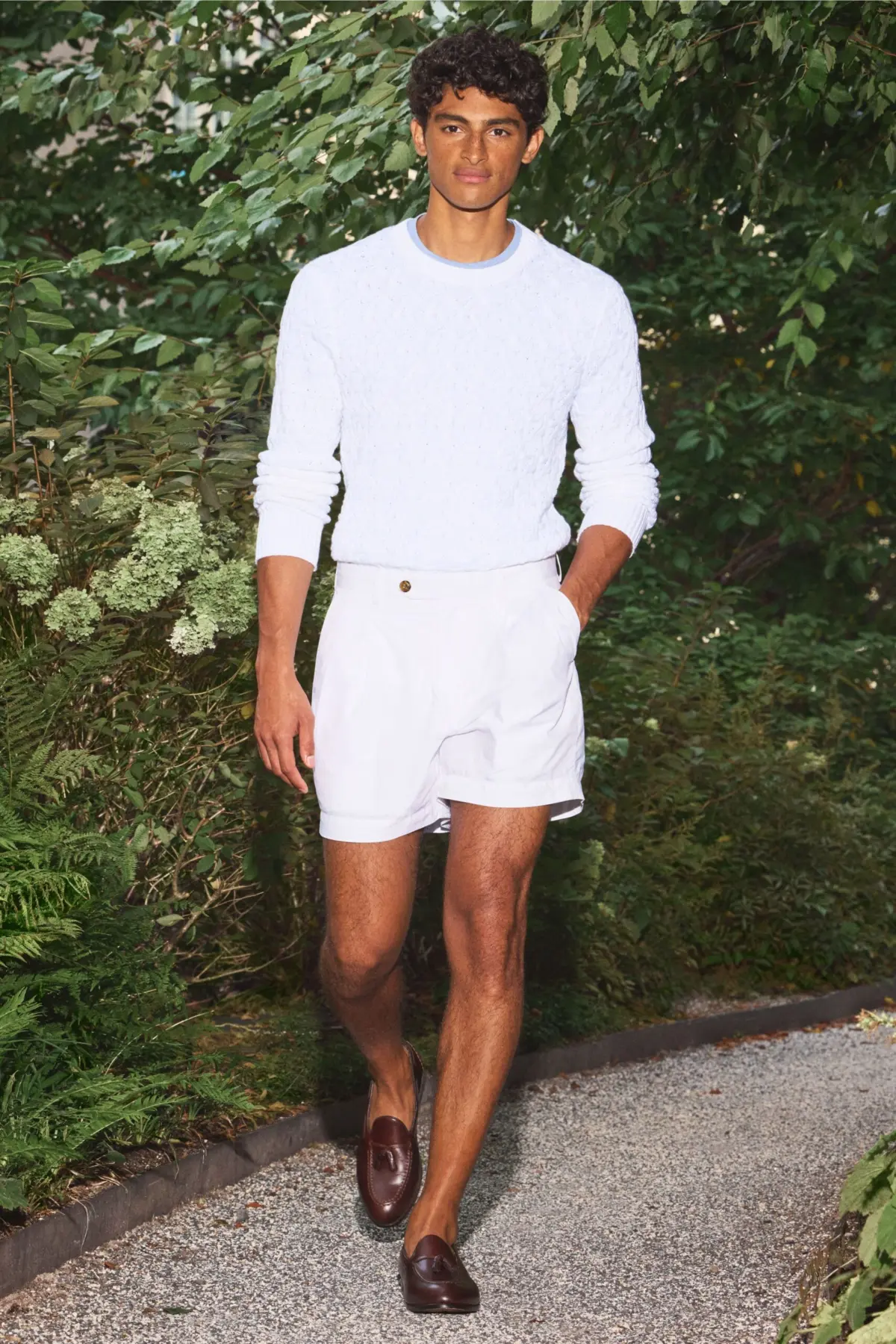
In the evolving landscape of American fashion, few names carry as much weight or historical gravity as Brooks Brothers. As the nation’s oldest clothing retailer, founded in 1818, the brand has spent over two centuries defining the aesthetic of the American establishment. Today, however, Brooks Brothers finds itself navigating a unique cultural moment. Benefiting from a resurgence of interest in collegiate and "prep" style among Gen Z consumers, and bolstered by a string of high-profile collaborations with avant-garde labels like Junya Watanabe, Sacai, and Brain Dead, the brand is currently riding a wave of commercial momentum. According to the company, it has enjoyed five consecutive years of growth, a testament to its ability to balance its storied past with the demands of a modern marketplace.
This season, that balancing act was on full display as the label presented its latest Spring collection. In a move that underscored its deep ties to New York City’s architectural and cultural history, the brand chose the iconic Rockefeller Center as its venue. It was a fitting backdrop for a creative director like Michael Bastian, who has been steering the creative ship at Brooks Brothers since 2020. Under Bastian’s leadership, the brand has sought to honor its heritage while cautiously experimenting with its identity, attempting to speak to a new generation without alienating the loyalists who have turned to the label for suits and oxfords for generations.
The collection presented at Rockefeller Center served as a masterclass in the foundational tenets of preppy style. The show opened with a clear, uncompromising statement of intent: a pristine, all-white ensemble featuring a cable-knit crewneck paired with pleated shorts. It was a crisp, clean look that signaled a return to the basics—the very items that built the Brooks Brothers legend. From there, the runway was an exploration of the familiar. Cricket sweaters, classic madras patterns, rugby polos, and candy-striped oxford shirts moved across the stage with rhythmic consistency. The collection also leaned heavily into the color palette of the traditional East Coast summer, highlighted by the iconic "Nantucket red" shorts cut to a trendy mid-thigh length.
As the presentation unfolded, however, the brand began to play with the boundaries of its own history. While the opening looks were rooted in the classicism of the boardroom and the country club, the later half of the collection ventured into slightly more eccentric territory. The designers introduced more vivid color stories and styling choices that felt decidedly more slapdash—a deliberate departure from the rigid, buttoned-up perfection usually associated with the label. There were oversized logos that spoke to current streetwear trends, alongside whimsical, almost "daffy" vacation prints. One particular highlight was a skirt featuring a coastal scene of sailboats in a bay, paired with palm frond motifs. It was an exercise in breeziness, showing that even a brand as venerable as Brooks Brothers can experiment with a more relaxed, playful approach to the wardrobe.
Yet, even as the collection became more adventurous in its visual language, it remained deeply reverential toward its roots. There was no attempt to deconstruct the brand into something unrecognizable; instead, the show felt like a curated anthology of American leisure wear. The evolution of the collection—from the austere, monochromatic opening to the more vibrant, eclectic finale—mirrored the current state of the brand itself: trying to maintain its status as a bastion of tradition while proving it can still surprise an audience.
For Michael Bastian, the task of leading Brooks Brothers is one of the most challenging roles in American menswear. A designer who previously built a reputation with his own namesake label—which frequently toyed with preppy tropes in a winkingly self-aware manner—and who spent time working with Gant, another pillar of the prep aesthetic, Bastian understands the history of these garments better than most. His challenge, however, is to translate that knowledge into a product that feels urgent today.
There is a growing consensus among fashion observers that Brooks Brothers has the potential to push further. While the current collection successfully reclaimed the brand’s history, there is a lingering sentiment that Bastian could afford to "loosen up" his approach even more. In the current fashion ecosystem, labels like J. Press, Rowing Blazers, and the cult-favorite Aimé Leon Dore have proven that there is a massive appetite for a more street-savvy, ironic, and irreverent take on classic menswear. These brands have successfully tapped into the "buzzy" side of the market by treating the rules of the old guard as guidelines rather than gospel, injecting a sense of personality and subversion into their designs.
Brooks Brothers, with its vast archives and deep cultural resonance, is arguably in a better position than any of its competitors to participate in that conversation. The brand has already shown that it is not afraid of outside perspectives, as evidenced by its successful partnerships with designers like Chitose Abe of Sacai and the experimentalists at Junya Watanabe. These collaborations have allowed the brand to be seen through a lens of high-fashion deconstruction, proving that the classic Brooks Brothers DNA is robust enough to survive—and even thrive—under intense stylistic scrutiny.
The question remains: how much further can the brand go on its own? In an age where the traditional codes of the "moneyed class"—the very demographic that once defined the Brooks Brothers customer—have gone sideways, there is a unique opportunity for the brand to insert itself into the discourse. The modern consumer is less interested in following the rules of the past and more interested in subverting them. By adding a touch of authoritative wit and a more pronounced sense of irony to its collections, Brooks Brothers could bridge the gap between its historical identity and its future ambitions.
It is clear that the brand is not interested in abandoning its roots. The sheer volume of classic items in the latest collection demonstrates that the company understands its business model relies on the consistent quality of its staples. However, the success of the brand’s recent growth suggests that consumers are looking for more than just a reliable shirt or a well-cut blazer. They are looking for a brand that understands the cultural weight of its own history and isn’t afraid to have a little fun with it.
As the show at Rockefeller Center drew to a close, the final impression was one of a brand in transition. It was a collection that satisfied the desire for traditional prep, but it also left the audience wondering what might happen if the brand were to fully embrace a more daring, irreverent persona. There is so much material to mine in the Brooks Brothers archive, and with a creative director who possesses the pedigree and the experience to execute that vision, the possibilities are vast. Whether the brand chooses to lean further into the "eccentric" styling hinted at in this collection or continues to refine its traditional approach, the fashion world will undoubtedly be watching. For now, Brooks Brothers has successfully navigated the current season by proving it can remain relevant while keeping its sails filled with the wind of its own history. The challenge for the seasons ahead will be to see if it can harness that wind to steer toward a bolder, more unconventional future.