
After nearly a decade of planning, construction, and inevitable delays, a monument to visual storytelling has officially touched down in Los Angeles. Situated in Exposition Park, the Lucas Museum of Narrative Art opens its doors to the public, welcoming visitors into a massive $1 billion institution. The museum serves as a permanent home for more than 40,000 works of art and pieces of pop culture history. Nearly all of these artifacts originate from the deeply personal collections of "Star Wars" creator George Lucas and his wife, Mellody Hobson, one of the most accomplished business figures in the world.
While the sprawling museum houses over 40,000 items in total, only about 1,200 works are displayed across its thirty-plus galleries at any given time. As the institution’s name suggests, the collections span vastly different genres, artists, and mediums, yet they are all tethered by a single unifying theme: visual storytelling. Within that framework, the museum achieves something unexpected for fine art institutions. It curates what may be the finest collection of vehicular art ever assembled under one roof, offering an experience that transcends traditional automotive museums and conventional fine art spaces alike.
Traditional car museums often feature exceptional automotive-related artwork, but those displays typically focus heavily on marketing materials, manufacturer promotions, and design sketches where the automobile remains the absolute center of attention. Major art museums, meanwhile, have historically struggled to fully grasp or contextualize the automotive form. The Lucas Museum takes a different approach. Across its diverse galleries, visitors encounter paintings, illustrations, comic book proofs, photographs, and historical prints that utilize vehicles as vital instruments to propel a narrative forward.
Automobiles, motorcycles, planes, trains, and maritime vessels are all heavily represented. Yet, it is the collection of science fiction art—brimming with rockets, futuristic spaceships, and otherworldly craft—that truly elevates the experience. For anyone visiting Los Angeles, the museum presents a compelling destination, even for those who might typically consider themselves averse to traditional art museums.
Now THIS is Podracing!
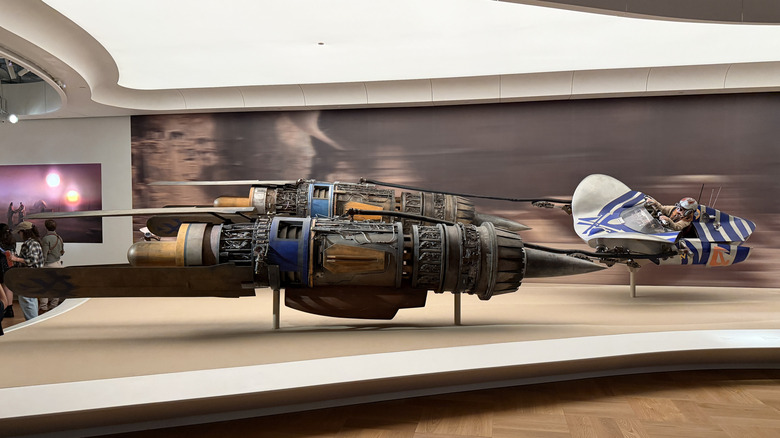
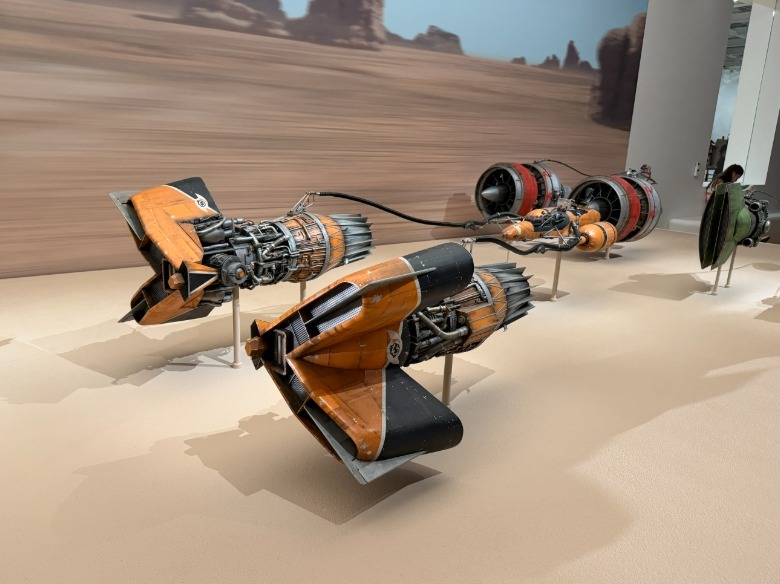
Items originating from the "Star Wars" franchise account for less than ten percent of the museum’s total inventory, but the dedicated cinema and sci-fi galleries command immediate attention from visitors. Upon entering the primary exhibition space, guests are greeted by a full-scale replica of Anakin Skywalker’s podracer from "Star Wars: Episode I – The Phantom Menace." Seeing the machine up close reveals the intricate design work and physical scale required to bring the fictional racing sport to life on the big screen.
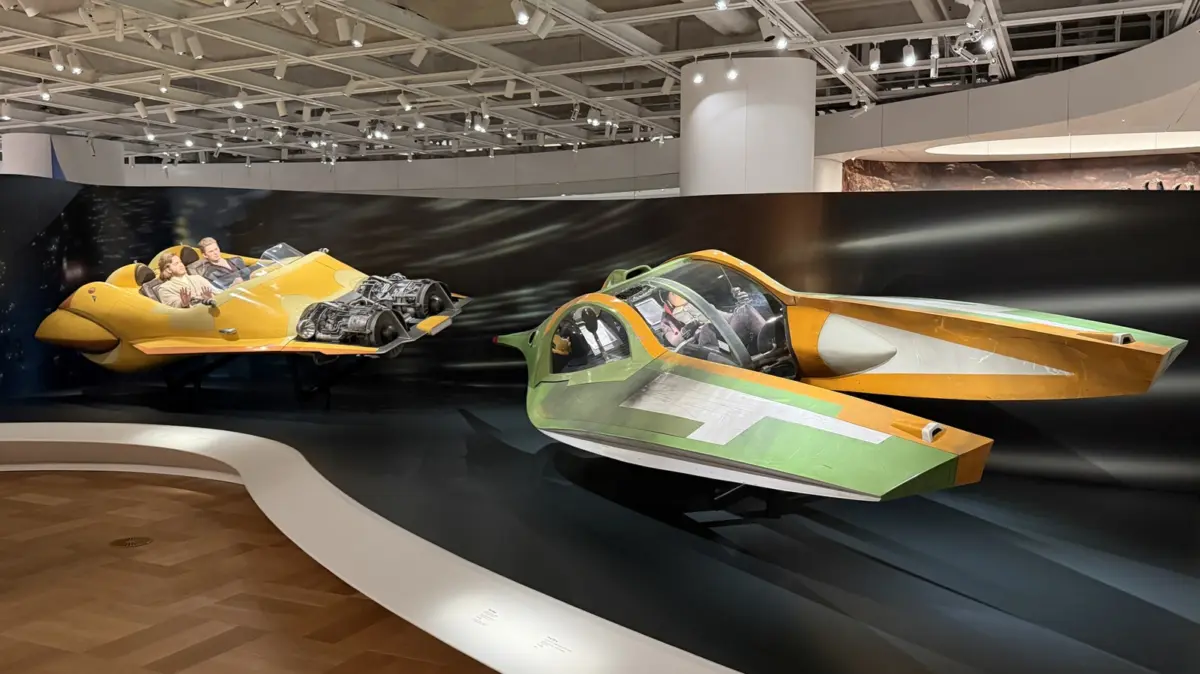
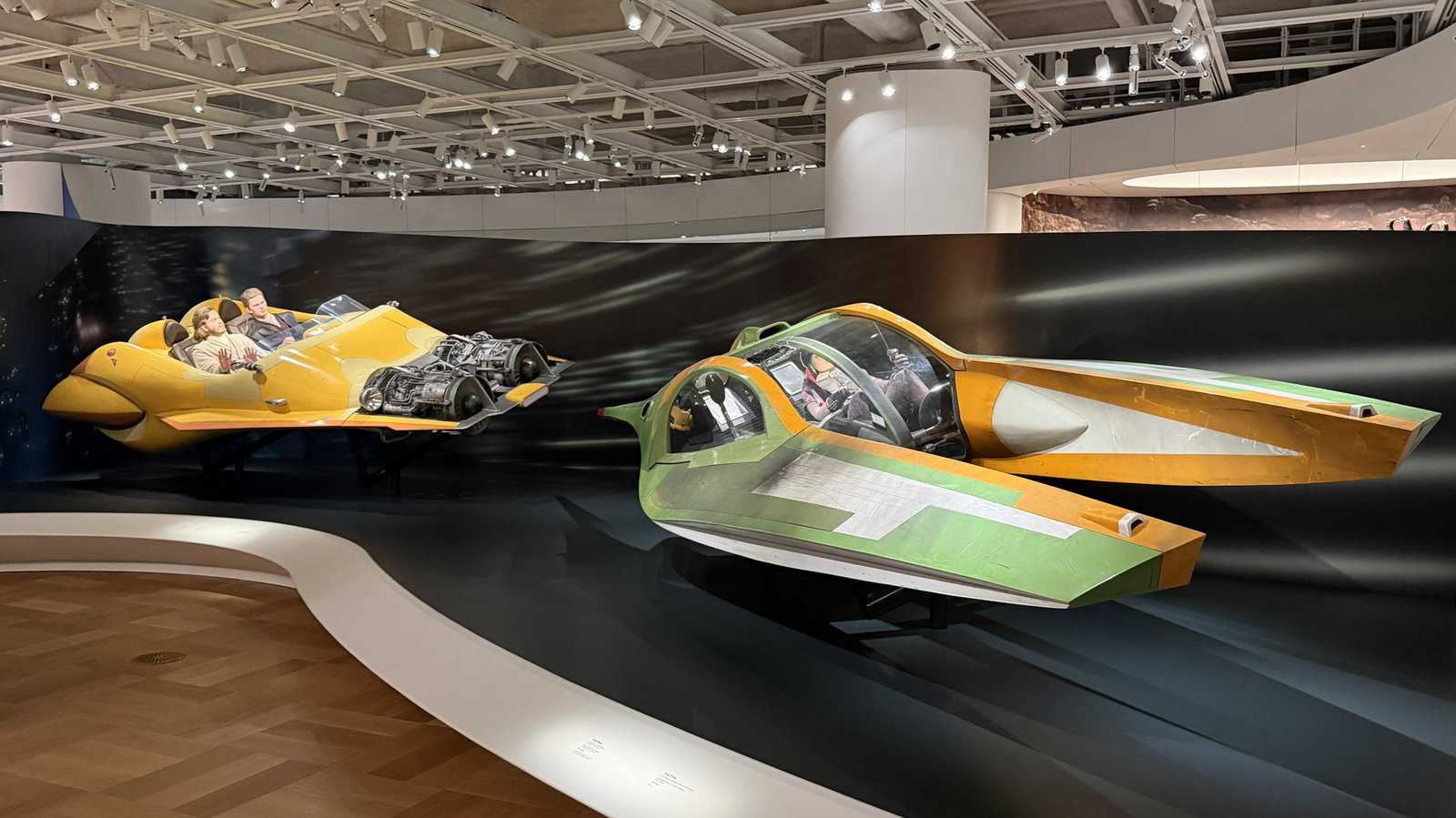
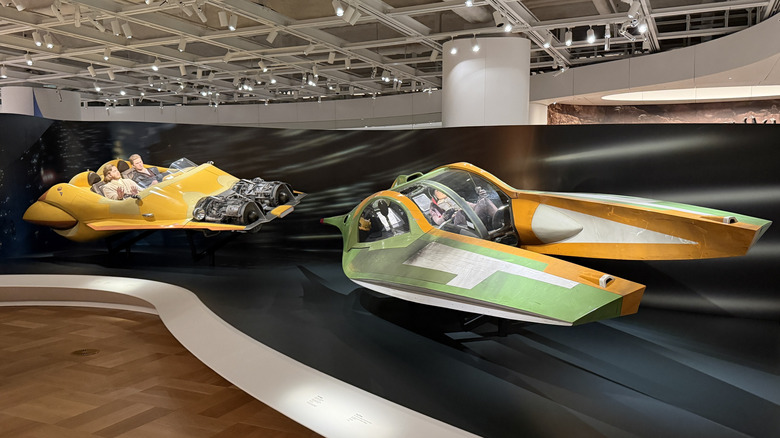
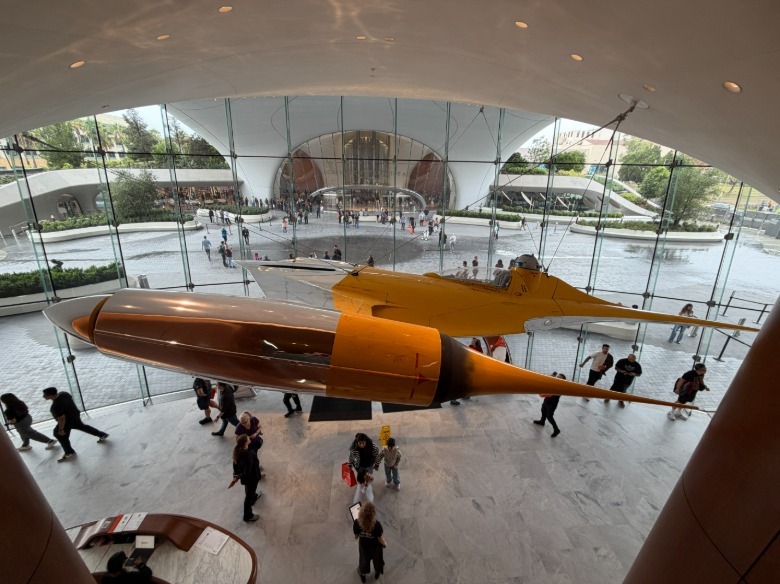
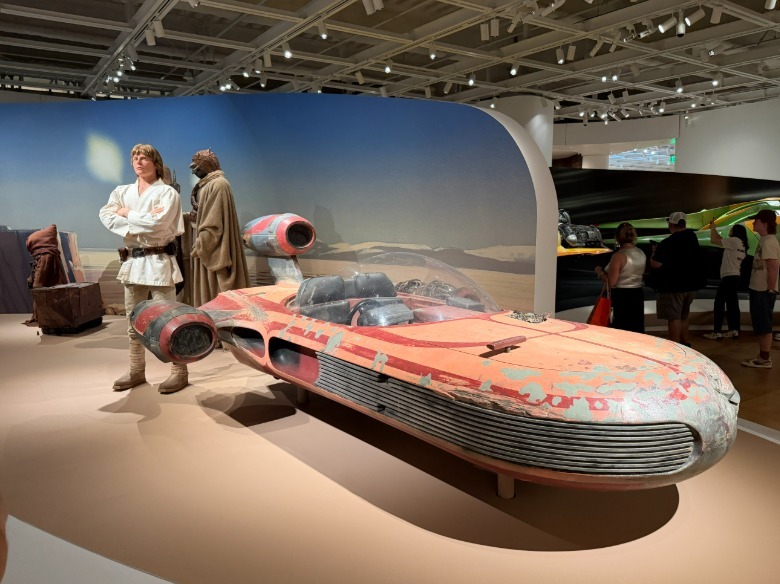
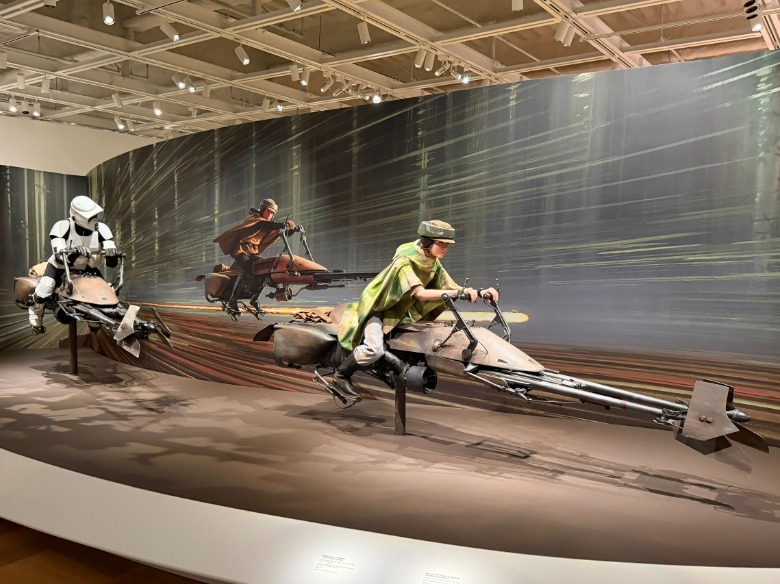
Directly across the gallery space stand the full-scale fiberglass speeder models utilized during the intense chase sequences in "Star Wars: Episode II – Attack of the Clones." Further exploration of the gallery reveals Luke Skywalker’s iconic landspeeder from "A New Hope," twin Empire speeder bikes from the forest moon of Endor featured in "Return of the Jedi," and Mace Windu’s personal speeder from the prequel trilogy. Overhead, suspended from the ceiling in the lobby of the museum’s specialized library, hangs a Naboo Starfighter from "The Phantom Menace," widely regarded as one of the most striking spacecraft designs in cinematic history.
Each of these vehicles is accompanied by display figures outfitted in authentic film costumes, positioned against carefully constructed backdrops designed to evoke a sense of kinetic motion. The attention to detail invites extended observation, allowing visitors to analyze how prop makers integrated everyday materials and real-world mechanical components to fabricate believable machinery for a galaxy far, far away.
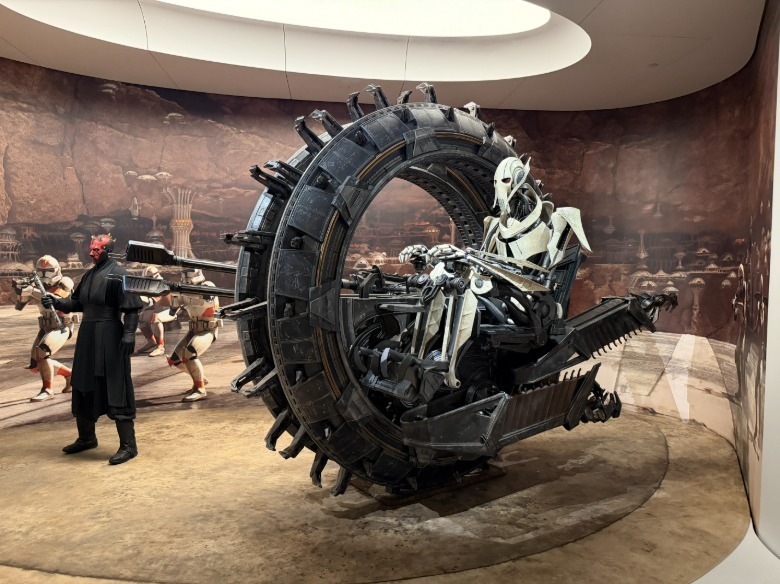
Among the standout cinematic props is a life-size replica of General Grievous’s single-wheel vehicle from "Revenge of the Sith." While the character’s mechanical wheel bike—complete with four deployable walking claws used during his pursuit of Obi-Wan Kenobi—was realized primarily through digital visual effects in the finished film, the museum commissioned a physical, life-size replica for its grand opening, providing a tangible tribute to the concept.
Size Isn’t Everything
While the full-scale vehicles and props capture immediate attention, the collection of scale models on display offers an even deeper level of fascination. Positioned near Anakin’s full-size podracer are meticulous miniature models of competing racers, including Sebulba’s distinctive craft. Constructed from a mix of metal, plastic, fiberglass, rubber, and electronic components, these smaller models demonstrate an astonishing density of detail.
Additional scale models from "The Phantom Menace" include the Trade Federation’s AAT tanks and massive MTT troop carriers, the latter populated by rows of miniature B1 Battle Droids. These models feature weathered paint applications and realistic patinas, creating the authentic illusion of machinery that has endured harsh combat conditions.
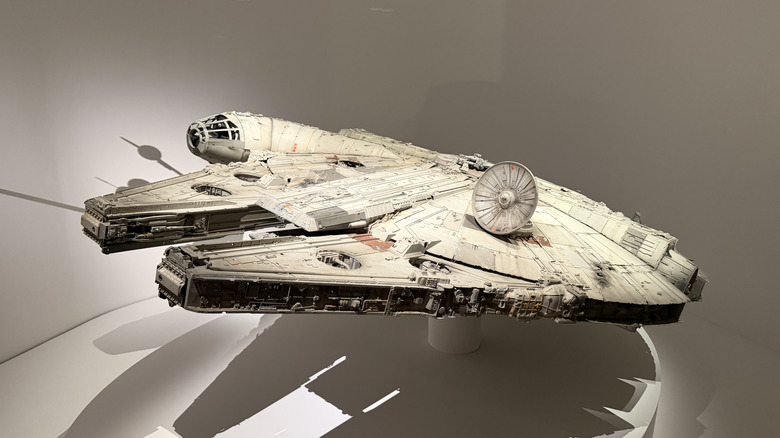
The craftsmanship becomes even more apparent when examining the miniatures utilized during the production of the original trilogy, most notably the iconic model of the Millennium Falcon. The spacecraft is a classic example of "kit bashing," constructed from more than 2,500 individual parts harvested from approximately 150 different commercial model kits. These components ranged from pieces of German military tanks and aircraft to Formula 1 racing car models. The interplay between full-scale props, miniature models, and innovative cinematography tricks remains a testament to the practical visual effects pioneers of the era.
Other original trilogy models on display include A-wing and Y-wing starfighters, clone troop carriers from the prequel era, various scales of the Imperial AT-ST walkers from "The Empire Strikes Back," and a diorama featuring a downed AT-AT half-submerged in snow. A miniature Jawa sandcrawler positioned beside an authentic, full-size Jawa costume further underscores the playful and meticulous nature of the collection.
The walls of the "Star Wars" gallery are lined with original concept artwork and production prints spanning the first six films. Created by legendary conceptual artists such as Ralph McQuarrie and Doug Chiang, the works range from atmospheric nocturnal vistas of Jawa sandcrawler operations to dynamic action sequences and conceptualizations of Cloud City.
Much More Than Just Star Wars
Despite the prominence of the "Star Wars" artifacts, the museum’s exploration of vehicular narrative art extends far beyond a single franchise. Nearly every gallery incorporates some form of transportation, ranging from classic maritime vessels and historic naval battle paintings to automotive illustrations and equestrian transportation.
The graphic storytelling, manga, and comic book sections provide another layer of visual narrative art. Original drawings, illustration proofs, and comic strip layouts highlight dynamic transport subjects, alongside vibrant works from international pop culture properties. The comics gallery also features notable classic newspaper comic strips alongside historic cover artwork from superhero publications and lesser-known anthology titles.
The science fiction gallery offers a curated selection of lush, imaginative works by renowned illustrators such as Vincent Di Fate, Ed Emshwiller, Henrique Correa, and Robert McCall, whose 1970 painting "Heavy Traffic" anchors the collection. These pieces reflect the golden age of speculative fiction and pulp book cover art, celebrating the intersection of futuristic transport and human imagination.
Automotive themes emerge in unexpected corners of the museum as well. The children’s stories exhibition features historical pieces like Charles Twelvetrees’ 1910 gouache and watercolor work, "Little Boy and Dog in Speeding Roadster." In the play and recreation sections, John Philip Falter’s 1961 oil painting, "Drive-In Movie in the Rain," demonstrates how automobiles serve as integral focal points for atmosphere, color, and storytelling. Elsewhere, the museum features dedicated galleries celebrating the works of Norman Rockwell, whose illustrations frequently captured the American landscape and its relationship with the automobile.
The Lucas Museum of Narrative Art is designed to be a dynamic cultural space, with exhibition galleries planned to rotate selections from George Lucas’s extensive private collection alongside visiting loans. The cinema gallery currently housing the "Star Wars" artifacts will eventually introduce new thematic installations, ensuring that repeat visitors encounter fresh perspectives on visual storytelling.
The institution welcomes the general public, with ticketing information available directly through the official Lucas Museum website. For visitors arriving by car, the facility includes an on-site parking garage equipped with accessible spaces and electric vehicle charging stations.