
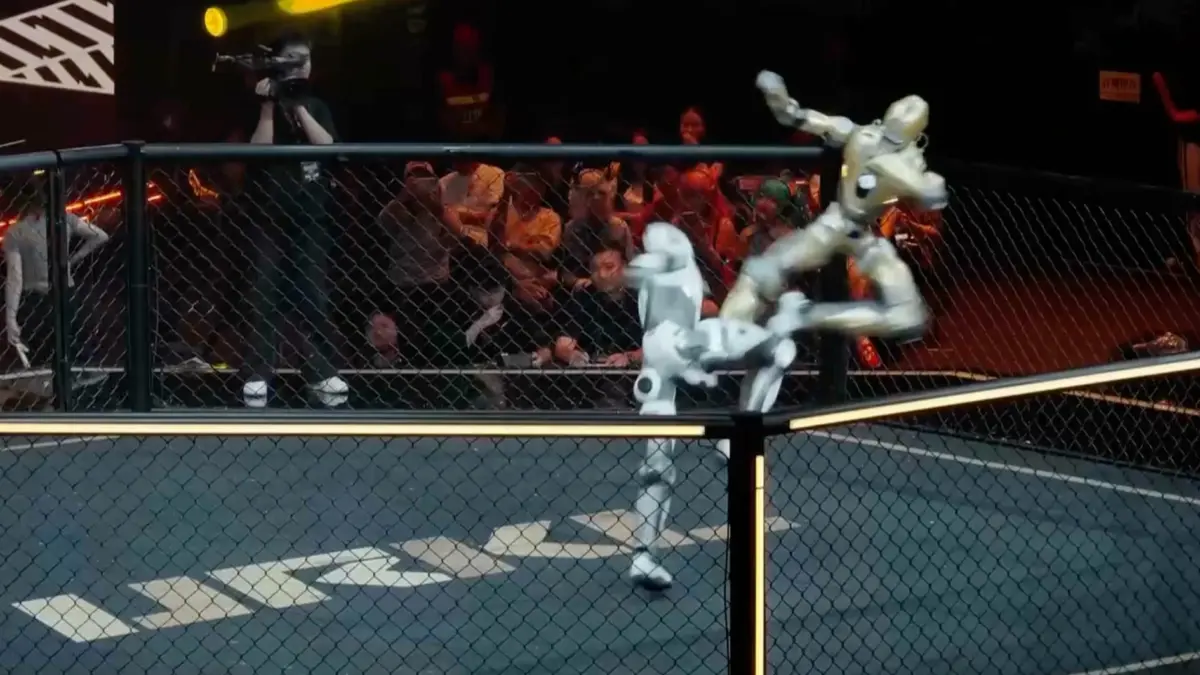
SHANGHAI — Artificial intelligence and mechanical engineering collided in a dramatic display of advanced robotics over the weekend, as a lineup of cutting-edge humanoid robots stepped into a steel cage to battle it out in Shanghai. The high-stakes combat event marked a major public showcase for the Ultimate Robot Knock-Out Legend (URKL) league, an emerging competitive circuit designed to test the limits of bipedal mobility, balance algorithms, and combat programming in humanoid machines.
The exhibition, which drew enthusiastic crowds and technology enthusiasts to the venue, featured sophisticated AI-powered humanoids going head-to-head within the confines of a reinforced steel enclosure. The match provided spectators with a striking glimpse into how rapidly robotics development is evolving, shifting from sterile laboratory environments and industrial manufacturing floors into dynamic, unpredictable public arenas where physical durability and real-time decision-making are put to the ultimate test.
Unlike traditional remote-controlled hobbyist combat robots—which typically feature wheels, wedges, and spinning metal blades—the competitors in the URKL league are fully articulated humanoid systems. These machines are engineered to mimic human movement, relying on complex arrays of sensors, gyroscopes, and advanced actuators to maintain equilibrium while delivering and absorbing forceful impacts. The sight of bipedal metallic frames throwing punches, executing defensive maneuvers, and attempting to regain their footing after being knocked down highlighted the immense technical hurdles that engineers have spent years working to overcome.

The event in Shanghai underscores a broader global trend in which robotics companies and research institutions are increasingly using competitive sports and high-pressure challenges to benchmark their hardware and software innovations. By placing these advanced humanoids in a chaotic cage match scenario, developers can observe how their artificial intelligence architectures handle abrupt physical disturbances, visual tracking under changing lighting conditions, and the rigorous stress of kinetic impacts.
Throughout the competition, the humanoid units demonstrated varying degrees of autonomy and responsiveness. Observers noted that while some movements required precise coordination and rapid-fire computational processing, the overarching goal of the league is to push developers toward creating machines capable of operating independently in complex, unstructured environments. The transition from controlled testing spaces to adversarial combat scenarios provides invaluable empirical data that engineers can use to refine stabilization software, power management systems, and mechanical resilience.
The Ultimate Robot Knock-Out Legend league aims to capitalize on the growing public fascination with humanoid robotics, positioning itself at the intersection of entertainment and cutting-edge technological research. As investment in artificial intelligence and mechanical hardware continues to accelerate worldwide, events like the Shanghai cage match serve as both a public demonstration of current capabilities and a testing ground for future advancements. With robotics teams continually upgrading their software and hardware iterations, the URKL league sets the stage for further developments in how machines interact, compete, and adapt to high-stress physical environments.