
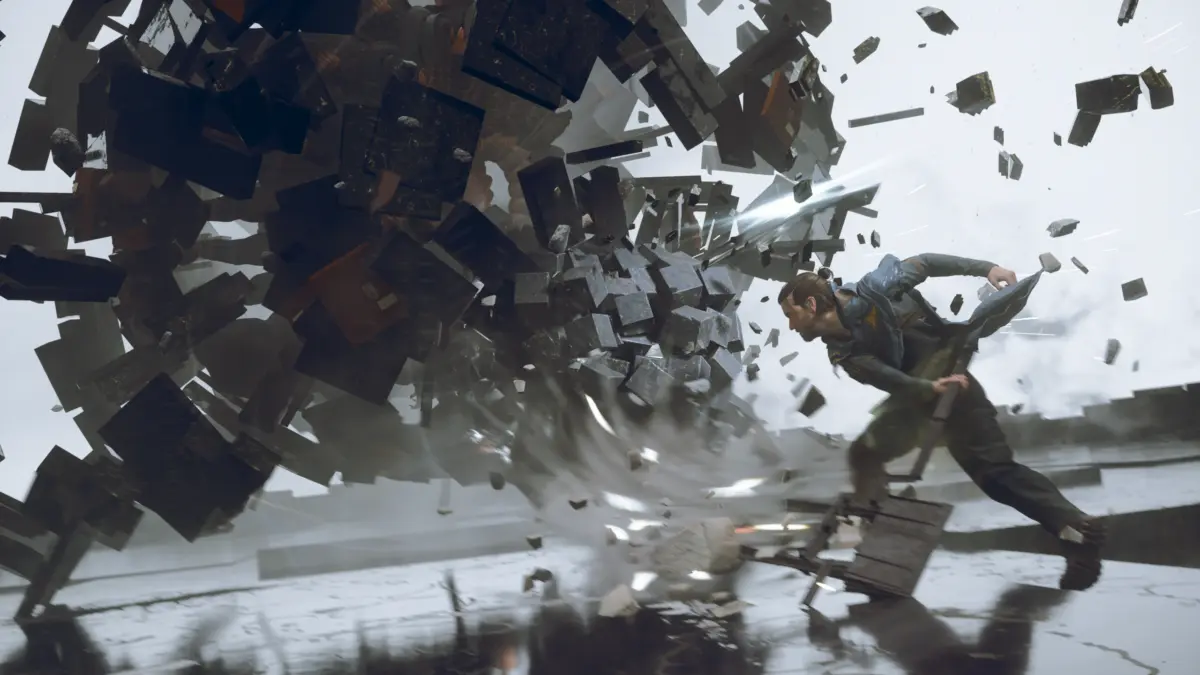
Seven years after the release of the critically acclaimed Control, Finnish developer Remedy Entertainment has finally returned to its paranatural universe. With the launch of Control Resonant, the studio is venturing into uncharted territory, trading the claustrophobic, shifting corridors of the Oldest House for the sprawling, reality-warped streets of Manhattan. It is a transition that has invited both immense praise for its creative vision and sharp debate regarding the evolution of the studio’s signature gameplay style.
Remedy has marketed Control Resonant as a “not so safe sequel,” a descriptor that carries weight given the studio’s decision to shift the focus away from Jesse Faden, the protagonist of the 2019 original, and instead place players in the shoes of her younger brother, Dylan Faden. For many fans, this character pivot was an unexpected gamble, but for creative director Mikael Kasurinen, it was part of a long-term vision. Early in the development process, Kasurinen envisioned a duology that would explore the disparate journeys of the two Faden siblings, with Resonant serving as the realization of that narrative goal.
This departure extends beyond the protagonist; the game fundamentally shifts Remedy’s established third-person shooter DNA. By introducing a melee-focused combat system and an expansive, open-ended world, the studio has attempted to modernize its formula for a new generation of hardware and player expectations. While such a radical pivot might typically alienate a core audience, early critical consensus suggests the gamble has largely paid off. The title currently holds an 84 on Metacritic, signaling that while the game is a departure, its core appeal remains intact.
A New Vision for Paranatural Combat
The combat in Control Resonant is centered on Dylan’s unique affinity for melee strikes and his mastery of the “Aberrant,” a versatile weapon that shifts forms to suit various tactical needs. However, the reception to this new direction has been nuanced. In his review for IGN, which awarded the game an 8 out of 10, Michael Higham noted that the combat feels “undercooked in spots.” He argued that while the mechanics are foundationally sound and capable of providing moments of genuine satisfaction, they occasionally struggle to match the polish of industry-leading action games.
For some critics, the issue lies in the design of the combat encounters themselves. Higham pointed out that several boss battles lean too heavily into “spongy” health bars, turning what should be dynamic tests of skill into repetitive wars of attrition. James Archer, writing for Rock Paper Shotgun, echoed this sentiment, attributing the inconsistency to Remedy’s relative inexperience with dedicated character-action systems. Despite these frustrations, Archer emphasized that the game’s combat remains a “slick vehicle” for storytelling, effectively pushing players through an inventive, albeit demanding, environment.

Not all feedback was critical of the mechanical changes, however. Kotaku’s Cole Kronman praised the synergy between the game’s movement systems and its combat encounters. He argued that the traversal abilities—which facilitate both exploration and battle—create a rewarding feedback loop where mastering one skill naturally informs the other. Conversely, Eurogamer’s Alexis Ong offered a more skeptical take, criticizing the traversal mechanics as feeling somewhat uninspired, famously likening the experience to “Spider-Man helping literal puppies.” Ong noted that, for her, the combat in Control was never the primary draw, and Resonant’s attempt to lean into the action genre fails to capture the same magic that made the original entry feel special.
Exploring a Fragmented Manhattan
The most striking departure in Control Resonant is the shift from the interior of the Oldest House to the streets of Manhattan. In the world of Resonant, the city has been subjected to “The Pattern,” an otherworldly force that causes the urban landscape to fold, collapse, and reshape itself. This setting is not a traditional open world in the Ubisoft sense, but rather a collection of interconnected, shifting zones that encourage deep exploration.
The structural changes have been met with significant intrigue. Rock Paper Shotgun’s Archer lauded the progression system, which rewards players for spending time and effort within specific zones. He drew comparisons to the design philosophy of Elden Ring, noting that the loop of completing side quests, challenging bosses, and earning rewards creates a “tangible and digestible structure” that motivates players to explore the map without relying on the typical clutter of quest markers and waypoints.
IGN’s Higham similarly appreciated how the environment guides the player. He noted that the design language of the Oldest House has effectively “spilled into the streets,” giving the city a personality that feels distinctly Control. Even without a traditional, detailed map, Higham found that the game’s environmental storytelling was intuitive enough to prevent the player from feeling lost.
However, the change in setting was not universally embraced. Eurogamer’s Ong argued that the move to an urban environment stripped away some of the “innate weirdness” that defined the original game. To her, the Oldest House provided a unique, Brutalist cocoon that felt alive and untrustworthy, whereas the repeated city blocks and military barricades of Resonant felt somewhat less distinct. She expressed concern that the game leans too heavily on “quirky weirdness” as a substitute for the structural substance and atmosphere that made the first game a landmark title.

Narrative Stakes and the Remedyverse
As a direct sequel to the events of Control, Resonant bears the burden of continuing the complex narrative of the Faden siblings. For returning players, the story provides necessary closure and context regarding Dylan’s history with the Hiss entity. IGN’s Higham observed that the game serves as both a sequel and a retroactive prequel, filling in gaps that were previously left to implication or tucked away in collectible documents. Nevertheless, he acknowledged that the main story occasionally relies on “easy logical leaps,” which may leave some players feeling that the emotional payoff is not quite as resonant as it could have been.
Kotaku’s Kronman highlighted the dialogue as a point of contention. He noted a tendency in the writing to rely on “snarky, too-clever-by-half banter,” a trope that has become common in modern television and gaming. While he felt these moments were sometimes distracting, he ultimately judged them to be minor flaws in an otherwise “thoughtful, effective story.”
The pacing, however, remained a persistent issue for some. Eurogamer’s Ong pointed out the “triple-A dance” between grand, world-ending stakes and mundane side tasks. She noted that after major plot revelations, being sent on minor fetch quests for supporting characters often caused the narrative tension to evaporate. Despite these critiques, the overall consensus remains that Control Resonant is a bold, high-budget endeavor that attempts to elevate the medium through its commitment to artistic vision.
Ultimately, Control Resonant is a game that refuses to play it safe. Whether it is through the transition to an open-ended Manhattan, the focus on melee combat, or the continued exploration of the Faden family’s tragic arc, Remedy has clearly prioritized its own creative impulses over the comforts of a proven formula. While some critics see the game as a “video game-per-square-inch” marvel that understands the intrinsic value of play, others see a title that is still struggling to reconcile its new ambitions with its established identity. As it stands, Control Resonant remains a polarizing, technically impressive, and characteristically unique addition to the Remedy library—a game that, as Kronman noted, leaves players genuinely curious about what the studio will choose to do next.