
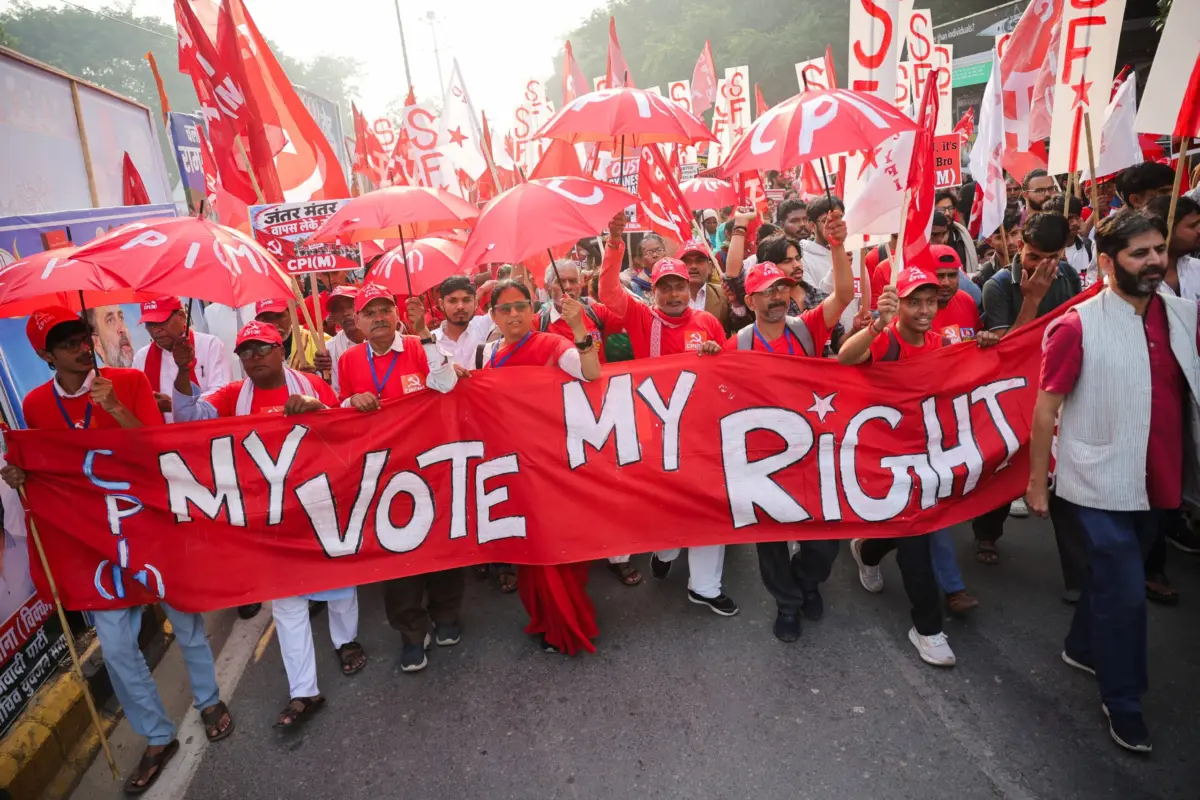
The high-stakes demonstration, which brought together various opposition factions, civic groups, and citizens concerned about the integrity of the electoral process, was spearheaded by prominent Indian National Congress leader Rahul Gandhi. Sunday’s protest marked the dramatic culmination of more than a month of continuous demonstrations, rallies, and political posturing. At the core of the opposition’s outrage is Chief Election Commissioner Gyanesh Kumar, whom protesters accuse of presiding over a deeply biased and politically motivated revision of national electoral rolls.
According to opposition leaders leading the charge against the Election Commission, the recent administrative exercises have resulted in the mass removal of more than 130 million names from voter registries across the country. Critics claim that this staggering contraction of the voter base has disproportionately impacted marginalized communities, specifically targeting Muslims and other minorities. Political analysts and opposition figures note that these demographic groups are statistically less likely to back Prime Minister Modi’s Hindu nationalist Bharatiya Janata Party (BJP), leading to fierce accusations that the voter roll revisions are a calculated effort to alter future electoral outcomes.
The allegations have cast a long shadow over the credibility of India’s independent institutions, which have long been heralded as the bedrock of the world’s largest democracy. For weeks, opposition parties have utilized public forums, parliamentary debates, and street protests to voice their lack of confidence in the current leadership of the Election Commission. They argue that an independent electoral arbiter must remain entirely above suspicion and that the scale of the deletions warrants an immediate, transparent judicial or independent inquiry, as well as a wholesale reconstitution of the commission’s leadership.
In sharp contrast to the narrative presented by the opposition, the Election Commission of India has strenuously denied all allegations of political bias or favoritism toward any party. Defending its administrative procedures, the commission maintains that the revision of electoral rolls is a routine, necessary, and legally mandated process designed to clean up voter databases by removing duplicate, deceased, or shifted voters. Furthermore, election officials have stated publicly that any voters whose names were erroneously or wrongly deleted during the administrative scrub retain the legal right to re-register and have their names restored to the official lists well ahead of future electoral contests.
The ruling Bharatiya Janata Party has similarly pushed back against the intensifying wave of protests, accusing the opposition of launching a reckless and politically motivated campaign to undermine the democratic foundations of the nation. BJP spokespersons argue that by continuously challenging legitimate statutory procedures and attacking constitutional bodies like the Election Commission, opposition leaders are actively eroding public trust in democratic governance for short-term political gain. The ruling party maintains that the electoral administration operates under strict legal frameworks and that the accusations leveled by Rahul Gandhi and his allies are baseless attempts to deflect from their own political shortcomings.
As the political fallout from the contentious voter list revisions continues to reverberate through the capital and across various states, the horizon points toward a prolonged ideological and institutional battle. India’s next general election is formally scheduled to take place in 2029, giving all political stakeholders ample time to prepare for what promises to be a deeply polarized national contest. In the interim, the dispute over the integrity of the electoral rolls and the stewardship of the nation’s democratic arbiters remains a central flashpoint in Indian politics, keeping pressure high on both the government and the Election Commission as they navigate the fierce scrutiny of the opposition and the public.