
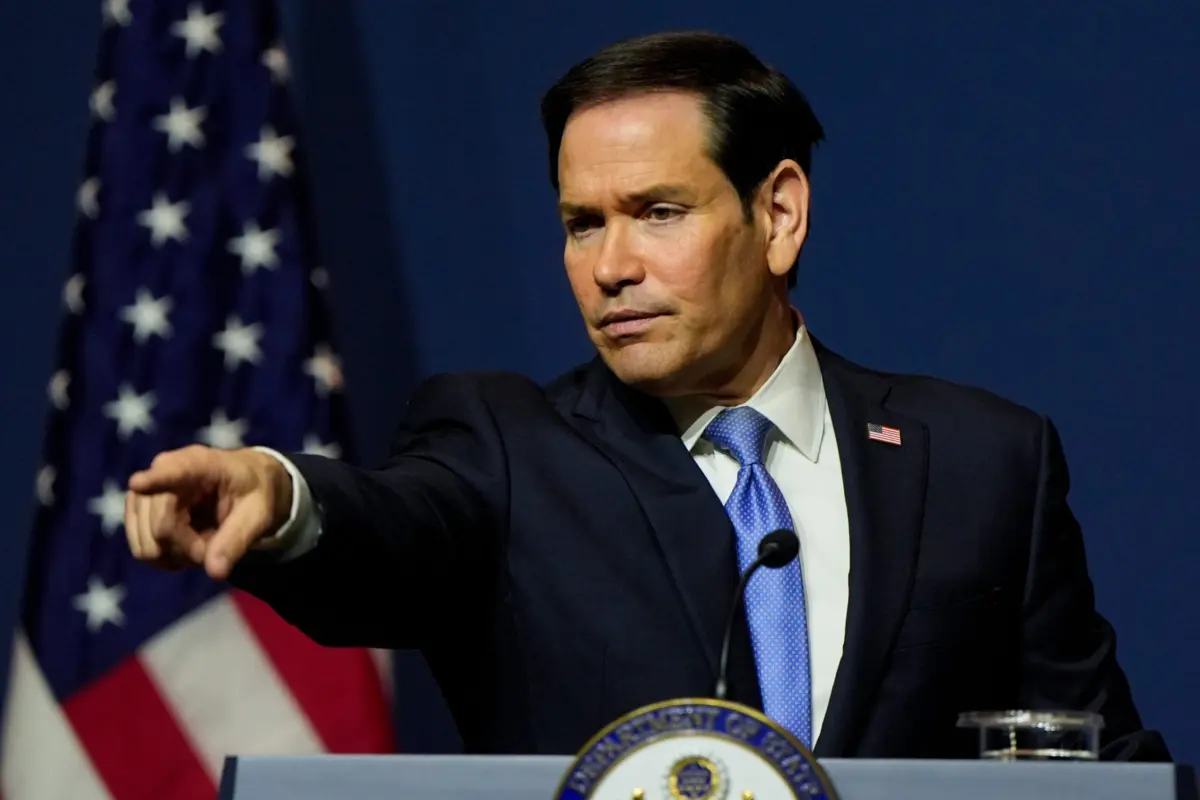
US Secretary of State Marco Rubio has asserted that the administration of President Donald Trump did not actively assist Brazil’s defeated presidential candidate, Flavio Bolsonaro, in fleeing his home country for the United States following his closely watched run-off defeat to incumbent President Luiz Inacio Lula da Silva.
Flavio Bolsonaro landed in Miami, Florida, on a Wednesday, coming just a day after the US Department of State confirmed that both he and members of his family would be granted official US visas. The political shift followed Bolsonaro’s October 25 election loss, a result that notably bucked a broader regional trend of conservative electoral victories across various parts of Latin America.
Before his departure from South America, Bolsonaro had become the subject of escalating legal scrutiny in Brazil. He is currently facing active investigations concerning allegations of corruption, money laundering, and tax evasion. Recognizing him as a potential flight risk, Brazilian judicial authorities had ordered him to surrender his passport prior to his exit, intensifying the domestic controversy surrounding his sudden departure.
Addressing reporters on Saturday in Atlanta, Georgia—where top diplomats from the Group of 20 largest world economies had gathered for international meetings—Secretary Rubio pushed back against assertions of direct governmental coordination in Bolsonaro’s transit.
"We didn’t facilitate anything," Rubio told members of the press during the diplomatic summit.
Elaborating on the administration’s handling of the situation, Rubio noted that officials had received word of Bolsonaro’s arrival after the fact. "We had word that he had arrived in the United States. He had previously held a visa, and the president made a decision to allow him to enter the country," Rubio said, adding for clarity that the federal government was not "involved directly in any of the moves that were made."
Despite the diplomatic friction surrounding the political exile’s arrival, Rubio indicated that communication channels with Brasilia remained open. He mentioned that he had crossed paths with Brazil’s foreign minister, Mauro Vieira, in Atlanta on both Friday and Saturday, and anticipated interacting with Brazilian government counterparts again the following month in France during a scheduled gathering of foreign ministers.
The unfolding diplomatic situation highlights ongoing political sensitivities between Washington and Brasilia. Prior to these developments, President Trump had publicly questioned the integrity of the Brazilian electoral process, at one point characterizing the election as "rigged." Following Bolsonaro’s defeat, Trump doubled down on his sympathetic stance toward the conservative politician, offering assurances that Bolsonaro would be welcome to remain in the United States for as long as he desired.
"I think he got treated very shabbily, very shabbily, so he can stay here as long as he wants," Trump told reporters on Saturday while speaking from his residence in Florida.
According to reports from the Reuters news agency, Bolsonaro was formally admitted into the United States under a humanitarian parole framework, an immigration status that typically grants temporary entry for a period of one year.
Trump’s public remarks and the administration’s decision to grant entry underscore potential strains in the diplomatic relationship between the Western Hemisphere’s two largest democracies, a tension that observers suggest may persist for the foreseeable future.
Following his run-off electoral defeat, Bolsonaro bypassed immediate domestic accountability by departing Brazil for the United States via a multi-leg journey through Argentina and Ecuador. Subsequent reporting by various US media outlets alleged that portions of his travel logistics were coordinated with assistance from Jason Miller, a high-ranking White House official—claims that have added further complexity to the narrative surrounding his relocation.
To date, Bolsonaro has consistently refused to formally concede the outcome of the Brazilian presidential election, characterizing the certified results as fraudulent while failing to produce verifiable evidence to substantiate the claims.
Since establishing his temporary residence in the United States, Bolsonaro has publicly asserted that he remains the true "leader" of Brazil. He has defended his decision to leave South America by portraying himself as a political target, claiming that he fled the country to escape what he describes as severe political "persecution" by domestic authorities.