
During London’s Frieze Week, the atmosphere at The Hart was charged with the typical energy of a fashion-crowd gathering. Amidst the clinking glasses, the hum of conversation among freelancers, and the sight of style icons like Alexa Chung, there sat a selection of objects that felt distinctly out of time—yet perfectly placed. These were not works of contemporary art, but rather "British Old Masters" of a different sort: the Stanhope Chelsea boot, the Skipton Oxford, and the Sidley lace-up. Alongside them, the women’s Sloane collection, headlined by the polished-calf Susan ankle boot, served as a reminder of a legacy that has endured since 1873.
These shoes are the hallmark of Church’s, the venerable Northampton shoemaker that has defined English footwear craftsmanship for over 150 years. Since its acquisition by the Prada Group in 1999, the brand has remained a cornerstone of high-end, heritage-driven fashion. Overseeing this showcase at The Hart was Denni Manzatto, who stepped into the role of CEO of Church’s in 2022. For Manzatto, a former Goldman Sachs professional who joined Prada in 2013, this event represented more than just a brand activation; it served as a public signal of a revitalized mission for the Northampton institution.
Manzatto’s connection to the brand is both professional and deeply nostalgic. Long before he took the helm, his appreciation for the shoemaker was forged during his time in private equity in London, where the brand’s 1921-opened Jermyn Street store was a fixture near his office. Today, he views Church’s as a rare and precious asset within the Prada portfolio.

“Church’s has a higher than proportional meaning for the Prada Group relative to its business size,” Manzatto explains. With annual sales hovering around £32 million—representing roughly 1% of the Prada Group’s total business according to H1 earnings—the brand functions as a boutique pillar of the conglomerate’s identity. “It is a jewel that we should preserve, we should restore, and take to new heights.” This commitment has culminated in a shift in strategy. After years of operating with intense discretion, Manzatto and the Prada Group are now pivoting toward a phase characterized by increased investment in the Northampton manufacturing base and a concerted effort to cultivate a new, younger generation of footwear enthusiasts.
A Legacy of Innovation and Industrial Craft
To understand the weight of Church’s, one must look to its history. Like many of the great heritage brands that have survived into the modern era, Church’s was, in its infancy, a pioneer of industrial technology. During a visit to the Northampton factory, company archivist Simon Hill noted that the brand’s 1881 “Adapted” boot was the first to introduce differentiated left-and-right shoes on an industrial scale, a standard we now take for granted but which was revolutionary at the time.
Founded by Thomas Church, the business was propelled forward by his sons, Alfred and William, who effectively transformed the town’s fragmented cottage-industry model. By consolidating specialist makers under a single factory roof, they established a rigorous, sequence-based manufacturing process that continues to dictate how shoes are made in the facility today. This system was the heartbeat of a Northampton tradition stretching back to the Middle Ages. At the height of the post-war boom in 1955, the local industry, led by Church’s and its neighbors, produced an staggering 160 million pairs of shoes annually.

The subsequent decline of the British Empire and the rapid rise of globalized manufacturing—which saw production shift toward dynamic Italian hubs or lower-cost centers in India and Southeast Asia—posed a significant threat to the Northampton model. Yet, Church’s and its peers, such as Tricker’s, Cheaney, and Edward Green, managed to survive by doing the opposite of their competitors: they leaned into their heritage. By treating their traditional, labor-intensive manufacturing practices as a unique point of differentiation rather than a relic, they secured a niche in a market increasingly hungry for authentic, long-lasting quality.
The Prada Acquisition and the Romantic Vision
Prada’s entry into Northampton in 1999 was a landmark moment for the industry. The group secured a £106 million takeover of the then-publicly listed Church & Co, successfully outbidding Diego Della Valle of Tod’s. At the time, Patrizio Bertelli was explicit in his intentions: the goal was not to assimilate Church’s into the Prada identity, but to preserve and strengthen its quintessential British character.
Manzatto admits that there was a romantic element to the acquisition. Bertelli and Miuccia Prada, having grown up admiring the brand, viewed Church’s as the absolute pinnacle of English shoemaking. "There was definitely a fascination in the first place," Manzatto says. However, when he took charge in 2022, he found the reality of the business to be far less romantic than the reputation.

Operating as a separate legal entity had created silos that limited the brand’s growth potential. A core part of his mandate has been to dismantle these barriers, integrating Church’s more deeply into the Prada Group’s vast corporate, industrial, and technological infrastructure. This integration is the key to the brand’s future viability.
A Strategic Shift: Bringing Production Back to Britain
Currently, while Church’s core Goodyear-welted footwear is produced in Northampton, other, more contemporary designs—including the iconic Shanghai shoe and various sneaker models—have been manufactured within Prada’s Italian facilities. Manzatto’s vision for the next few years is radical in its simplicity: "Our vision over the next few years is to bring everything back to the UK."
Achieving this requires more than just shifting logistics; it requires a heavy investment in both the physical factory and the human capital. As long-serving master shoemakers reach retirement, Church’s is collaborating with local institutions to train a new generation of craftspeople. Furthermore, the factory must be upgraded to handle a wider variety of product categories that were not historically associated with traditional English shoemaking. Manzatto acknowledges that these ambitious goals would be impossible without the resources of the Prada Group.

This aggressive reinvestment in the UK comes at a time when the British manufacturing and retail sectors face significant headwinds. Post-Brexit trade duties, complex administrative hurdles, rising labor costs, and the removal of tax-free shopping for international tourists have all exerted pressure on the business. "That has impacted both our top line and our bottom line. It’s a fact," Manzatto admits. Yet, rather than retreating or reducing the brand’s exposure to the UK, the response from the Prada Group has been to "double down."
Crafting the Future
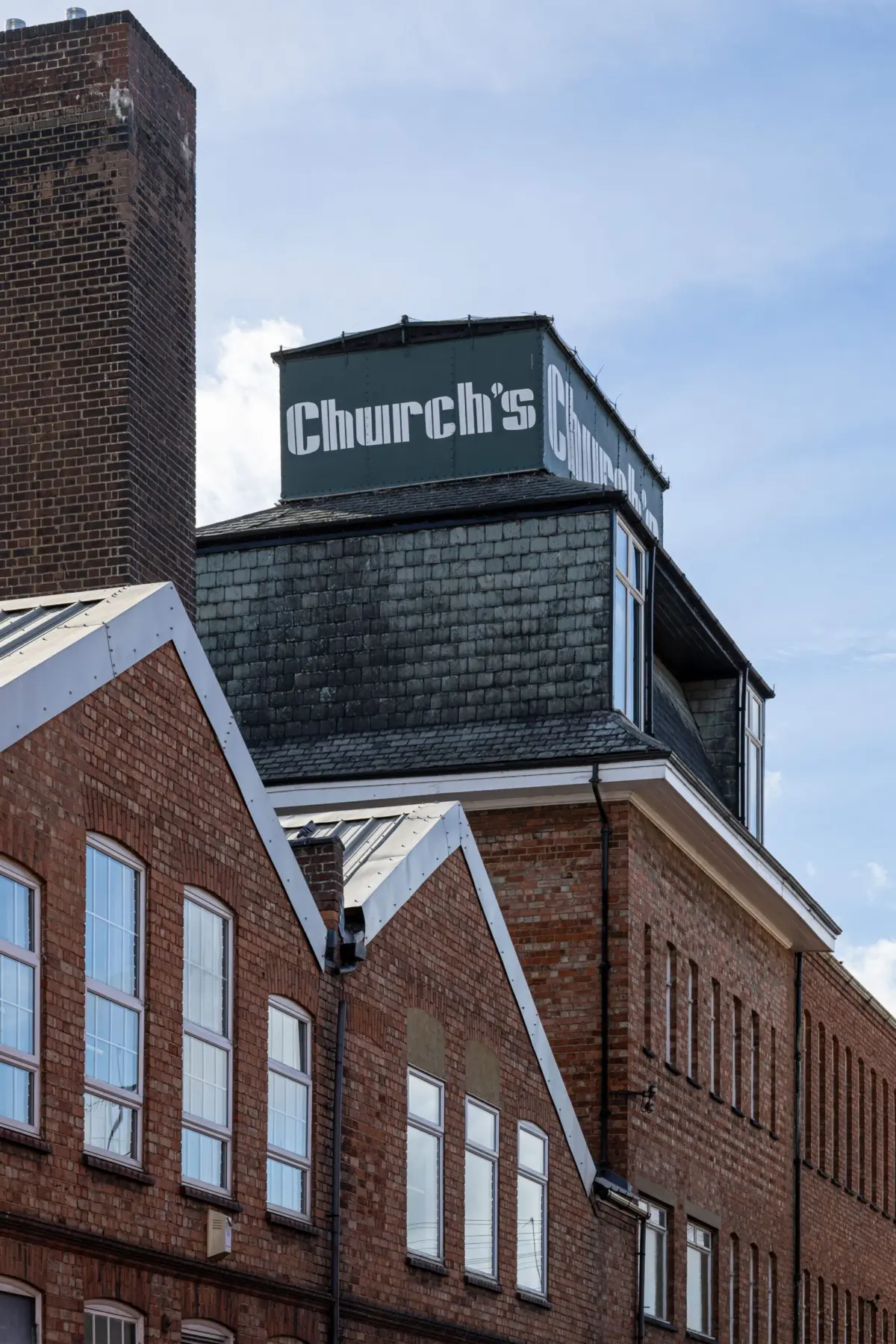
Inside the St James Road factory, which currently employs 137 people, the production process remains a rhythmic display of tradition. Shoes still move through the specialized rooms established by the Church family: clicking, closing, lasting, making, finishing, and polishing. During a recent tour, as the sounds of KC and the Sunshine Band’s "Boogie Shoes" played over the tannoy, it was clear that the environment is one where technical precision meets a certain creative spirit.
One standout example of this is a former apprentice, now a full-time employee, who specializes in applying color by hand to the brand’s high-end Crown collection. Her ability to blend traditional techniques with a contemporary aesthetic—evidenced by her own punk-inspired look—is a testament to the creative freedom encouraged within the factory. As Simon Hill explains, this freedom is not just for show; it fosters skills that eventually feed back into the core production lines.

The Crown and Royal collections, which require over 320 distinct processes and up to 12 weeks to complete, serve as the ultimate proof that there is a market for exceptional workmanship. "If you come out with exceptional products, and of course, if you’re able to share with your clients what it takes to create these products… there is no price resistance," says Manzatto.
Despite the focus on craft, the strategy is not to transform Church’s into a fast-fashion brand driven by the hunger for novelty. Instead, the focus remains on "continuity products." While seasonal offerings have their place, the business is anchored by the perennial, iconic Goodyear-welted styles that new and returning customers seek out year after year.
With new, technology-integrated screens bearing the Prada Group logo now sitting alongside vintage machinery on the factory floor, Church’s is entering a phase of renewed scale. Manzatto has identified women’s footwear as a significant area of untapped opportunity and has flagged North America as a primary market for growth starting in 2027. His directive is clear: the brand intends to do more and better of the same. By leveraging the backing of the Prada Group to refine its processes, Church’s aims to become, as Manzatto puts it, "even more established, even more recognized, even more iconic, even more English."