
As guests arrived at the Shushu/Tong runway show for the Spring 2027 collection, they were greeted by a charming, functional invitation: a colorful umbrella resting on every seat. The accessory served as an immediate, tactile bridge to the collection’s primary inspiration, Jacques Demy’s 1964 cinematic masterpiece, The Umbrellas of Cherbourg. By invoking the visual language of this French New Wave classic, designers Liushu Lei and Yutong Jiang signaled the start of a season defined by "Darling Melancholy"—a title that promised a complex exploration of longing, though the resulting collection ultimately chose to embrace a more vibrant, optimistic outlook.
The atmosphere in the room felt like a bridge between eras and continents. While the film’s mid-century French aesthetic provided the narrative framework, the show effectively filtered these influences through a distinctively modern, Asian lens. Attendees noted the presence of 1960s icons such as Mary Quant’s mod aesthetic and the futuristic, architectural lines of Courrèges, all while maintaining the brand’s signature penchant for the youthful, hyper-feminine spirit that has often drawn comparisons to the eclectic, playful world of Miu Miu.
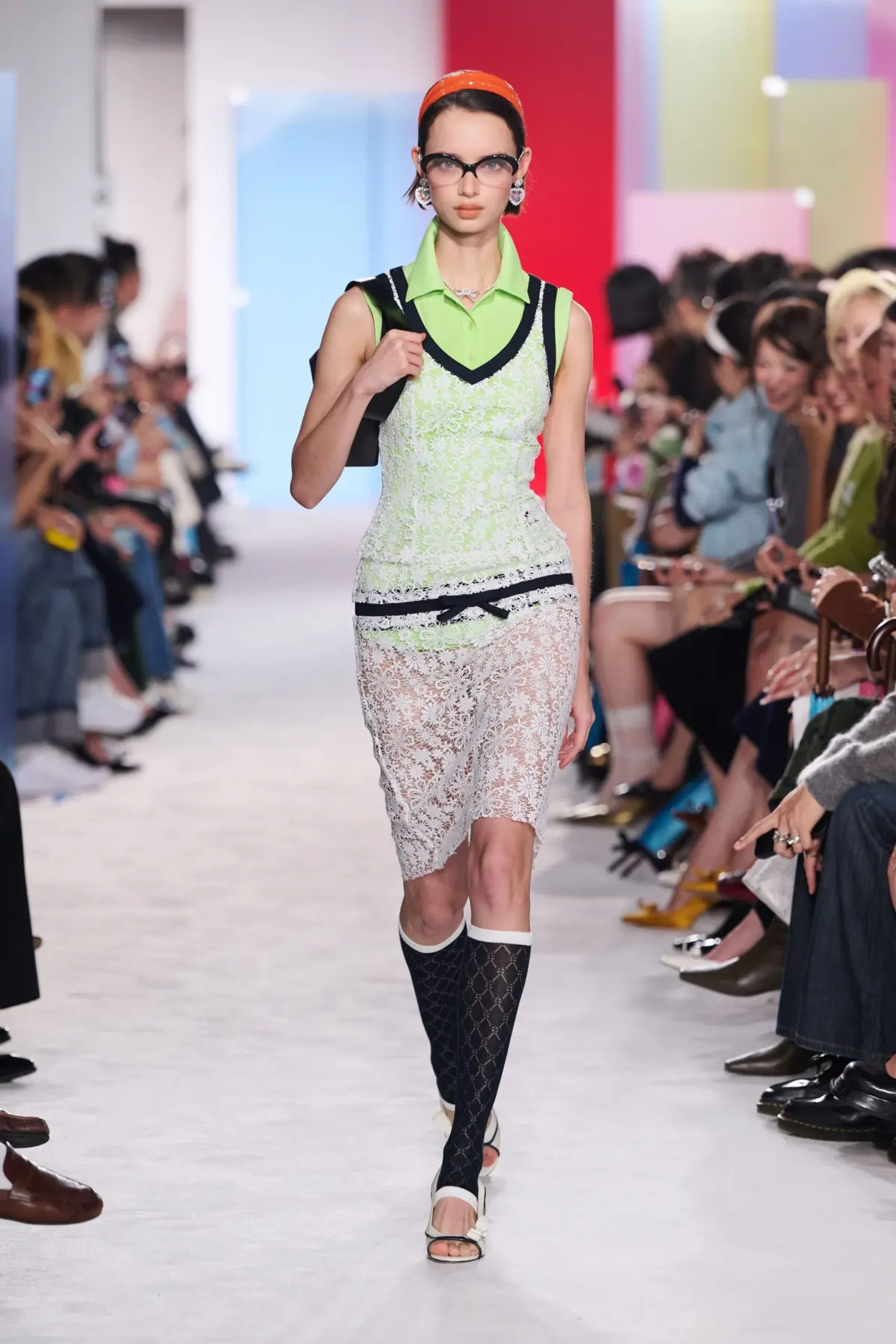
The collection was a masterclass in controlled sweetness. The runway was filled with short, girly silhouettes that emphasized a sense of playfulness. Designers utilized petal-edged details, intricate macramé lace, and voluminous balloon skirts to construct a wardrobe that felt simultaneously nostalgic and cutting-edge. The color palette leaned into candy-colored combinations, creating a visual feast that felt both curated and lighthearted. To balance the saccharine quality of the silhouettes, the design duo introduced a "drizzle" of embellishments and delicate beaded daisies. These small, thoughtful details served to keep the mood firmly in the realm of the upbeat, preventing the collection from becoming overly precious.
Despite the thematic title of "Darling Melancholy," the clothes themselves seemed to reject any true sense of sorrow. In Demy’s original film, the narrative is famously colored by bittersweet longing and the inevitable heartbreak of lost love. However, at Shushu/Tong, that melancholy was given a pink umbrella and encouraged to move on. The collection felt disarmingly wearable and neatly proportioned, suggesting that while the designers were interested in the aesthetic of the 1960s, they were not interested in the heaviness that often accompanied the era’s dramatic storytelling.
As the show progressed, the ultra-feminine aesthetic was occasionally punctuated by sporty details. These moments of athletic-inspired design helped to ground the collection, adding a contemporary edge that prevented the looks from feeling like costumes. However, it was arguably the accessories that provided the definitive statement for the season. Models navigated the runway clutching ladylike, boxy bags tucked firmly in the crook of their arms. These accessories, which felt akin to oversized, sophisticated Pop Art toys, served as the perfect punctuation mark to the outfits—structured, charming, and undeniably stylish.
The influence of the designers’ personal histories was palpable throughout the presentation. Liushu Lei and Yutong Jiang have long spoken of their childhood obsessions with Japanese anime, a sensibility that has hovered around the label’s output for years. This background is central to the Shushu/Tong identity, which frequently experiments with the visual codes of schoolgirl uniforms and a sense of "unreal prettiness." This season, that anime-inspired sensibility merged seamlessly with the mid-century European references. The result was a collection that felt consistent with the brand’s history while demonstrating a clear evolution in how they translate their inspirations into wearable garments.
When discussing the collection, the designers emphasized that the 1960s aesthetic was passed through an "Asian lens." This process of translation was evident in the final products, which favored a sleek, modern finish over pure period recreation. By moving the focus away from the bittersweet longing inherent in their source material and toward a more forward-looking, high-fashion interpretation, the designers succeeded in creating a collection that felt fresh. The melancholy might have been present in the title, but it was conspicuously absent from the skirts, which were designed for movement, play, and a modern lifestyle.
The reception from the audience reflected the brand’s established standing in the fashion industry. The front row was populated by the brand’s well-groomed, loyal clientele, who viewed the parade of cuteness with a clinical, laser-like focus. Observers noted that these Very Important Clients (VICs) were not merely watching a show; they were already mentally auditing their closets, sizing up the skirts and accessories to determine which pieces would make the transition from the runway to their personal wardrobes. This level of engagement speaks to the strength of the brand’s identity—a consistency that makes Shushu/Tong one of the most anticipated labels on the Shanghai schedule.
Ultimately, the Spring 2027 collection was a testament to the power of deliberate aesthetic choices. By taking the iconic, emotional weight of a 1960s French film and reinterpreting it through the lens of anime-inspired, youthful femininity, Shushu/Tong created a narrative that was entirely their own. The clothes were exceedingly pretty and meticulously executed, proving that even when a brand toys with the idea of "melancholy," it is entirely possible to craft a collection that feels celebratory. As the models took their final turns, the umbrellas, the boxy bags, and the beaded daisies left a lasting impression: a brand that understands the value of a pretty, polished exterior while maintaining the structural integrity required to keep the fashion-forward audience wanting more. As the season continues to unfold in Shanghai, the conversation surrounding the collection highlights a broader trend in the industry: the ability to balance deep, intellectual inspirations with the commercial, wearable realities of modern luxury fashion.