
For a generation of football supporters, the Premier League has been defined by a familiar financial and sporting hierarchy. Long before Leicester City produced one of the most astonishing sporting upsets in history by defying 5,000-1 odds to claim the Premier League title in the 2015-16 season, English football had grown accustomed to the ironclad dominance of a select few. Leicester’s triumph captured the global imagination precisely because it felt like an impossible anomaly—a momentary glitch in a system where clubs outside an exclusive, entrenched circle had virtually no hope of breaching the summit.
That fairytale season, however, initially looked destined to be a fleeting exception. For the three campaigns immediately following Leicester’s crown, the collective known simply as the ‘Big Six’—consisting of Arsenal, Chelsea, Liverpool, Manchester City, Manchester United, and Tottenham Hotspur—locked down the top positions of the table once more with ruthless efficiency. During that period, the chasm between the elite and the remainder of the division yawned wider than ever before. The smallest deficit separating seventh place from sixth place across those three successive seasons stood at a commanding eight points.
Historical data underscores just how absolute that control was. Between the 2010-11 and 2018-19 campaigns, the traditional ‘Big Six’ finished inside those leading positions on five separate occasions. In the remaining years of that window, they fell out of the top six only marginally, finishing in the top seven twice and the top eight just once. To the casual observer, the Premier League was calcifying into a closed shop, an elite European-style super league operating within domestic borders.
Yet, as football so often proves, periods of prolonged hegemony eventually breed disruption. Things began to change subtly at first, then with undeniable momentum. In only one of the six seasons played since that era of total control have all six members of the traditional elite managed to finish inside the top six. Instead, ambitious challengers such as Aston Villa, Newcastle United, and Brighton & Hove Albion have muscled their way into those coveted spots at various points, fracturing the old order.
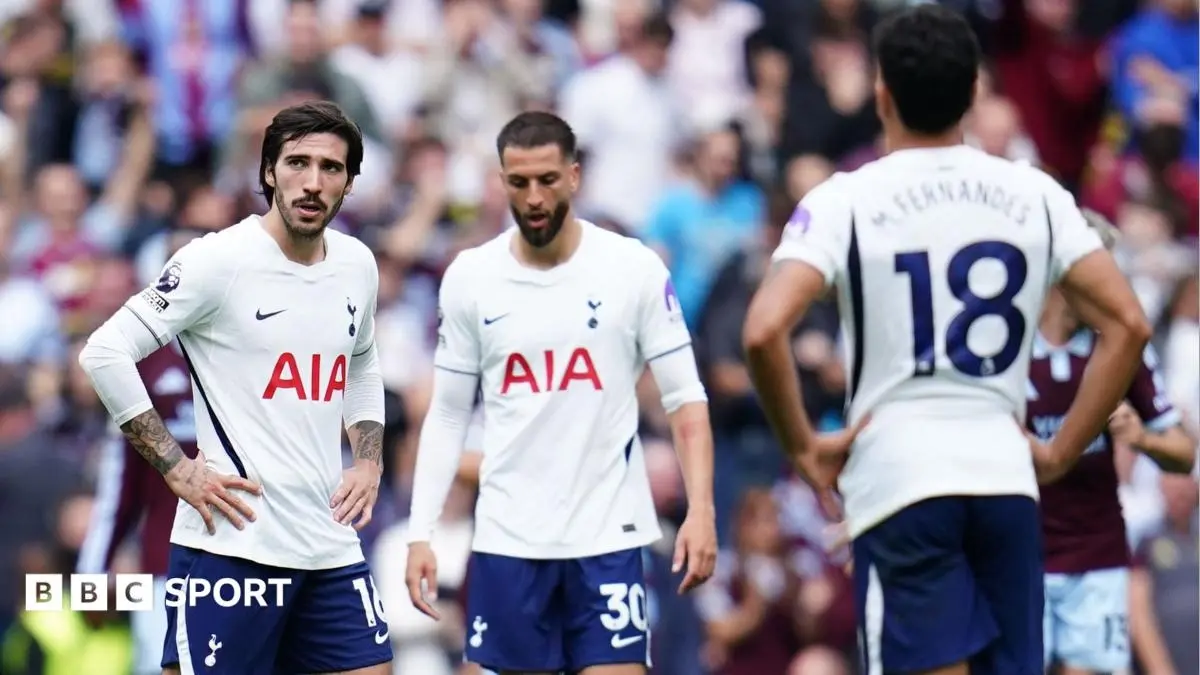
No club exemplifies this shifting landscape quite as starkly as Tottenham Hotspur. While Spurs were once a reliable fixture in the upper echelons of the table, they have suffered a dramatic and sustained slump. North London’s white half has ended up just one place above the relegation zone in each of their past two domestic campaigns. Their struggles have spilled uncontrollably into the current season, where they currently sit second from bottom with a meager three points after failing to register a single victory across their opening six fixtures.
Tottenham are not alone in enduring uncharacteristic turbulence. Manchester United find themselves languishing down in 13th spot, while Liverpool sit in ninth. The broader statistical trends reveal a startling decline in consistency for clubs that once took Champions League qualification for granted. Since the 2021-22 season, both Chelsea and Manchester United have finished outside the top six twice, while Tottenham have missed out on the top six three times, including two separate finishes down in 17th position. Over the past three years alone, five of the top six places in the Premier League have gone to clubs operating outside the traditional elite—matching the exact total achieved across the previous eight years combined.
Closing the Financial and Operational Gap
The erosion of the ‘Big Six’ collective dominance can be attributed to several converging factors, chief among them being the aggressive closing of the financial gap by ambitious challengers. The most visible catalyst for this shift arrived at Newcastle United following their transformative £305m takeover in 2021, spearheaded by the Public Investment Fund of Saudi Arabia. Backed by immense financial resources and a renewed sense of purpose, the Tyneside club executed a rapid ascent. They climbed swiftly from an 11th-place finish in the 2021-22 season to a remarkable fourth place the following year, before securing a creditable fifth-place finish two seasons later.
At the same time, other clubs have chosen a different path to disruption, leaning heavily into sophisticated data analytics and remarkably smart recruitment models to bridge the divide. Foremost among these algorithmic innovators are Brighton & Hove Albion, whose talent identification network has become the envy of European football. The Seagulls have established an extraordinary reputation for unearthing promising young talent from across the globe for minimal initial outlays, developing them within their system, and eventually selling them on for astronomical profits.
That philosophy was demonstrated vividly in 2021 when Brighton signed a 19-year-old midfielder named Moises Caicedo from Ecuadorian side Independiente del Valle for a modest fee of £4m. Just two years later, they transferred him to Chelsea in a deal worth a staggering £115m, setting a British transfer record at the time. Similar masterclasses in the transfer market included signing Marc Cucurella for £15m before selling him to Chelsea for £62m, and bringing in Alexis Mac Allister for £7m prior to his £55m move to Liverpool.
Speaking on BBC Radio 5 Live’s Football Daily podcast, Brighton sporting director Mike Cave shed light on the meticulous methodology driving the club’s success. "Our recruitment strategy and philosophy has been something that we’ve built on over a long period of time now," Cave explained. "The data element of it gets a lot of attention because going back a few years it was quite novel in comparison to some other clubs. Really, it’s just a component of a bigger process that goes on. It’s an important component, it helps us to identify talent from around the world in quite an efficient way which allows us to move quickly in what is a really competitive transfer market."
An Ever-Evolving Hierarchy
The concept of a fixed ‘Big Six’ has never been an immutable law of the Premier League; rather, it is simply the latest chapter in the ever-shifting topography of English football governance and wealth. When the Premier League was first formed back in 1992, the division was initially characterized by a ‘Big Five’ comprising Arsenal, Everton, Liverpool, Manchester United, and Tottenham—clubs that commanded the largest supporter bases and greatest financial muscle of that era.
As the 1990s bled into the early 2000s, that landscape evolved organically into a ‘Big Two’ as Manchester United and Arsenal established a fierce duopoly at the summit. That circle widened once more into a ‘Big Four’ as Chelsea, supercharged by Roman Abramovich’s arrival, and Liverpool regularly cemented themselves in the Champions League qualification spots. It was not until the 2010-11 season that English top-flight football witnessed the exact top-six configuration of Arsenal, Chelsea, Liverpool, Manchester City, Manchester United, and Tottenham for the very first time. That specific alignment was subsequently repeated in the 2014-15, 2016-17, 2017-18, and 2018-19 campaigns, solidifying the modern terminology of the ‘Big Six’.
Looking further back into history, English football has experienced periods of profound competitive openness. Arguably the most fiercely contested era in the top division occurred during the 1960s, a golden decade that saw Burnley, Tottenham, Ipswich Town, Everton, Liverpool, Manchester United, Manchester City, and Leeds United all capture league titles.
While it remains true that the eventual Premier League champion is still most likely to emerge from one of the traditional powerhouse clubs, the broader monopoly is undeniably fracturing. We are steadily moving away from an era where the top six positions were exclusively the private domain of those six clubs, with four years now having passed since they last occupied all of those places simultaneously.
At present, clubs like Brighton, Brentford, and Everton find themselves rubbing shoulders in the upper reaches of the table. While an immense amount of football remains to be played before the current campaign draws to a close, the upper tier of the division appears as wide open and unpredictable as it has been in decades—and for a competition built on the drama of sporting uncertainty, that evolution can only be welcomed.