
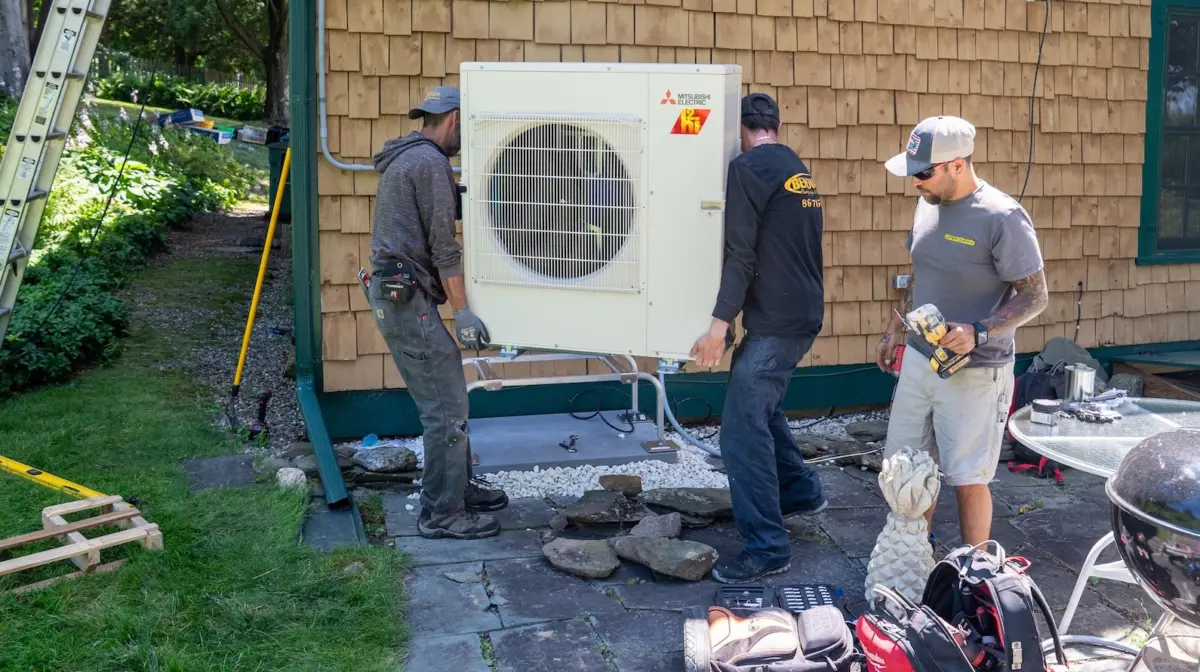
For years, widespread adoption of heat pumps has been dogged by persistent misconceptions. Critics have long argued that these energy-efficient systems—which transfer warmth from outdoor air to an indoor space rather than generating it directly through combustion, like a traditional furnace—simply stop functioning when temperatures plummet. Others worry that because heat pumps run entirely on electricity, transitioning millions of American households to the technology simultaneously will overwhelm the electrical grid, inevitably leading to rolling blackouts and infrastructure failure.
According to new research, both assumptions are entirely incorrect.
Modern heat pump models designed for frigid climates are fully capable of keeping homes comfortable even in the dead of winter. One needs to look no further than the Nordic countries, which have fully committed to widespread heat pump adoption despite enduring some of the harshest winters in the developed world. Closer to home, states like Maine have aggressively embraced the technology, blowing past official installation goals years ahead of schedule.
Now, a comprehensive report from the energy think tank RMI offers reassuring news for policymakers and homeowners alike. The analysis reveals that the U.S. electrical grid possesses a substantial amount of untapped capacity during the winter months. Because of this seasonal "headroom," approximately three-quarters of all American homes—translating to roughly 109 million households—could adopt heat pumps immediately without requiring major, costly upgrades to the underlying power infrastructure. Far from crashing the grid, widespread adoption would significantly reduce greenhouse gas emissions and slash monthly electric bills by more than 20 percent in some states.
"A substantial number of homes can upgrade to heat pumps within the headroom today," said Ryan Shea, a manager on RMI’s buildings team. "We’d be better utilizing the grid capacity that’s already there, that essentially spreads those costs across more kilowatt-hours, and everyone benefits with a lower electricity rate."
Understanding Winter Grid Headroom
To understand why the grid can handle this massive influx of electrical heating load, it helps to examine how power consumption fluctuates throughout the year. In most parts of the United States, electricity demand reaches its annual peak during the scorching summer months, when millions of residential and commercial air conditioners run continuously to combat intense heat.
During the winter, however, overall electricity demand drops significantly in many regions because a vast portion of the population relies on natural gas furnaces for space heating. This reliance on a separate energy source for winter heating creates a distinct seasonal cushion on the electrical grid. Generation capacity that is heavily utilized in August sits relatively underused in January.
"That’s where we see moving to heat pumps, adding that electrical load in the winter, where there is all that available grid capacity, is a way to add load to the grid without needing to build it out more," Shea explained.
In practical terms, this means that keeping 109 million heat pumps running smoothly through the coldest months of the year would not necessitate the rapid construction of massive new gas-fired power plants. Instead, it leverages existing generation assets that already exist within regional power markets.
Of course, this winter buffer is not uniform across every state or region. Climate variations play a major role in how the grid operates locally. For instance, cities like Phoenix experience punishing, extended summers that demand massive amounts of cooling capacity, while their winters remain remarkably mild. Conversely, northern cities experience long, freezing winters that require sustained heating efforts.
The composition of local power generation fleets also matters immensely. While traditional gas-fired power plants can generally run year-round regardless of weather conditions, the rapid expansion of solar power means that renewable generation naturally dips during the winter months as days grow shorter and daylight hours shrink.
To compensate for these seasonal fluctuations in renewable generation, modern utilities are increasingly turning to innovative technological solutions. Energy providers are actively constructing sprawling utility-scale battery storage farms to capture and hold excess clean energy for later use. Some utilities are even experimenting with vehicle-to-grid technology, treating the growing fleet of electric vehicles on American roads as a vast, decentralized network of backup power storage. In certain regions, engineers are even utilizing the thermal properties of the Earth itself as a giant battery for longer-duration seasonal energy storage.
These overlapping combinations of renewable energy sources and advanced storage technologies are steadily making the power grid far more reliable and flexible than it has historically been under a system dominated entirely by fossil fuels. By smoothing out supply and demand curves regardless of the season, these advancements help drive down operational costs, which ultimately translates to lower rates for everyday ratepayers.
Beyond Gas Furnaces: Replacing Electric Resistance Heaters
While much of the public debate focuses on transitioning homes away from natural gas, heat pumps also offer a massive efficiency upgrade over another common form of home heating: electric resistance heating, such as baseboard heaters and traditional space heaters.
Electric resistance heating appliances are particularly common in regions like the Pacific Northwest and the Southeast, where winters tend to be milder than in the Northeast. While these heaters represent an improvement over gas furnaces in terms of indoor air quality because they do not burn fossil fuels or release toxic indoor air contaminants, they are remarkably inefficient compared to modern heat pump technology.
Heat pumps are roughly three to four times more efficient than standard electric resistance heaters. Because they move existing heat rather than creating it through direct electrical resistance, they require significantly less electricity to achieve the same indoor temperature.
For households currently relying on electric resistance heating, upgrading to a modern heat pump can yield dramatic financial savings. Previous research conducted by RMI indicates that transitioning from resistance heating to a heat pump could theoretically save individual American households an average of $1,530 a year in energy costs.
Accelerating the Transition
Given the clear economic and environmental benefits, policymakers and industry experts are increasingly turning their attention to how the United States can accelerate its ongoing transition toward heat pump technology.
One of the most straightforward entry points for homeowners is equipment replacement. When an aging air conditioning unit finally breaks down, replacing it with a reversible heat pump provides both efficient summer cooling and powerful winter heating in a single appliance. State and federal governments can further incentivize this shift by offering targeted consumer rebates and financial assistance programs.
When states make a coordinated, intentional effort to promote the technology, widespread adoption can occur at a surprisingly rapid pace. Maine, a northern state hardly renowned for its mild winters, famously surpassed its ambitious policy goal of installing 100,000 heat pumps a full two years ahead of schedule, prompting state leadership to set even higher targets.
Interestingly, broader societal trends can also indirectly support the shift toward cleaner home energy. Urban planners and housing advocates point out that building more multi-family housing and apartments—an issue that has occasionally found rare bipartisan agreement among lawmakers grappling with the national housing crisis—serves as a highly effective way to deploy heat pump systems at scale within dense urban environments.
Ultimately, the broader integration of heat pumps across diverse American climates—from the humid South to the sub-zero conditions of Alaska—promises to deliver tangible financial relief to homeowners while enhancing the overall resilience of the electrical grid. As the political conversation across the United States remains intensely focused on cost-of-living concerns and household affordability, the humble heat pump is increasingly viewed by energy analysts as a rare policy success story capable of addressing both economic and environmental challenges simultaneously.
"We really think there’s a reason to include heat pumps within those affordability plans," Shea said, "and try to really establish some heat pump installation goals."