
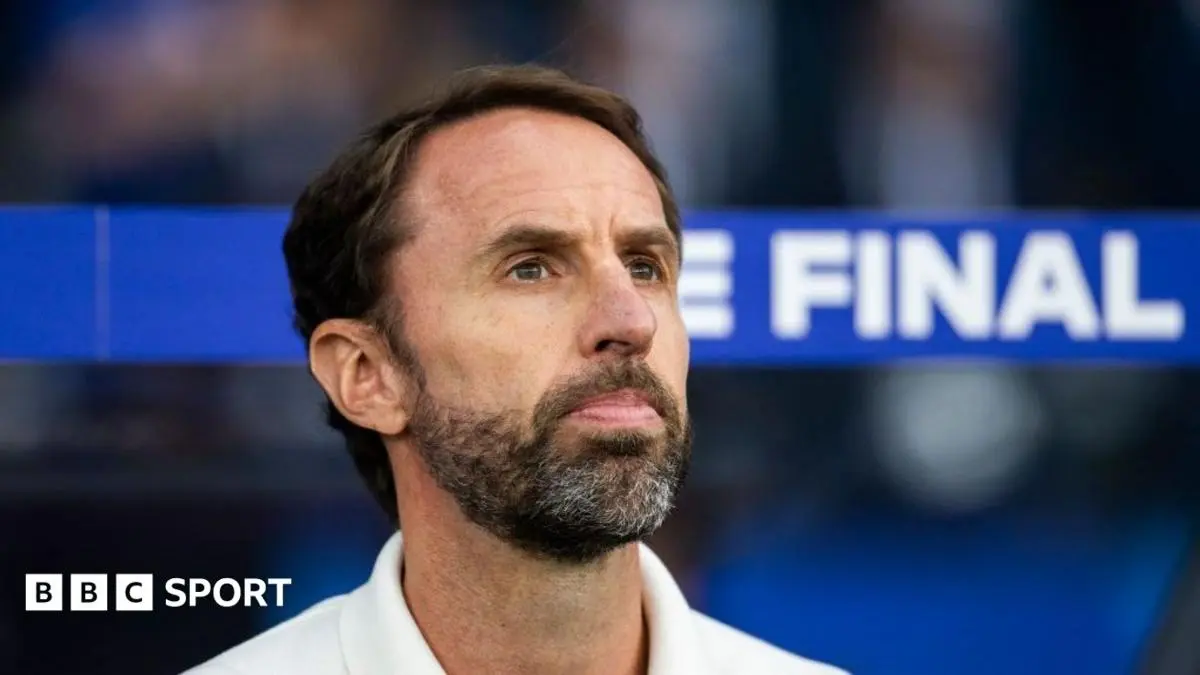
Former England manager Gareth Southgate has firmly stated that he does not foresee himself returning to club management within the Premier League, signaling a significant shift in his professional priorities following his departure from the international stage.
The 56-year-old has remained out of management since stepping down from his role as the leader of the Three Lions. His resignation followed the dramatic conclusion of Euro 2024, where England reached the tournament’s final only to suffer a heartbreaking defeat against Spain. That campaign marked the second consecutive European Championship final appearance under his stewardship, having also guided the national team to the showpiece match at Euro 2020.
Despite his extensive experience at the highest level of international football, Southgate has not managed at the club level since a three-year spell with Middlesbrough, which concluded in 2006. When explicitly asked during a recent appearance on The Amol Rajan Connection whether he would ever consider a return to the dugout in the English top flight, his response was unequivocal. "I don’t see a scenario where I do that," he stated.
Elaborating on the psychological and emotional toll that elite football management took on him by the end of his tenure, Southgate opened up about the erosion of his enjoyment for the game. He explained that towards the conclusion of his time with the national team, the fundamental joy of winning had begun to evaporate.
"Towards the end of my time with England, I stopped enjoying, at the very least for a period, the wins keep you going," Southgate reflected. "By the end, I didn’t even enjoy the wins for any longer than a couple of minutes. So, I’ve hardly watched football."
The disconnect from the sport has been profound since he handed over the reins of the national side. Southgate noted that his attendance at live matches has plummeted to almost zero, save for one deeply personal and historic occasion for his favorite childhood club. "I went to the FA Cup final to see my team, Crystal Palace, win their first trophy," he said. "I’ve not been to a football ground since. So my sort of desire to be involved in football has changed."
In the months following his departure from the Football Association role, Southgate has deliberately diversified his professional pursuits. He has spent time working within the media landscape and, earlier this year, took on a prominent role fronting a BBC documentary. For that project, he traveled across the United Kingdom to engage with communities and understand the complex challenges currently facing young men and boys in modern society.
Furthermore, he expanded his intellectual horizons by spending time as a visiting lecturer at Harvard Business School in Boston, engaging with students and faculty on topics of leadership and management outside the traditional sports sphere.
Reflecting on this transitional phase of his career, Southgate expressed immense satisfaction with the direction his life has taken away from the relentless pressure cooker of professional football. "I’ve loved the last 18 months of my life," he added. "I’ve had 37 years where my sense of self depended on did I win or lose on Saturday. And actually I’ve loved having different experiences. I’ve met politicians, I’ve met people in the media industry, I have learned about leadership in all sorts of areas, I’ve travelled around the world learning things. I’ve just enjoyed playing a different film in my life."
Beyond his personal reflections on management and life after the national team, Southgate also addressed broader systemic issues currently facing English football, specifically the recent landmark developments concerning Manchester City and the Premier League.
Last month, Manchester City were found guilty of the majority of charges relating to breaches of the Premier League’s financial regulations covering the period between the 2009-10 and 2017-18 seasons. An independent commission determined that, during that timeframe, the club had arranged "sham contracts" and relied upon "sham agreements to artificially inflate the club’s revenues and reduce its costs."
Manchester City have consistently denied any wrongdoing throughout the extensive investigation and subsequently submitted a formal appeal against the findings on October 2.
Offering his perspective on the fierce public and tribal reactions provoked by the case, Southgate drew upon his extensive behind-the-scenes experience within football’s administrative corridors.
"There’ll be the tribal fans’ response to punish Manchester City as much as we can, relegate them, fine them, do whatever you can," Southgate noted. However, offering a more measured institutional viewpoint, he added, "I’ve been in football boardrooms, I’ve been in meetings with Uefa, I’ve been in meetings with Fifa, I have been in all these spaces and I know how complicated all of this is."
Southgate emphasized that the fallout from such unprecedented regulatory actions extends far beyond simple partisan satisfaction, highlighting the intricate web of legal and administrative challenges that lie ahead for the sport.
"My underlying thought is none of this is good for football and there are no winners because if you’re at the Premier League, for a very brief moment you might feel justified that all the flak you’ve had for this case taking so long, this is why it’s taken so long and there’s the verdict, and I’m sure there’s an element of justification in that," he explained.
"Then there’s this realisation of how do we deal with all of this because you know the possibility of all the different legal cases that emerge from this, how long this could still take, what’s the right sort of punishment, how do you keep the whole game on track? That’s unbelievably complex."