
The stark disparities on display during Tuesday night’s international fixtures laid bare a growing structural crisis within European women’s football qualification, once again bringing the fairness of the current tournament format into sharp focus.
One of the primary driving forces behind the lopsided scorelines across the continent was a strict qualification bottleneck: only a single team from each of the primary league phase groups received automatic qualification to the major tournament. This unforgiving framework forced several footballing powerhouses into a grueling and redundant play-off system, despite campaigns that would have seen them cruise through under alternative setups.
The Netherlands, who proudly claimed the European crown in 2017, discovered this the hard way. They finished a strong second in their group behind France, a side currently ranked sixth in the world. Rather than securing a direct ticket, the Dutch were thrust into the play-offs, where they subsequently dismantled Hungary 11-0 on aggregate.
Similarly, Norway—historical giants of the sport who lifted the World Cup trophy in 1995 and boast six appearances in European championship finals—found themselves casualties of a brutal draw. They lost out to powerhouse Germany in their group and were left to secure their progression by beating Romania by a dominant 8-0 scoreline.
Other high-profile fallouts from League A suffered an even more glaring mismatch of talent. Sweden and the Republic of Ireland completely overwhelmed their respective opponents, cruising to astonishing 15-0 and 12-0 aggregate victories.
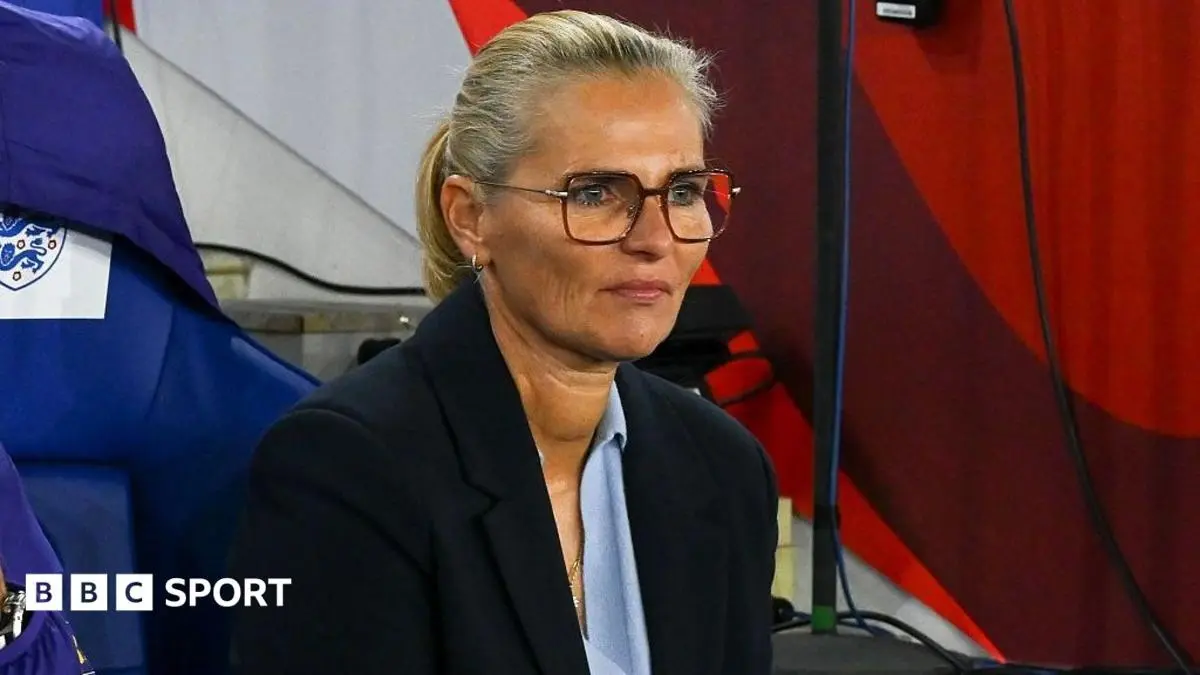
Given these structural realities, it came as little surprise when back-to-back European champions England recorded another heavy victory against vastly weaker opposition from League C during their play-off encounter. The Lionesses had the misfortune of being drawn in the exact same group as reigning world champions Spain, setting off a chain of events that left manager Sarina Wiegman repeatedly addressing the media about the convoluted qualification path.
"Of course we wanted to qualify straight away, that’s not the case," said England manager Wiegman when asked about the qualification process once again on Tuesday. "For us now, the facts are that we are in the play-offs, we have played Greece, now we’re through, and now we’re going to play Ukraine. That’s what my focus is on. Uefa will review how things are set up and see whether they think it works or it should be better, or different. I don’t think it’s my place now to review that."
Despite securing their passage past Greece, the Lionesses still face another arduous two-legged tie against Ukraine. The first leg is scheduled to take place away from home on December 1, with the return fixture slated for the iconic turf of Wembley Stadium on December 5.
The absurdity of the fixture computer is underscored by the fact that Ukraine is a side England already defeated twice during the regular league phase by a commanding aggregate score of 9-1. It seems a bizarre spectacle that a top-tier European nation should be forced to defeat the exact same opponent on at least three separate occasions simply to navigate a single qualification cycle.
England’s overall body of work throughout the campaign illustrates just how harsh the group dynamics were. The Lionesses won seven of their last eight qualifying matches, netting 21 goals while conceding a mere six times. Their only blemish was a hard-fought defeat away from home against world champions Spain. In fact, they came runners-up in League A3 strictly on their head-to-head record against the very best team in the planet, a point underscored when England memorably defeated Spain 1-0 under the arch at Wembley.
Furthermore, England’s overall tally of 15 points accumulated during the league phase was a stellar return that was surpassed by just three other teams across the entire continent: Germany, Switzerland, and Hungary. However, a closer look at the tournament architecture reveals a stark imbalance. Switzerland and Hungary secured their qualifying paths within League B and League C environments that did not feature a single team from the world’s top 45 ranked nations.
In sharp contrast, England—rightfully seeded in the elite tier of League A—had to contend with Iceland, a tricky opponent ranked 13th in the world, alongside the global number one-ranked Spain in a punishing four-team group.
This is not the first time England has found themselves wrestling with lopsided qualification matches. When securing their ticket to the 2023 Women’s World Cup, England had to dispatch Latvia across two thoroughly one-sided encounters, winning 20-0 and 10-0.
That specific tournament did see a historic and welcome expansion from 24 to 32 teams. While the qualification path leading up to it remained heavily skewed, the showpiece event in Australia and New Zealand proved to be an entirely different and highly competitive spectacle. England was severely tested by tournament debutants Haiti in the group stages, narrowly squeezing out a 1-0 victory, and later faced a fierce challenge from Colombia in the quarter-finals, despite the South American side having failed to qualify for the preceding tournament.
The overall level of international competition has clearly been rising rapidly. This growth has been particularly evident across Europe, highlighted by the fact that England famously failed to qualify for the 2024 Olympic Games on behalf of Team GB after finishing second to the Netherlands in their fiercely contested Nations League group. The following year also brought difficult tests, including a frustrating draw with Portugal, a defeat at the hands of Belgium, and the need to successfully navigate two nervy penalty shootouts during their journey through Euro 2025.
There is no denying that the standard of competition within England’s matches has drastically improved over recent years, yet they were undeniably dealt an exceptionally rough hand in this cycle’s World Cup qualification campaign.
Following a costly 4-0 defeat at the hands of Spain back in June, Wiegman did not hide her frustration regarding the system. "The competition in Europe is really high," she remarked at the time. "What I’m disappointed about is that we win five games, we have 15 points and we’re in a group with the world champions and then you can’t qualify. I’m happy with the performances but not the result of us having to go into the play-offs. That’s just the way it is."
What adds to the growing frustration within the English camp is the contrast in preparation time. While England has been forced to navigate routine wins over Greece and prepare to face an opponent they have already locked horns with twice in 2026, many of their potential World Cup rivals are spending these international windows testing themselves in high-profile matches against top-tier global opponents.
Evidence of this top-flight preparation was clear on Tuesday night when tournament favorites Germany and Japan squared off in a blockbuster friendly match. Across the Atlantic, regional rivals Brazil and Argentina played out a competitive 2-2 draw, while four-time world champions the United States locked horns with Spain twice in the span of five days in a mouth-watering meeting of global titans.
Looking further ahead, FIFA has recently announced that the 2031 Women’s World Cup will be expanded yet again, growing from 32 teams to a massive 48-nation format. While sports administrators and fans continue to debate whether this latest expansion is the right decision for the global game, the immediate domestic fallout remains clear. As long as massive scorelines continue to dominate the headlines, it is increasingly evident that they are less a reflection of a widening talent gap and more a direct result of a European qualification process that simply does not work to the benefit of the majority.