
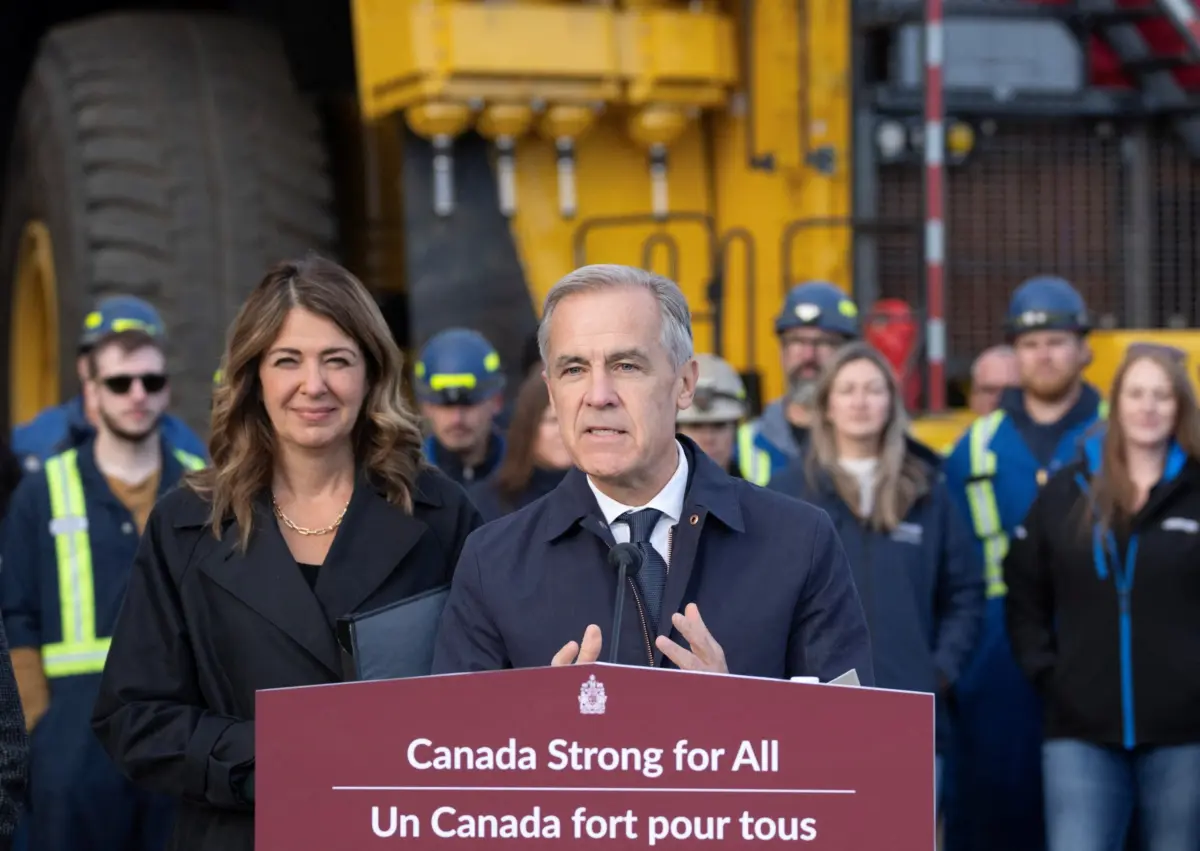
Prime Minister Mark Carney has used his national Thanksgiving message to deliver a passionate call for Canadian unity, stepping up his engagement just one week before the oil-rich province of Alberta heads to the polls to vote on a contentious proposal to secede from the federation.
The Thanksgiving address, broadcast nationwide on Monday, comes at a delicate and pivotal moment for the country. As communities across Canada gathered to celebrate the autumn holiday, the federal government found itself confronting severe political headwinds, marked by surging regionalism in the West and a resurgent sovereignty movement in the East.
Addressing citizens from a classroom at his alma mater, St. Francis Xavier High School in Edmonton—where he grew up—Carney directly confronted the centrifugal forces threatening to pull the country apart. Speaking with a deliberate sense of urgency, the Prime Minister warned that the nation’s collective future hinges on cohesion rather than division.
"We can’t build big things on fault lines," Carney said in his video message, cautioning that Canada currently faces multifaceted threats to its economic stability, national security, and foundational way of life. "We have to be strong, and we are stronger together."
The Alberta Referendum and Longstanding Grievances
Carney’s remarks serve as a direct appeal to voters in Alberta ahead of the high-stakes October 19 provincial vote. On that day, Albertans will decide whether their provincial government should begin the formal, complex legal process required under the Canadian Constitution to hold a binding referendum on whether the province should separate from Canada.
The initial ballot question facing voters on October 19 is explicitly worded: "Should Alberta remain a province of Canada, or should the Government of Alberta commence the legal process required under the Canadian Constitution to hold a binding provincial referendum on whether or not Alberta should separate from Canada?"
While the upcoming ballot is non-binding, it represents a crucial procedural step for the province’s vocal and organized separatist movement. The push for independence has been fueled by years of deep-seated regional frustration, particularly regarding federal energy, fiscal, and environmental policies. Separatist organizers and their supporters have long argued that Ottawa unfairly targets and restricts Alberta’s oil and gas industry, which serves as the undeniable cornerstone of the provincial economy and a major engine for broader Canadian prosperity.
Despite the growing visibility of the secessionist campaign, public opinion research indicates that the majority of Albertans ultimately oppose independence, preferring to address their economic and political grievances from within the Canadian federation.
Nevertheless, Carney emphasized that his administration is actively investing in the province’s future to demonstrate the tangible benefits of national unity. Highlighting his frequent returns to his home province, the Prime Minister pointed to major ongoing infrastructure and development projects.
"I’m back home a lot these days because we are building big things again in Alberta: thousands of new homes, high-speed rail, a new pipeline to the West Coast that will create lasting opportunity and prosperity for hundreds of thousands of people in this province and across the country," Carney said.
International Attention and US Inquiries
The domestic political drama unfolding in Western Canada has not gone unnoticed beyond its borders. The movement is being closely watched south of the border, particularly given that Canada’s diplomatic and economic relationship with the United States under President Donald Trump has grown increasingly strained in recent times.
The geopolitical dimensions of the separatist push gained unexpected traction earlier this month when an investigative report by The Globe and Mail revealed that United States Republican operatives had held meetings with secession organizers in Alberta. According to the report, the discussions centered on campaign strategies, with separatist leaders allegedly offering potential future access to the province’s lucrative water and oil royalties in exchange for American backing for an independent Alberta. Separatist leaders have publicly disputed those claims.
At the same time, external commentators have weighed heavily into Canada’s domestic constitutional debates. Last week, the secessionist Parti Québécois won the most seats in a provincial election in Quebec, allowing the party to return to power in the National Assembly after more than a decade out of office. However, the Parti Québécois secured only 59 out of 129 seats, leaving them short of the majority needed to unilaterally advance major constitutional change.
Despite the lack of a legislative majority, the Quebec election result drew immediate international commentary. US tech entrepreneur Elon Musk, widely recognized as the world’s wealthiest individual, took to social media to applaud the outcome and amplify calls for the breakup of the Canadian state.
"Good. Quebec should separate," Musk wrote on social media platforms, leveraging his massive online influence. "They would be better off. Alberta and Saskatchewan should separate too."
Navigating a Complex National Landscape
The convergence of the Alberta referendum, the political resurgence of sovereignty forces in Quebec, and external commentary from high-profile foreign figures has created a uniquely challenging environment for Prime Minister Carney’s government.
As the October 19 polling date rapidly approaches in Alberta, the federal government continues to emphasize economic partnership, infrastructure investment, and historical ties as the best antidote to regional alienation. With the eyes of the nation and international observers fixed on Edmonton, the coming days will test the resilience of Canadian federalism and the resonance of Carney’s message that national unity remains the bedrock of future prosperity.