

For car enthusiasts, the garage is often the single most important room of a home. Many motorists have even based their entire home-buying decisions around the quality, size, and layout of a property’s garage setup. Yet, despite the deep reverence car culture holds for these dedicated spaces, reality often tells a different story.
According to a study conducted by Craftsman back in 2022, between a quarter and a third of American homeowners with a garage actually have too much accumulated clutter stored inside to even park a vehicle in it. For automotive purists, the concept of owning a garage and choosing not to use it to protect valuable cars and motorcycles from the elements might seem baffling. However, statistical reality shows that a significant portion of the population utilizes their garages for entirely different purposes.
Garages have evolved into the Swiss Army knives of residential architecture. Because they offer a large, open footprint and heavy-duty concrete flooring, they serve as a completely blank slate for homeowners. Over the years, people have converted these spaces into improvised laundry rooms, home recording studios, home-brewing stations, and even functional workshops for small businesses. In some cases, homeowners have completely closed off the large vehicle entry doors to transform the area into additional residential bedrooms, attempting to generate extra income in a challenging economic landscape. A garage can truly become whatever a homeowner needs it to be.
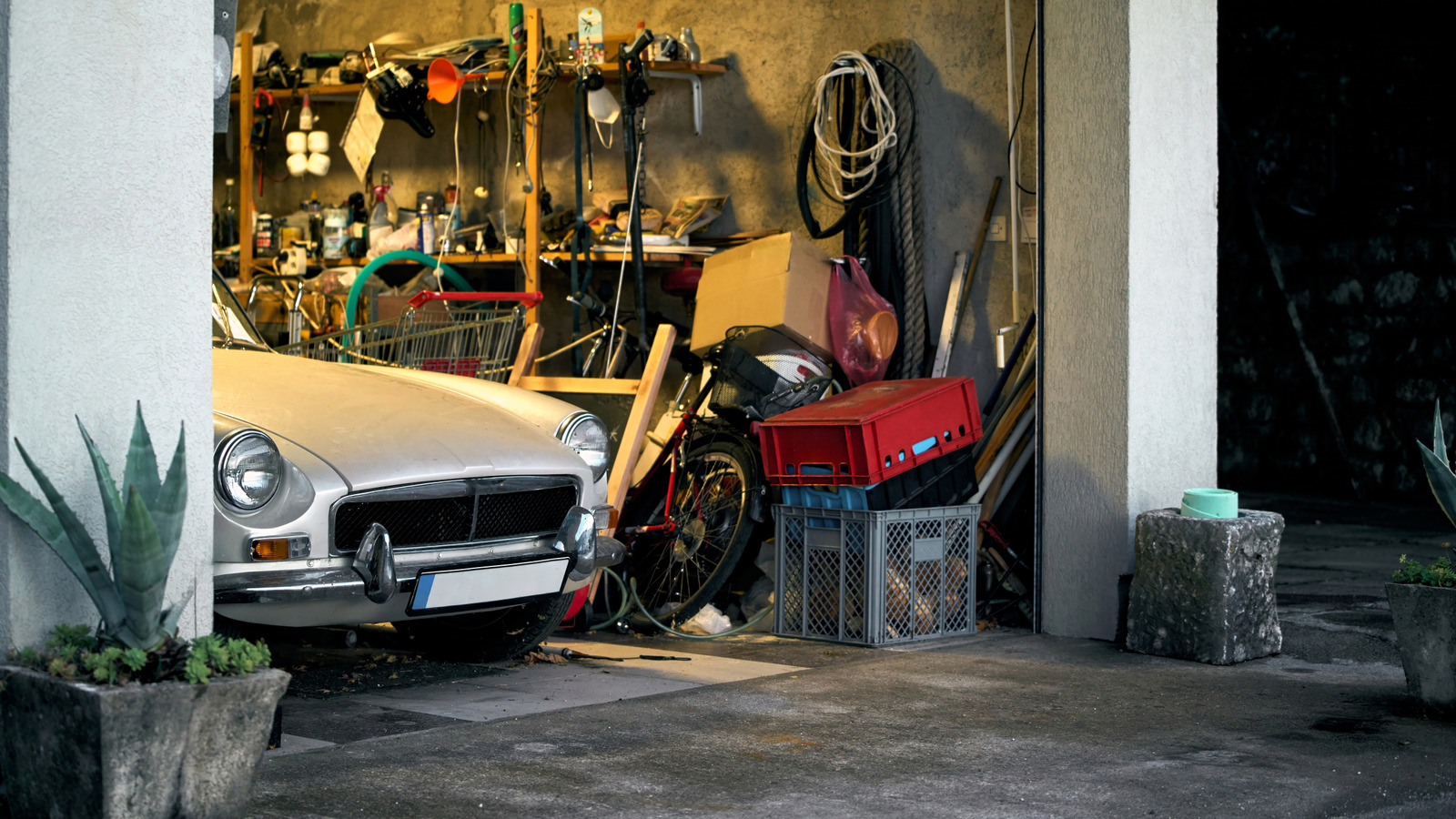
Still, there is a distinct magic to utilizing a garage for its traditional and intended purpose: sheltering and maintaining automobiles. For automotive enthusiasts, discussing what resides behind their garage doors is an opportunity to showcase their pride and joy. Whether it is a pristine weekend cruiser tucked away under a breathable cover, a rugged off-road rig, or a daily driver that occasionally forces lesser vehicles to sit outside exposed to the elements, the contents of a garage reveal a lot about its owner. For those enthusiasts who do not currently have access to a garage, the conversation turns toward aspiration—dreaming about the ultimate fleet they would house if they suddenly acquired the square footage.
I Understand the Clutter
The tension between keeping vehicles protected and managing household storage is a universal dilemma, one that even automotive journalists face on a daily basis. For instance, living with a historic home built in the early 1920s—an era when automobiles were still a rare luxury—often means dealing with a complete lack of dedicated residential parking structures.
To solve this problem, some enthusiasts are forced to rent external commercial shop spaces located miles away simply to store and maintain their collections. Unfortunately, these remote shops have a tendency to transform into repositories for household clutter that simply has no other place to go. When multiple people share the same space, the footprint fills up rapidly.
In some cases, rented workshop spaces serve dual purposes, accommodating both automotive projects and small independent businesses, such as vintage clothing enterprises. When the weather permits, setting up a mobile desk and a computer transforms the automotive workspace into an open-air office. However, square footage is always at a premium. In a shop measuring roughly eighteen feet wide by sixty feet deep, there should theoretically be ample room to comfortably store up to half a dozen vehicles.
In practice, however, heavy clutter often reduces that capacity significantly. When a workspace fills up with spare parts, equipment, and inventory, compromises have to be made. Important project cars and classic vehicles, such as vintage Porsche models, may end up relegated to outdoor parking lots, enduring the harsh elements of freezing winter weather simply because indoor space is occupied by non-automotive items.
This phenomenon highlights a broader philosophical question about modern material life: human possessions tend to expand dynamically to fill whatever physical space is provided for them. Even if a garage or shop space were magically doubled in size, history suggests that the new area would likely reach maximum capacity within a matter of days. The eternal struggle between acquiring meaningful machinery and managing the inevitable accumulation of miscellaneous belongings remains a shared experience across households everywhere.