
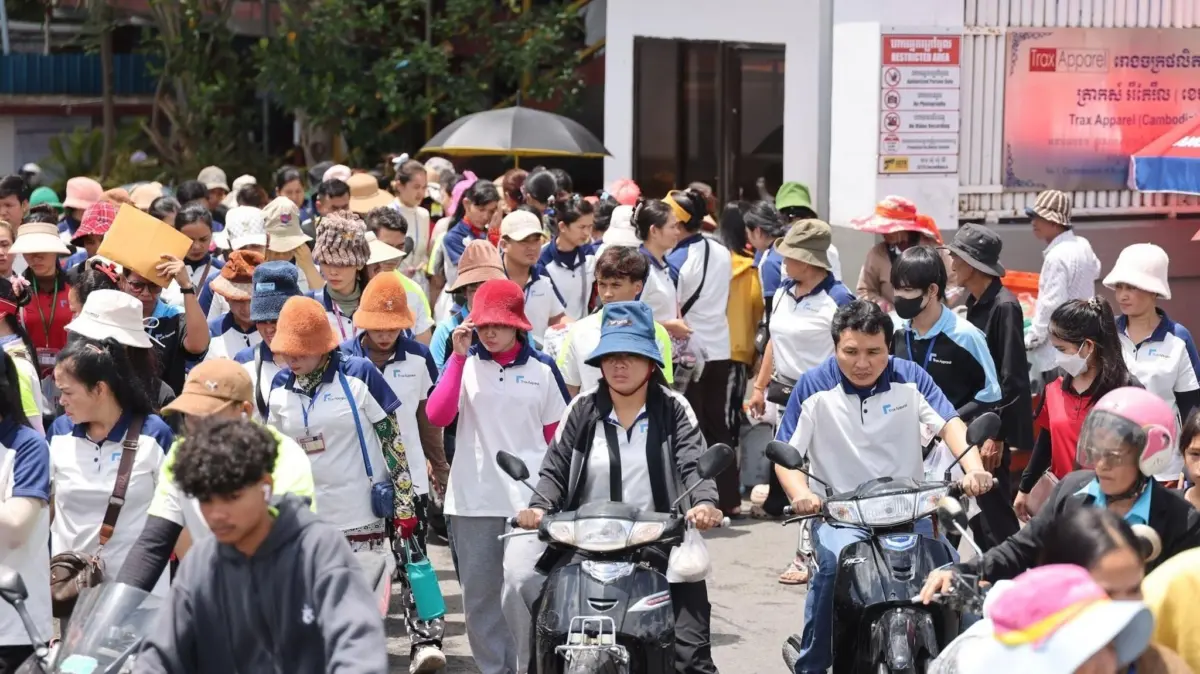
Workers are being paid a basic wage of less than £1 an hour to produce official replica football shirts for some of the biggest and most commercially successful clubs in the world, a BBC Sport investigation can reveal.
The investigation successfully traced authentic merchandise back to two major manufacturing facilities in Cambodia, where working conditions were described by labor rights advocates as "grim." The inquiry into the global supply chain behind official football kits was launched after football supporters voiced mounting frustration over steeply rising retail prices, a trend that has driven many fans toward cheaper, unregulated counterfeit alternatives.
Photographs and documentation obtained from inside the Bowker Garment Factory and Trax Apparel reveal that these plants manufacture official kits for several elite European clubs, including Arsenal, Celtic, Liverpool, Aston Villa, Benfica, and Real Madrid. Employees working inside these facilities reported struggling to make ends meet while fulfilling demanding production quotas of up to 700 items per person each day on fast-paced assembly lines.
The findings have drawn sharp criticism from international labor organizations. The Clean Clothes Campaign, a global network dedicated to protecting garment workers’ rights, stated that the investigation paints a very grim picture of conditions that mirror challenges faced by garment workers throughout the region. Similar concerns regarding low basic pay, stifling indoor temperatures, and grueling hours have long plagued Cambodia’s broader textile and garment manufacturing sector.

Life on the Production Line
Thousands of miles away from the European stadium club shops where the finished garments are eventually sold, the manufacturing process begins months before new kit designs are officially unveiled to the public. Inside the Bowker Garment Factory, located on the outskirts of Phnom Penh, promotional displays feature Benfica, Aston Villa, and Celtic kits hanging beneath a prominent Adidas logo on the wall.
Approximately 3,400 people, the vast majority of whom are women, are employed at the Bowker facility. Another 3,200 workers are employed roughly 10 miles east at Trax Apparel. The manufacturing process relies heavily on imported raw materials, with fabric shipped in from neighboring countries such as Thailand and Vietnam. Once the textiles arrive, specialist tailors construct a prototype sample for other line workers to follow. The bulk of the production process—incorporating intricate sewing, ironing, quality control, and packaging—is then carried out across these sprawling factories.
Staff members at both locations typically work six eight-hour shifts each week. According to payslips reviewed during the investigation, basic monthly salaries typically range between $210 and $220, equivalent to roughly £158 to £166. While these base rates comply with local minimum-wage legislation in Cambodia, payslips indicate that total monthly earnings can rise to approximately $300, or about £226, once overtime pay and allowances are factored in. However, achieving this higher total requires workers to log significant extra hours on top of their standard working week.
‘These Shirts Contain the Sweat of Cambodian Workers’
For many employees on the factory floor, the financial compensation falls well short of covering the rising cost of living. Workers described the constant struggle to cover basic necessities such as rent, food, and utility bills.

"It’s hard to live with this amount," one Bowker employee explained. Another worker at Trax voiced a direct message to international consumers: "I want international customers to hear that one shirt they buy costs more than two weeks’ salary for a worker. Every one of these shirts contains the sweat of Cambodian workers."
In response to the findings, Trax reported that average monthly employee earnings at its facility range between $305 and $342, or roughly £230 to £258, for the current year. Meanwhile, sportswear manufacturer Adidas stated that average net wages across a sampled group of its Cambodian suppliers were found to be 34% higher than the living-wage benchmark established by the Anker Research Institute. The company added that its supply chain staff are usually compensated at rates considerably higher than the local minimum wage. Management at the Bowker facility did not respond to requests for comment.
Extreme Temperatures and Production Pressure
Conditions inside the factories add further strain to the workforce. Photographic evidence taken inside the Bowker Garment Factory recorded indoor temperatures reaching 35.2 degrees Celsius alongside humidity levels of 57.6%.
"The heat stress is really taking a toll on our health," said an employee who works on the facility’s ironing line.

In addition to thermal discomfort, workers described immense pressure to meet daily group production quotas, which typically range between 300 and 700 finished items per person. Employees highlighted the stark contrast between their wages and the retail price of the garments they produce. Pointing to shirts that retail for $120, or around £90, in stores, workers questioned how much revenue is generated from hundreds of items, arguing that a massive financial return yields almost nothing for the people on the assembly line.
Some employees also reported facing verbal abuse and intimidation when production targets were missed. One Bowker worker claimed that failure to complete quotas often resulted in supervisors yelling, scolding, and telling staff to resign. The same worker recounted a hazardous incident involving two separate electric shocks from an exposed wire, noting that management only addressed the hazard after the second shock occurred.
Adidas responded by stating that both factories maintain proper heat-management measures, that its workplace standards strictly prohibit any form of harassment, and that reviews of Bowker’s incident logs revealed no records of electrical-related accidents. Trax acknowledged that the facilities experience periods of elevated temperatures but maintained that active cooling systems are in place, insisting that its operational approach is not driven by the enforcement of rigid output targets.
Broader industry data underscores these challenges. A 2024 report published by the International Labour Organization found that 69% of garment factories in Cambodia experienced issues related to excessive heat, while 84% faced deficiencies concerning worker protection standards.

From Cambodia to the Club Shop
The global appetite for official club merchandise remains immense, with research firms estimating the worldwide market for teamwear to be worth several billion pounds. Over the past decade, the average price of an adult replica Premier League shirt has climbed by more than 50%, a trend driven by expensive kit deals with elite clubs and advances in fabric technology.
A typical £85 replica shirt breaks down across several financial categories, with fabric, sewing, and shipping accounting for £8.50, retailers taking £37.45, manufacturers claiming £16.25, marketing consuming £9.50, and value-added tax absorbing £13.60. For player-specification shirts worn on the pitch, retail prices can soar as high as £120.
Industry experts emphasize that the pricing structure is complex. Representatives from labor organizations point out that high profit margins on jerseys make the brand market uniquely lucrative. Conversely, kit designers have previously noted that retailers shoulder significant financial risk depending on the on-field success of individual clubs, while sportswear brands must attempt to recoup the massive expenditures paid out in sponsorship contracts.
Adidas supplies eight of the twenty clubs in the Premier League, alongside several national teams. Competitor Nike supplies three Premier League sides as well as the England national team, with production largely based in Thailand, Vietnam, and Georgia. While Nike does not publish country-specific salary data, the company stated that 71% of its key suppliers pay wages that meet or exceed local living-wage benchmarks. Other major sportswear brands operating in the top flight did not respond to inquiries.

The soaring cost of official merchandise has fueled a parallel market for counterfeit replicas, which can often be purchased online or in markets for as little as £12. Law enforcement agencies and trading standards bodies routinely issue warnings against purchasing counterfeit goods, citing a lack of safety standards and protections for workers in unregulated supply chains.
Meanwhile, labor advocates argue that sports clubs share a responsibility to monitor their commercial partners closely. Campaign groups emphasize that respect and ethical treatment must serve as a fundamental baseline across the sports industry, urging clubs to ensure that their names and badges are not associated with manufacturing practices that fail to respect basic labor rights.