
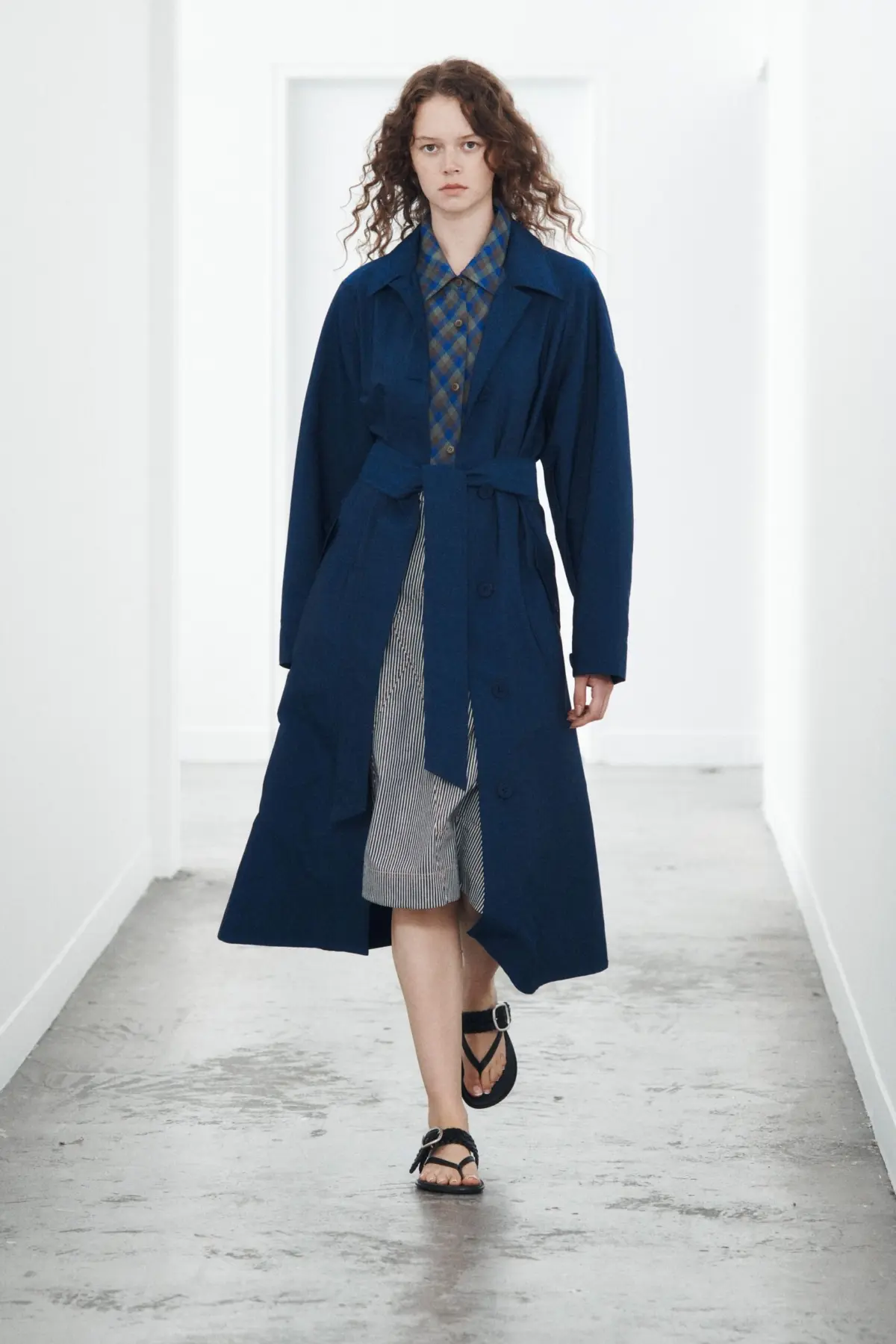
For 27 years, designer Lee Mathews has navigated the delicate balance between the static presentation of a garment and its kinetic reality on the human form. Like many in the fashion industry, she has long grappled with the disconnect that often exists between a piece hanging on a rack and the way it breathes, moves, and settles on a body in motion. This season, she decided to bridge that gap with a unique, experiential approach to her latest lookbook, transforming a warehouse space near her inner-Sydney studio into an impromptu runway.
Rather than relying on the traditional, curated stillness of static photography, Mathews chose to capture her models in transit. They walked through the industrial space, showcasing a collection of breezy, high-summer silhouettes designed specifically to handle the sweltering heat of the Australian climate. The garments, which are slated to arrive in boutiques this coming January, were presented not as objects to be viewed, but as functional apparel meant to be lived in.
“We’ve talked about this idea forever,” Mathews remarked on an unseasonably warm Sydney afternoon. The heat, which feels increasingly like a harbinger of a challenging, warming climate, serves as the backdrop for her latest work. As Australia prepares for another potentially record-breaking summer, the demand for Mathews’ signature airy, investment-quality dresses is expected to remain high. Her designs have long been characterized by their capacity to withstand both shifting trends and extreme weather, a testament to her nearly three decades of experience in the industry.
This latest collection marks a distinct period of reflection for the designer. Over the past few seasons, Mathews has been on a self-described “nostalgic streak,” prompted in part by a recent partnership with SWOP, the Australian recycled fashion chain. The collaboration provided her with an unexpected lens through which to view her own history.
“We went to Brisbane, and the whole front of the store was old things of ours,” she recalled. Seeing garments from two decades ago displayed in a modern, youth-oriented retail space was a revelation for the designer. She found that pieces she had designed twenty years prior felt strikingly current, sitting comfortably alongside the contemporary aesthetic of the store. The experience challenged her perceptions of longevity and relevance in fashion. It was a realization that the “hip cognoscenti” who frequent stores like SWOP were actively coveting and styling her older designs in ways that felt entirely relevant to the present day.
This discovery brought about a profound shift in her creative philosophy. Mathews found herself questioning the industry’s perpetual drive for novelty. “It was the weirdest thing,” she explained. “I had one of those moments where you just think, ‘Why erase to make something brand-new, when there’s still so many lovely things that only ever had one outing?’”
Guided by this introspection, Mathews decided to lean into the concept of the “throwback.” The runway presentation featured sophisticated iterations of her classic cotton dresses, rendered in an understated palette of soft yellows and muted blues. Also making a return were her signature lace dresses—pieces that have become perennial requests from her loyal customer base.
“People say to me in the store, ‘I love that lace slip that you used to do, you need to do them again!’ And I’m like, ‘Which one?’ There were so many,” she said with a laugh. By revisiting these archival silhouettes, Mathews is not merely repeating herself; she is responding to a genuine, persistent demand for the items that have defined her brand’s identity over the last quarter-century.
While the consistency of her aesthetic remains a pillar of her brand, this season’s collection represents a slight departure from the more vibrant, experimental color palettes she has explored in recent years. Instead, utility has taken center stage. The focus is on the creation of a modular wardrobe—garments that do not exist in a vacuum but are intended to be layered and integrated with pieces from previous collections. “You’ll be able to wear the pieces with anything, from any other collection, because they all come from the same source,” she noted.
This approach reflects a growing sensibility in fashion toward sustainability and the longevity of the wardrobe. By ensuring that new releases complement existing staples, Mathews is encouraging her customers to view their collections as cumulative rather than disposable. However, this commitment to the past does not mean a rejection of improvement. Even when revisiting archival designs, Mathews approaches them with the benefit of 20/20 hindsight.
“You’re taking something from the past, sticking it in there, and going, ‘You know what, if we just change that sleeve and update that collar, that’s a great thing,’” she explained. For Mathews, the process of looking back is not about stagnant preservation, but about iterative refinement. It is about identifying the core of what made a piece successful—the fit, the fabric, the drape—and adjusting the minor details to ensure that the garment remains functional and modern for the wearer of today.
The collection, which feels like a culmination of her years spent observing how women actually interact with her clothing, is a study in quiet confidence. There is no desire to chase ephemeral trends here. Instead, the focus remains firmly on the tactile experience of the fabric and the silhouette’s ability to facilitate ease of movement. The models, walking through the warehouse, served as the ultimate proof of this concept. In a world where fashion is often obsessed with the next big aesthetic shift, Mathews is finding success by doubling down on the enduring qualities of her own heritage.
As she looks toward the release of these pieces in January, the designer appears content with this retrospective approach. She is not erasing her past to create a new identity; she is synthesizing it. By acknowledging the resilience of her previous work and updating it with the wisdom gained over 27 years, she is offering her customers a sense of continuity.
This latest chapter for Lee Mathews is defined by the realization that true style does not necessarily require constant invention. Sometimes, it requires the courage to look at what has already been done, recognize its value, and refine it for a new generation. In the context of an increasingly uncertain climate and a fashion industry that is beginning to reckon with its own consumption, Mathews’ pivot toward the archival feels both timely and necessary. Her focus on utility, her commitment to quality, and her willingness to iterate on her own classics position her brand as a stabilizer in a volatile market.
For the woman who has spent nearly three decades in the industry, the path forward is increasingly paved with the lessons of the past. By honoring the garments that have stood the test of time, Mathews is creating a future that feels, in many ways, like a return to the very things that made her work resonate in the first place. As the models finished their final walk through the warehouse space, the message was clear: the best design is that which is built to endure, evolve, and remain, season after season, a foundational part of the wearer’s life.