
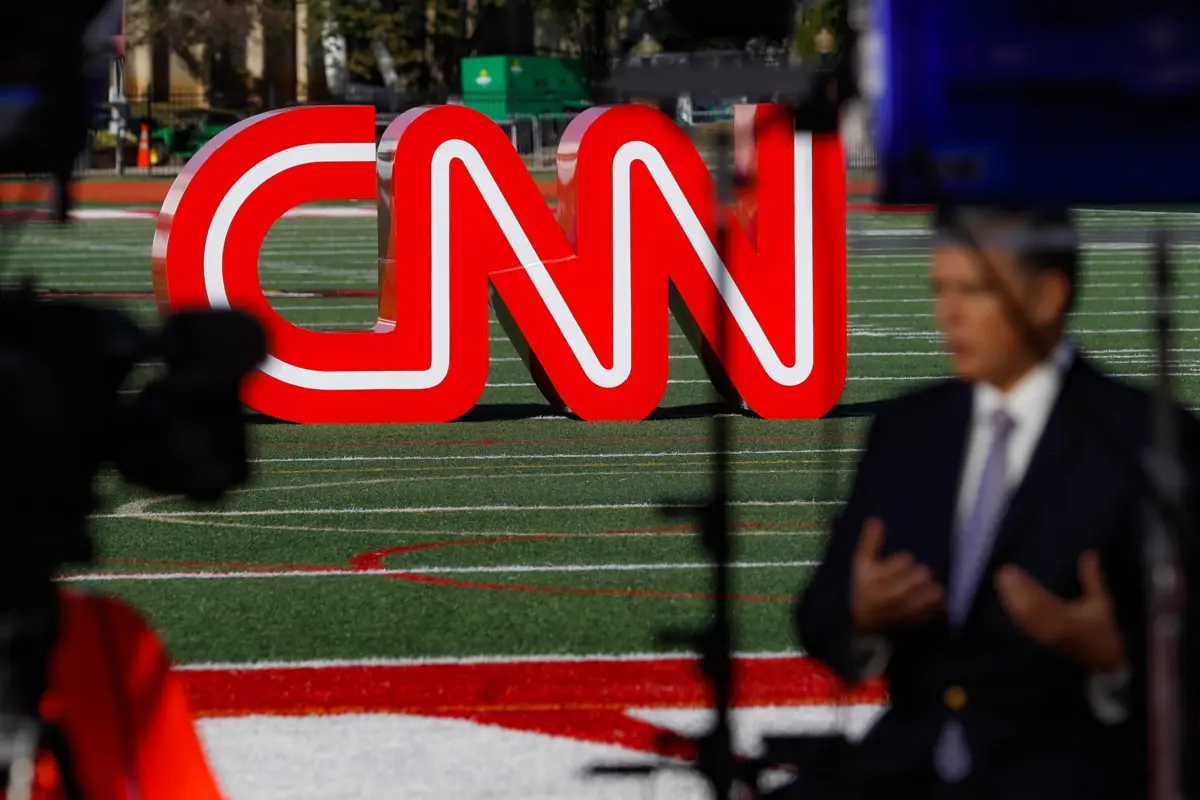
Paramount Skydance has officially finalized its massive $110 billion acquisition of Warner Bros Discovery, including debt, bringing two of the most influential American news organizations, CNN and CBS News, under the exact same corporate ownership. The landmark mega-deal unites a vast portfolio of Hollywood’s biggest studios, streaming platforms, and cable networks, instantly reshaping the global media landscape. However, the completion of the transaction immediately reignites intense, widespread concerns regarding media consolidation, editorial independence, and the future of freedom of speech in the United States and beyond.
The newly formed mega-entity, operating under the corporate banner of Skydance Corporation, creates a monumental media titan. The combined company brings together legendary entertainment brands such as HBO, CBS, Nickelodeon, Showtime, Comedy Central, DC Studios, and the Food Network. In the streaming sector, the deal merges Paramount+ and HBO Max into a single, dominant market force.
Despite the staggering entertainment portfolio, the most acute scrutiny has focused squarely on the company’s newfound control over two major US newsrooms. David Ellison, serving as Skydance’s chairman and chief executive, has attempted to assuage public and regulatory anxiety by publicly promising to preserve the absolute editorial independence of both networks. However, those assurances have been met with deep skepticism from industry watchdogs, journalists, and politicians, largely due to the background of the deal’s primary financial architect.
David Ellison’s father, Oracle cofounder and billionaire Larry Ellison, stands as a major financial backer of the entire acquisition. Larry Ellison has a well-documented political footprint, having previously poured substantial funds into political efforts supporting US President Donald Trump, as well as directing millions toward pro-Israel organizations. When explicitly asked about the high-stakes corporate takeover on Tuesday, President Trump enthusiastically welcomed the development. Speaking to reporters, the president praised the leadership, stating, "They’re terrific people, and it’s going to be a great company."
Why was the merger challenged?
The path to finalizing the acquisition was fraught with intense legal and political hurdles from the very beginning. The takeover faced fierce, sustained opposition from Hollywood labor unions, politicians, and state prosecutors who grew increasingly alarmed by the mounting concentration of corporate power in an entertainment industry already heavily concentrated among a handful of conglomerates.
The corporate maneuvering began when Netflix initially reached a preliminary agreement to purchase a portion of Warner Bros Discovery. Seeing an opportunity to expand its footprint, Paramount launched a high-stakes competing bid, sparking a fierce, multi-month bidding war that ultimately led Netflix to walk away from the table entirely.
As the bidding escalated, a California-led coalition consisting of 12 state attorneys general took legal action, filing a formal lawsuit to block the deal on antitrust grounds. Prosecutors argued that the merger would severely reduce market competition, stifle creative output, and ultimately lead to higher prices for consumers. Simultaneously, the Writers Guild of America brought a separate legal challenge to protect industry workers and creative standards.
Both high-profile legal battles were ultimately settled in September when Paramount agreed to a series of binding commitments. These concessions included specific guarantees relating to sustained film production levels, financial and logistical support for displaced media workers, and institutional protections for the news networks—most notably, the promised creation of a dedicated editorial independence board.
Despite the legal settlements, opposition to the merger remained fierce and vocal. High-profile figures and activists quickly condemned the finalized transaction. Actor and activist Mark Ruffalo did not mince words regarding the implications of the deal, warning the public that "this merger will stifle creativity, weaken free speech and cost people their jobs."
Democratic Senator Elizabeth Warren also stepped forward to link the corporate takeover directly to recent, aggressive political efforts aimed at restricting media access. Highlighting the administration’s posture toward critical journalism, Senator Warren stated, "As Trump tries to ban CNN from the White House, it would be a massive mistake to cave on the Paramount merger." Her comments referred directly to a federal court battle last month, where a US judge ultimately blocked an attempt by the Trump administration to bar reporters from several prominent news organizations, including CNN, from accessing the White House press facilities.
Can an editorial independence board protect CNN and CBS?
Central to the regulatory settlement that cleared the way for the merger is a requirement forcing Skydance to establish a specialized "News Editorial Independence Board" within 180 days of completing the takeover. According to the structural guidelines, this five-member body is designed to include active or retired journalists, each possessing a minimum of 10 years of professional industry experience. The board’s stated mandate is to establish foundational editorial principles and actively mediate any disputes that arise between the news networks and corporate management.
However, a close examination of the board’s mechanics has left media critics and legal experts with a multitude of unresolved questions and deep-seated skepticism. The appointed members are selected directly by, and will report exclusively to, Skydance’s own board of directors—a corporate body chaired by David Ellison. Furthermore, the governance rules permit up to two members to belong to the exact same political party, and critically, there is no formal requirement for the board to publish its findings or internal deliberations.
Industry experts have pointed out glaring contradictions in the board’s design. Critics are asking how a member of a supposedly independent editorial board can simultaneously hold membership in a political party, how meaningful public scrutiny can occur when findings remain hidden behind closed corporate doors, and how true independence can ever be achieved when the board is appointed by directors who ultimately answer to the company’s chief executive.
Seth Stern, chief of advocacy at the Freedom of the Press Foundation, offered a scathing assessment of the compromise mechanism. "A Paramount-appointed editorial independence board for CNN and CBS is worthless," Stern said. "The fish rots from the head, and this particular fish is headed by a compromised oligarch with a history of throwing journalists under the bus to advance his business interests."
Furthermore, Stern raised a profound constitutional paradox, questioning whether government enforcement of the settlement agreement could inadvertently threaten press freedom itself. He noted that "the editorial board creates the same First Amendment problems it’s supposed to solve—the government meddling in the news." The First Amendment of the US Constitution provides foundational legal protection for freedom of speech and the freedom of the press against government interference.
Despite the pervasive skepticism, David Ellison continues to maintain that the news divisions will operate with total autonomy. "We’re going to make sure that CNN and CBS News are completely editorially independent," Ellison reiterated during press statements on Tuesday.
Offering a brief measure of stability amid the corporate upheaval, Skydance announced on Monday that Mark Thompson would remain in his role as CNN’s chairman and editor-in-chief. Simultaneously, Bari Weiss will continue serving as CBS News’s editor-in-chief, temporarily easing earlier, widespread industry fears that Weiss would immediately take direct administrative charge of both prominent news networks simultaneously.
Why are there fears for editorial independence?
The timing and context of the takeover have amplified fears regarding the future of journalistic integrity. The acquisition grants the Ellison family direct corporate control over CNN mere weeks before the critical November 3 US midterm elections. This transfer of power arrives on the heels of relentless, high-profile attacks launched by President Trump against the network as it attempts to hold the administration accountable.
Shortly after Paramount launched its initial takeover bid in December, President Trump publicly accused CNN of spreading what he termed "poison and lies," asserting openly that it was "imperative" for the network to be sold. Simultaneously, members of the Trump administration have actively worked to restrict CNN’s reporting capabilities within designated areas of the White House.
Financial disclosures and political contributions have further fueled concerns over potential conflicts of interest. Larry Ellison donated approximately $45 million to a political nonprofit organization that heavily supported Trump’s 2024 election campaign. Additionally, he previously donated $16.6 million to Friends of the Israel Defense Forces, a charitable organization supporting Israeli soldiers, which stood as the charity’s largest single individual donation at the time.
Tensions between the administration and the newsrooms have frequently spilled into public view. Earlier this year, the White House openly criticized CNN’s comprehensive coverage of the US-Israeli military conflict involving Iran. Compounding these pressures, Defense Secretary Pete Hegseth remarked to reporters that "the sooner David Ellison takes over that network, the better."
Adding another layer of financial complexity, sovereign wealth funds hailing from Saudi Arabia, Qatar, and the United Arab Emirates hold indirect financial interests in the newly combined Skydance Corporation. While these foreign entities possess no voting stakes in the company, their financial involvement introduces yet another layer of scrutiny regarding the ultimate backing of the media empire.
Concerns regarding the future of editorial integrity within the corporate family are not merely theoretical; they draw heavily on recent precedent. Following Skydance’s acquisition of Paramount in 2025, widespread corporate restructuring and layoffs quickly followed. These changes included the complete closure of CBS News Radio and significant structural alterations to CBS News’s flagship investigative journalism program, 60 Minutes.
High-profile departures enacted under the leadership of CBS News Editor-in-Chief Bari Weiss and Skydance Media CEO David Ellison included the dismissals of veteran correspondents Sharyn Alfonsi and Cecilia Vega, alongside the ouster of 60 Minutes executive producer Tanya Simon. The subsequent season premiere of the historic investigative program in September suffered a sharp decline, attracting roughly 21 percent fewer viewers compared to the previous year.
Furthermore, in 2025, Paramount agreed to pay President Trump $16 million to settle a contentious lawsuit stemming from the editorial handling of a 60 Minutes interview featuring then-presidential candidate Kamala Harris.
The accumulation of these events prompted nine major advocacy organizations—including Reporters Without Borders, the Freedom of the Press Foundation, and the Committee for the First Amendment—to issue a joint warning in a June 2 letter. The coalition argued that CNN could soon face a nearly identical wave of upheaval and politically motivated firings.
"Bari Weiss’ shameless actions fulfil the Ellisons’ commitment to President Trump to remake CBS to his liking," the advocacy groups alleged, pointing directly to the dramatic shakeups at 60 Minutes. "Larry Ellison has reportedly promised to do the same at CNN if allowed to take control through the pending Paramount-Warner Bros. Discovery merger. Not because it makes any business sense, but because they seek to control the public discourse."
Characterizing the corporate transaction in stark terms, the advocacy groups described the proposed and now-completed takeover as an "existential threat to the free press, independent media, and free speech in this country and beyond." As Skydance Corporation steps into its new era as a media monolith, journalists, regulators, and the public remain watchful to see how editorial independence will be navigated under its new leadership.