
In a significant pivot in domestic policy, President Donald Trump announced on Sunday the establishment of a "Super Intelligence Force," a high-level federal task force designed to spearhead the United States’ efforts to maintain global dominance in artificial intelligence. The move, disclosed via a post on Truth Social, signals an aggressive new phase in how the federal government intends to manage, foster, and oversee the rapid development of what the administration calls "Super Intelligence."
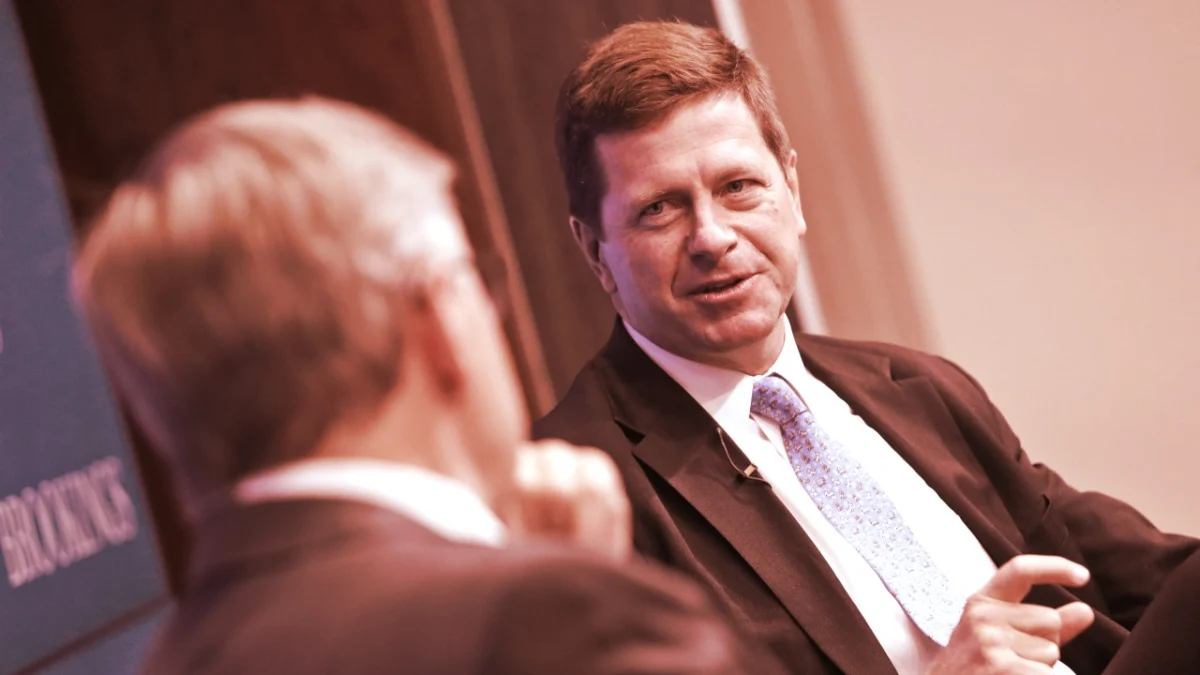
At the center of this new initiative is Jay Clayton, the former Securities and Exchange Commission (SEC) chairman whose tenure during the Trump administration’s first term left an indelible mark on the financial technology landscape. Clayton, currently serving as the Director of National Intelligence, has been widely identified as the administration’s new "AI czar," tasked with harmonizing the government’s multifaceted approach to this transformative technology.
A Coordinated Federal Mandate
The newly minted task force arrives with a broad and ambitious mandate. According to President Trump’s announcement, the group is designed to serve as the primary bridge between the federal government and a wide array of stakeholders. This includes private consumers, public interest advocacy groups, religious organizations, providers of critical national infrastructure, and the major tech companies currently driving the AI boom.
The organizational structure of the force reflects its status as a top-tier administrative priority. Reporting directly to President Trump and White House Chief of Staff Susie Wiles, the task force brings together a coalition of high-ranking officials. Alongside Clayton, the leadership team includes Federal Trade Commission (FTC) Chairman Andrew Ferguson, Under Secretary of War for Research and Engineering Emil Michael, and Office of Personnel Management Director Scott Kupor.
The announcement follows closely on the heels of what the administration has dubbed the "Historic White House Accord on Super Intelligence." This agreement, reportedly signed by industry giants such as OpenAI, Google, and Nvidia, serves as a framework wherein these corporations have ostensibly confirmed their responsibilities to the American public. The formation of the task force is seen by political analysts as the enforcement arm of this broader diplomatic push, ensuring that the commitments made during meetings with AI industry leaders at the White House last week are translated into actionable policy.
The Architect of the Crypto Crackdown Returns
For those in the financial technology and cryptocurrency sectors, the appointment of Jay Clayton to oversee AI is a development of profound, and perhaps polarizing, significance. Clayton is a familiar figure in the corridors of power, but his legacy is inextricably linked to the aggressive regulatory posture he adopted toward blockchain technology during his time as SEC chair.
Under Clayton’s leadership, the SEC pioneered an approach often characterized by critics as "regulation-by-enforcement." During his tenure, he oversaw 57 separate enforcement actions against crypto firms, initial coin offerings (ICOs), and various blockchain-related projects. He famously touted this record as a triumph of investor protection upon his departure from the agency, asserting that the SEC had successfully brought order to a chaotic, nascent market.
Perhaps his most enduring—and controversial—legacy in the digital asset space occurred in the final weeks of his SEC leadership. In December 2020, in one of his last major acts as chair, Clayton authorized a $1.3 billion lawsuit against Ripple Labs. The SEC alleged that Ripple had engaged in the sale of XRP as an unregistered security. The case became a defining moment for the entire industry, setting a legal template that the subsequent SEC leadership, under Gary Gensler, would rely upon for years to come in their own high-profile battles against token issuers and major cryptocurrency exchanges.
A Complex Record in Finance and Law
Clayton’s post-SEC trajectory has been anything but linear, characterized by a series of pivots that have kept him at the center of the debate over government oversight of emerging technologies. After leaving the SEC in 2021, Clayton famously joined the crypto-focused asset management firm One River as an adviser, a move that surprised many who had viewed him as a staunch antagonist to the industry. He also lent his expertise to the advisory board of Fireblocks, a major institutional custodian for digital assets.
These roles suggested a potential reconciliation between the former regulator and the industry he had once sought to constrain. However, his return to government service has consistently maintained a focus on enforcement. President Trump’s attempt to appoint Clayton to lead the U.S. Attorney’s Office in Manhattan in 2020 served as an early indicator of his continued favor within the administration.
When he eventually took the helm as the interim U.S. Attorney for the Southern District of New York in 2025, he did not shy away from the intersection of technology and law enforcement. His office notably continued the aggressive prosecution of Tornado Cash developer Roman Storm, signaling that while Clayton may have advised private firms, his philosophy regarding the enforcement of federal mandates remains firm.
The Road Ahead for AI Policy
As the Super Intelligence Force begins its work, the tech sector and legal observers alike are waiting for more granular details regarding the task force’s specific mandate and operational timeline. While the President’s post outlined the breadth of the group’s engagement, it remained silent on the specific regulatory hurdles or incentive programs that might be introduced.
The selection of a figure with Clayton’s background—someone who has balanced private-sector advisory roles with a career defined by strict regulatory enforcement—suggests that the administration may be looking to strike a balance between promoting American technological dominance and maintaining rigid oversight of AI development. The presence of the FTC’s Andrew Ferguson, known for his scrutiny of corporate power, alongside defense-oriented officials like Emil Michael, implies that the administration views AI not just as an economic driver, but as a core component of national security and critical infrastructure.
For now, the industry is left to analyze the implications of this new "Super Intelligence" regime. With the White House Accord setting the stage and a seasoned regulator in the driver’s seat, the task force is poised to become the most influential body in Washington regarding the future of the nation’s technological landscape. Whether this new era of "Super Intelligence" policy will mirror the combative regulatory environment of the crypto-era or adopt a new, more collaborative model remains the central question facing stakeholders as the task force prepares for its first formal sessions.
The White House has yet to provide a schedule for the first meeting of the group, but with the rapid pace of developments in artificial intelligence, it is expected that the force will begin its consultations with industry leaders and public interest groups in the near future. As the administration works to consolidate its position, the influence of the individuals named to this task force will undoubtedly be felt across the entire tech sector, from the largest AI labs in Silicon Valley to the smallest startups working to innovate within the new government-defined boundaries.