
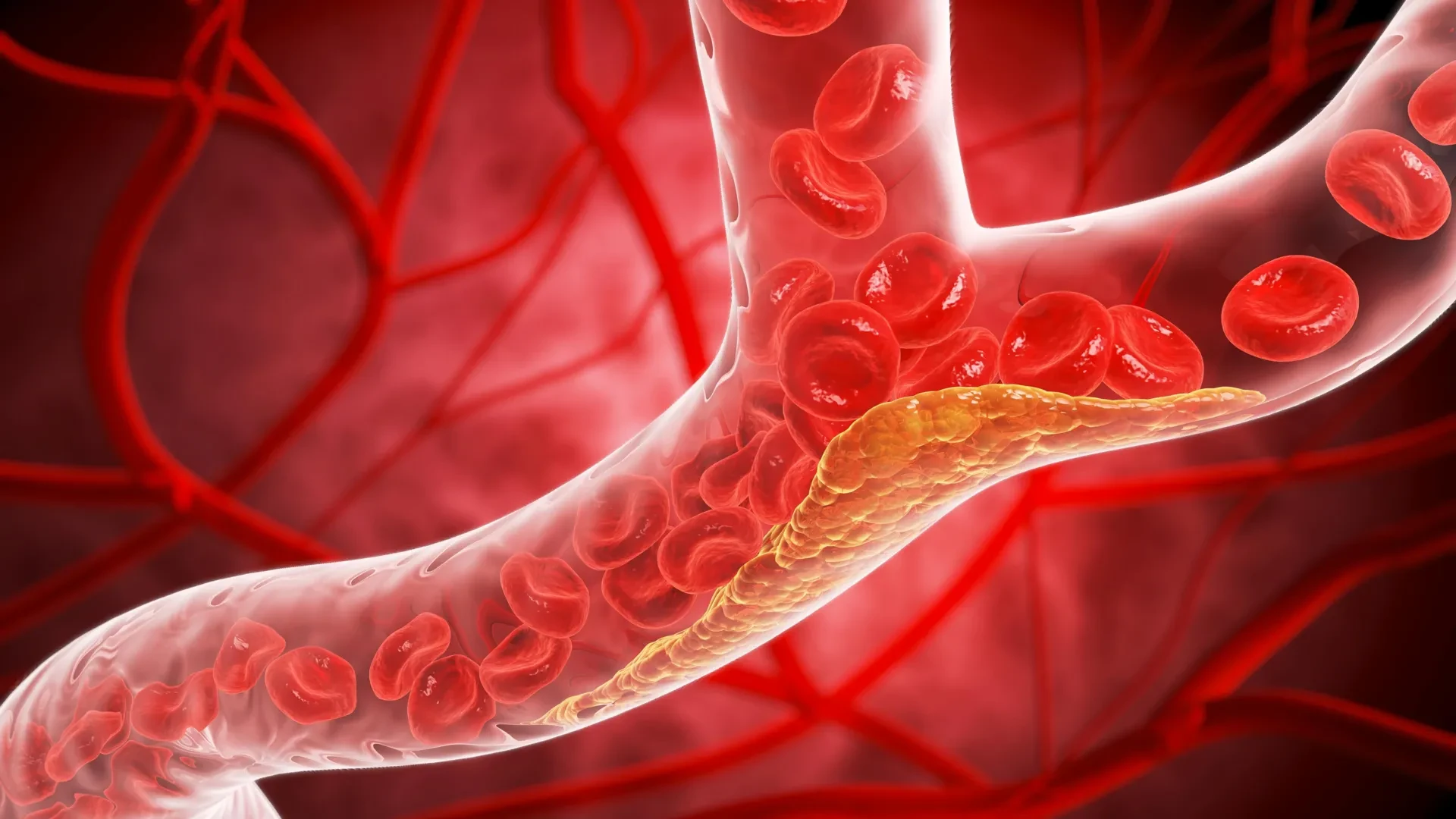
Atherosclerosis—the gradual, silent buildup of fatty plaque inside human arteries that serves as the primary engine driving most cardiovascular disease—can begin its insidious progression many years, or even decades, before a person ever notices a single symptom. Now, the results of a massive, landmark international study suggest that this hidden pathology is not only present in a significant portion of young adults who otherwise appear completely healthy, but that it is also considerably more widespread across the general population than previously recognized by the medical community.
The groundbreaking research was spearheaded by Professor Henning Bundgaard, Professor of Cardiology at Rigshospitalet in Copenhagen, Denmark, alongside Dr. Borja Ibáñez, Scientific Director of the Centro Nacional de Investigaciones Cardiovasculares Carlos III (CNIC), cardiologist at Hospital Universitario Fundación Jiménez Díaz, and group leader at CIBERCV.
Among a staggering cohort of more than 16,000 adult participants who reported no prior symptoms and had no previous clinical diagnosis of cardiovascular disease, researchers detected hidden atherosclerotic plaques in an astonishing 57.1% of individuals. The profound findings were formally presented during a high-profile Hot Line session at the ESC Congress 2026 and published simultaneously in the prestigious New England Journal of Medicine.
Mapping Hidden Atherosclerosis Across Adult Life
These revelations stem directly from the initial phase of REACT, one of the most ambitious and expansive epidemiological efforts ever undertaken to examine how silent atherosclerosis develops, evolves, and progresses throughout the span of adult life. This massive international research project is generously funded by a major grant of up to EUR 23 million from the Novo Nordisk Foundation for its first phase, and is carried out through a robust clinical collaboration involving Rigshospitalet, other leading Danish medical institutions, and the CNIC in Spain.
Professor Bundgaard explained the fundamental philosophy driving the initiative, noting that the overarching vision of REACT is to fundamentally transform primary cardiovascular prevention. By shifting toward a precision medicine approach centered on the early, direct identification of atherosclerosis, medicine can evolve beyond guesswork.
Atherosclerosis remains the primary underlying root cause of cardiovascular disease worldwide, eventually manifesting in catastrophic clinical emergencies such as heart attacks, ischemic strokes, or sudden cardiac death. Simply having arterial plaque does not automatically mean that an individual will inevitably develop fully symptomatic, life-threatening disease. However, the stakes could not possibly be higher: cardiovascular disease currently claims the lives of nearly 20 million people around the world each year, with atherosclerosis directly responsible for the vast majority of those tragic fatalities.
One of the greatest clinical challenges in modern cardiology has always been the stealthy nature of the condition. The disease can develop quietly and invisibly for decades, with plaque continuously accumulating inside critical arterial walls without ever producing a single obvious warning sign or symptom until an acute event occurs.
Looking for Disease Instead of Estimating Risk
Addressing this long-standing clinical paradigm, Dr. Ibáñez stated that the REACT study is rooted in a simple yet revolutionary conceptual shift. The medical community has long relied on a model that merely estimates the statistical probability of future cardiovascular disease based on traditional, indirect risk factors such as blood pressure, cholesterol levels, and smoking history. The REACT paradigm, by contrast, proposes detecting the actual disease directly through advanced medical imaging before it ever causes symptoms.
In this visionary model, preventive medical interventions and the targeted treatment of risk factors would be guided securely by the confirmed physical presence of silent atherosclerosis, rather than relying exclusively on probabilistic risk estimates. The vital first step in this highly ambitious endeavor was to determine the true, unmasked prevalence of silent atherosclerosis across all three major vascular territories and throughout the entire adult lifespan—data that the research team is now successfully reporting to the global scientific community.
Instead of relying solely on statistical variables to calculate a person’s future cardiovascular risk profile, the researchers set out to determine definitively whether dangerous plaque is already physically present within the vascular system.
The multi-phase REACT project is expected to span a total of eight years. Phase 1, officially known as REACT-DETECT, was successfully launched in 2024. Subject to continued funding approval, Phase 2, designated as REACT-PROTECT, is planned to run consecutively from 2027 through 2032.
The newly released results originate entirely from Phase 1, which investigators report provides the most comprehensive, high-resolution picture yet assembled regarding where silent atherosclerosis appears in the human body, how common it is across different age brackets, and how its prevalence distinctly varies between women and men.
Atherosclerosis Is Already Present in Young Adults
For this foundational first phase of the study, researchers enrolled an impressive total of 16,808 healthy participants ranging in age from 18 to 70 years old, hailing from clinical centers across Denmark and Spain. Crucially, none of these participants had any known history of atherosclerotic cardiovascular disease prior to their inclusion in the project.
Every single participant underwent a rigorous battery of advanced diagnostic imaging specifically designed to identify and quantify plaque accumulation in three major anatomical areas: the carotid arteries located in the neck, the femoral arteries running through the legs, and the vital coronary arteries supplying oxygen-rich blood directly to the heart muscle.
In addition to sophisticated imaging, the researchers comprehensively evaluated traditional cardiovascular risk factors, measured circulating blood biomarkers, collected specialized biological samples for extensive omics studies, and meticulously analyzed detailed retinal images. Together, these multi-layered measurements have successfully created one of the most exhaustive, information-rich databases on human atherosclerosis ever assembled in medical history.
The resulting scans yielded findings that surprised even the seasoned researchers. Atherosclerosis can appear far earlier in human life than previously believed, taking root during the earliest stages of adulthood. Approximately 1 in every 13 participants aged 18 to 29 already exhibited clear, detectable signs of the disease in at least one major artery.
Following this early onset, the overall prevalence of atherosclerosis climbed steadily and predictably with advancing age. Among older participants ages 60 to 70, roughly 9 out of 10 individuals showed definitive evidence of the disease.
Ultrasound Could Offer a Simpler Way to Screen
Another vital structural pattern emerged clearly from the imaging data, carrying profound practical implications for future healthcare delivery. The vast majority of participants who showed evidence of atherosclerosis inside their coronary arteries also simultaneously displayed detectable plaque in their peripheral carotid or femoral arteries.
This remarkable anatomical overlap could transform the logistics of widespread clinical screening. Imaging the carotid and femoral arteries using standard ultrasound technology is significantly easier, much faster, completely noninvasive, and far less resource-intensive compared to performing high-resolution CT scans to examine the deeply situated coronary arteries.
Dr. Ibáñez emphasized the clinical potential of this discovery, explaining that within the proposed medical paradigm, portable ultrasound devices—which can easily be operated by any trained healthcare professional—could eventually become the standard, frontline tool for universal atherosclerosis screening starting from the early stages of adult life.
Men and Women Show Different Patterns
The expansive study also successfully mapped notable, clinically relevant differences in how atherosclerosis develops and progresses across the human lifespan in men versus women.
Among male participants, the overall prevalence of atherosclerosis began its upward trajectory at noticeably younger ages. The general timeline and progression pattern of the disease in men appeared roughly five to ten years ahead of the corresponding pattern observed in women.
Female participants, meanwhile, demonstrated their sharpest, most pronounced surge in atherosclerosis prevalence between the ages of 40 and 60. This critical window of accelerated plaque accumulation broadly overlaps with the natural menopausal transition in women.
The study authors noted that these distinct sexual divergences underscore an urgent medical need to develop and implement targeted cardiovascular prevention strategies that properly account for both biological sex and specific life stages.
Traditional Risk Scores Miss Many Existing Cases
Perhaps one of the most consequential and sobering findings of the entire research endeavor involved the recognized limitations of conventional cardiovascular risk assessment tools.
Current standard methods of evaluation, including established clinical risk scores such as SCORE2, successfully identified only a very small proportion of the individuals who were already walking around with hidden, silent atherosclerosis. This glaring gap demonstrates that a person can be evaluated as having a relatively low cardiovascular risk profile according to traditional statistical measures, while harmful arterial plaque is quietly developing and progressing inside their vascular system.
Reflecting on these insights, Dr. Ibáñez reiterated that the findings point directly toward a fundamentally different, more direct approach to preventing cardiovascular disease before tragedy strikes.
For decades, modern medicine has been forced to estimate cardiovascular risk indirectly using demographic and clinical factors like age, systemic blood pressure, and circulating cholesterol numbers. This massive new study clearly shows that clinical science can now go one decisive step further, actually detecting the physical disease directly before it has the chance to trigger a sudden heart attack or a debilitating stroke.
Dr. Ibáñez emphasized that the future of cardiovascular disease prevention must become significantly more precise and deeply personalized. If physicians can successfully identify atherosclerosis in its absolute earliest, most nascent stages, medicine will finally possess the capability to intervene much sooner, tailor therapeutic interventions far more effectively, and drastically reduce the overwhelming global burden of cardiovascular illness.
Echoing this sentiment, Professor Bundgaard believes the robust findings provide an unprecedented opportunity to fundamentally rethink how clinical cardiovascular prevention is carried out across healthcare systems worldwide.
Until now, preventive medical decisions have always been forced to rely on a generalized estimate of risk, operating in the dark without knowing whether the underlying disease pathology was already physically established in the patient. The REACT project clearly demonstrates that atherosclerosis can now be detected decades before any clinical manifestations ever appear, while providing the medical community with the most comprehensive evolutionary atlas of the disease across the entire adult human lifespan.
Testing Whether Earlier Detection Improves Outcomes
Professor Bundgaard added that these definitive results establish the essential scientific and clinical foundation required to test whether this newly proposed preventive approach actually translates into measurable improvements in patient health outcomes.
Identifying and treating silent atherosclerosis at the earliest possible moment is an absolute prerequisite to successfully reducing the global toll of cardiovascular disease, the researchers argue. Their groundbreaking results strongly support the initiation of large-scale prospective clinical studies designed to evaluate whether a proactive preventive strategy guided by direct vascular imaging—including the widespread deployment of portable ultrasound technology—can successfully surpass current clinical standards. If these prospective trials confirm the hypothesis, it would effectively introduce true precision medicine to the most prevalent form of cardiovascular disease known to humanity.
Subject to the successful acquisition of ongoing funding, the second phase of the REACT initiative—planned to run from 2027 through 2032—is designed to examine that exact clinical question head-on.
The research team intends to launch a massive, definitive randomized clinical trial specifically testing whether a proactive prevention strategy guided by direct vascular imaging can successfully slow, halt, or reduce the systemic progression of atherosclerosis over time. The ultimate, long-term goal of this ambitious scientific journey is to determine whether this imaging-guided strategy can prevent heart attacks, strokes, and other devastating cardiovascular events far more effectively than current clinical practice allows.
Expanding REACT Around the World
Recognizing that regional and genetic variations can influence disease patterns, the dedicated research team is actively expanding the scope of the REACT initiative far beyond the borders of Europe to confirm whether these vital findings hold true across diverse human populations globally.
Dr. Ibáñez noted that REACT is aggressively expanding its international impact, establishing close, collaborative research partnerships with medical institutions in India, Singapore, Tanzania, and Mexico to validate these foundational results in varied populations around the world.
The ongoing success of REACT is built upon the strong scientific shoulders of the earlier, highly regarded PESA-CNIC-Santander study, which was originally led by Dr. Valentin Fuster, Director General of the CNIC, who remains directly and actively involved in the leadership of the REACT project.
That previous foundational work successfully revealed that atherosclerotic disease was already present in a surprising number of middle-aged adults and was closely linked to specific lifestyle patterns. The REACT initiative brilliantly extends this line of scientific inquiry downward into much younger adult age groups, striving to pinpoint the exact moment when the disease first begins to emerge in the human body.
Dr. Fuster reflected on the trajectory of this vital research, noting that past work with PESA demonstrated that atherosclerotic disease is already widespread among middle-aged populations and tied closely to daily habits. With REACT, the team sought to investigate how the pathology emerges at much younger ages. For many years, pioneering cardiologists have maintained the hopeful hypothesis that early, aggressive intervention in the course of atherosclerosis could not only halt its progression, but might one day make it realistically possible to cure the disease entirely. The comprehensive data generated by REACT, Dr. Fuster concluded, will finally provide the answer to that historic medical question.