
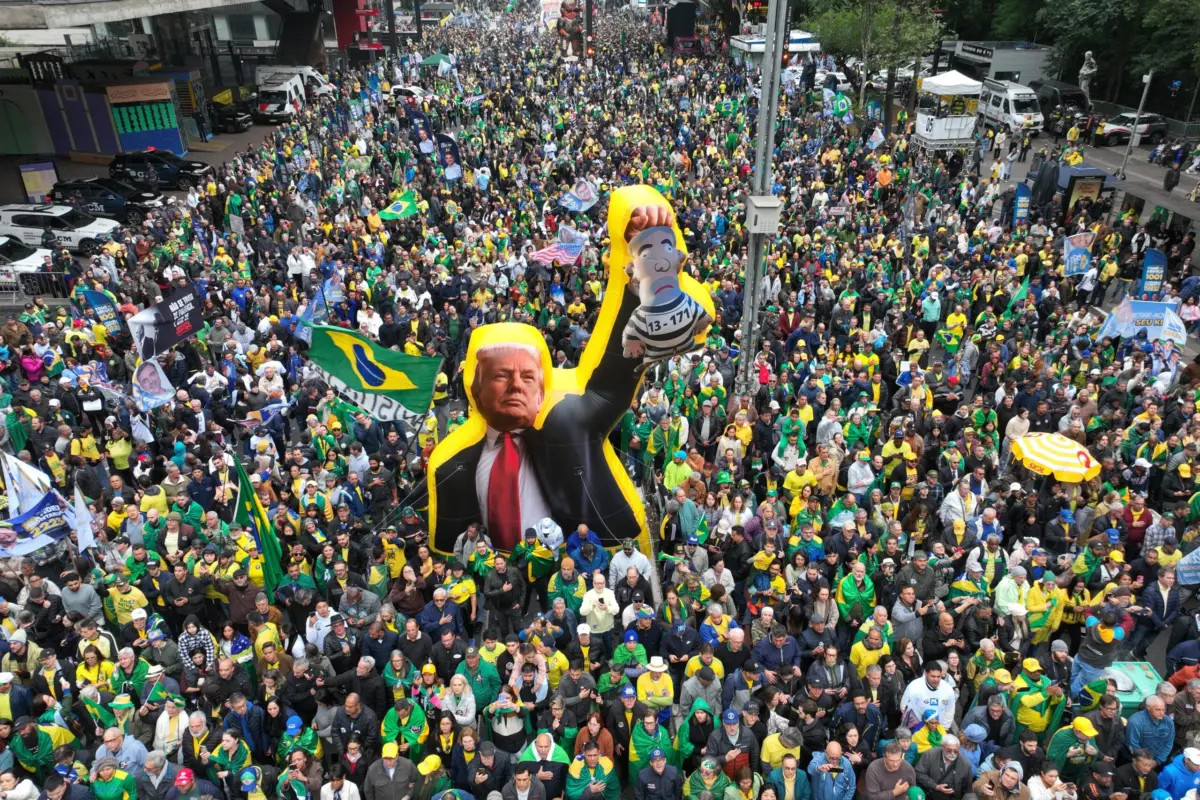
Brazil’s top legal official has formally requested a comprehensive law enforcement investigation into alleged efforts by the United States government to interfere in domestic Brazilian politics. The call for a probe comes on the heels of a damaging media report indicating that the administration of United States President Donald Trump diverted substantial funds toward far-right civil organizations and political causes aimed at undermining Brazil’s democratic institutions, particularly the country’s Supreme Court.
Attorney General Jorge Messias issued his directive for an official investigation on Thursday. The move follows an investigative report published on Wednesday by the British newspaper The Guardian, which revealed that the Trump administration had planned to channel $1 million specifically to right-wing civil groups operating inside Brazil that actively oppose the rulings and authority of the Brazilian Supreme Court.
Addressing the public through a strongly worded statement shared on social media, Messias emphasized that external interference in sovereign domestic matters "cannot be tolerated" under any circumstances. He characterized the revelations published in the British press as an urgent and critical warning regarding the integrity of Brazilian sovereignty.
"The information is especially serious in light of Brazil’s electoral process and the recent episodes of external pressure on our institutions," the attorney general added, highlighting the precarious timing of the alleged funding scheme as the nation approaches a deeply polarized national ballot.
The unfolding controversy threatens to cast a long shadow over Brazil’s high-stakes presidential election, where incumbent leftist President Luiz Inácio Lula da Silva is vigorously campaigning for a fourth term in office. President Lula has consistently sought to center his campaign messaging on the defense of national sovereignty, repeatedly warning the Brazilian public about external threats and aggressive efforts by Washington to boost the electoral prospects of far-right political allies across the broader Latin American region.
President Trump has maintained an assertive posture throughout Latin America, frequently endorsing conservative and right-wing candidates ahead of national votes. In some instances, the US leader has openly hinged the possibility of future economic and financial support for regional governments on the direct outcomes of their democratic elections. Furthermore, Trump has cultivated exceptionally close political and personal relations with the family of former Brazilian President Jair Bolsonaro, who suffered a decisive defeat to Lula in the previous presidential contest.
The current political landscape features Bolsonaro’s eldest son, Senator Flavio Bolsonaro, who has emerged as a frontrunner in the conservative push to challenge Lula’s presidency this year. Recent public opinion polling data indicates that Lula and Flavio Bolsonaro remain virtually tied ahead of the critical first round of voting scheduled for October 4.
The political friction between Washington and Brasília has been palpable for months. In May, Flavio Bolsonaro traveled to Washington, D.C., where he met with President Trump at the White House amid his troubled and controversial presidential bid. During that visit, the younger Bolsonaro signaled a commitment to forging much closer bilateral ties with the United States should he win the presidency. In sharp contrast, President Lula has positioned himself as an outspoken critic of what he describes as an interventionist foreign policy approach by the Trump administration toward Latin American security and domestic politics.
According to The Guardian report published on Wednesday, the alleged funding directed toward Brazil was part of a much broader, global financial reallocation by the Trump administration. The reporting states that Washington sought to redirect roughly $175 million originally designated for the US State Department’s human rights fund toward various far-right causes and political initiatives around the world.
The targeted recipients of these reallocated funds allegedly included controversial groups advocating for white Afrikaners in South Africa—a population that the Trump administration has frequently and falsely portrayed as victims of an ongoing "genocide." In Brazil, the funds were reportedly earmarked to support local efforts designed to counter what the United States government publicly characterized as "lawfare and censorship."
In recent years, the Brazilian Supreme Court has frequently found itself the target of intense criticism from political conservatives, both within Brazil and internationally. Much of this fierce criticism originated following the landmark 2025 criminal conviction of former President Jair Bolsonaro. Judicial authorities found Bolsonaro guilty of active involvement in an elaborate coup plot specifically designed to subvert his electoral defeat to Lula in the 2022 presidential race and illegally retain power.
Both Bolsonaro and his domestic and international political allies, most notably President Trump, have consistently depicted the judicial proceedings and subsequent conviction as a clear-cut case of politically motivated persecution. The fallout from the trial triggered severe diplomatic tensions between Washington and Brasília last year. Citing what he termed an unjust prosecution, President Trump abruptly levied punitive 50-percent tariffs on specific categories of Brazilian goods imported into the United States, though he has since lifted those trade penalties.
At the time the tariffs were initially announced, Trump released an official letter sharply denouncing the legal actions taken against his Brazilian ally. "The way that Brazil has treated former President Bolsonaro, a Highly Respected Leader throughout the World during his term, including by the United States, is an international disgrace," Trump wrote in the correspondence.
Beyond economic sanctions, the Trump administration engaged in direct diplomatic retaliation. Washington revoked the official visas of several Brazilian judicial officials who were directly involved in investigating and prosecuting Bolsonaro’s alleged coup plot, applying pressure in an unsuccessful attempt to have the high-profile case dismissed. Additionally, the US government levied short-lived financial and travel sanctions against Brazilian Supreme Court Justice Alexandre de Moraes, accusing the jurist of orchestrating "an unlawful witch hunt" targeting right-wing political voices.
Despite the intense domestic pressure and foreign interference, the legal proceedings against the Bolsonaro family pressed forward. Jair Bolsonaro was ultimately convicted by the high court and handed a heavy 27-year prison sentence in September 2025.
The legal fallout extended further down the political family tree. In June, another of the former president’s sons, Eduardo Bolsonaro, was sentenced to more than four years in prison. A Brazilian court ruled that Eduardo had actively and illegally lobbied for United States government interference in his father’s ongoing legal defense, crossing the line from standard political advocacy into unlawful subversion of the national judiciary.