
The first thing Brightline wants its passengers to know about its current financial restructuring is that the trains will keep running.
"Business as usual," read a reassuring message sent to customers shortly after the privately operated higher-speed rail company filed for Chapter 11 bankruptcy protection. The legal and financial maneuver followed months of intense discussions with bondholders, according to reports by the Financial Times. The restructuring plan is designed to give the company the necessary breathing room and time to secure an additional $490 million in borrowing. This capital injection is vital as the rail provider strives to increase its ridership enough to comfortably keep up with payments on a staggering $4.4 billion in debt accumulated over years of building, expanding, and operating the railroad network.
Despite the significant corporate setback, sleek passenger trains will continue zipping between Orlando and Miami at speeds up to 125 miles per hour. This continuity is possible because the Chapter 11 filing does not include Brightline Trains Florida, the specific corporate division that directly operates the line. Furthermore, the financial restructuring leaves Brightline West completely unaffected. That separate division is currently pressing ahead with its ambitious development of a high-speed rail corridor designed to connect Las Vegas to the Los Angeles area.
Brightline originally began offering passenger service between Miami and West Palm Beach back in 2018, before successfully extending its route northward to Orlando beginning in 2023. Over the years, the system has frequently been held up by transportation experts and policymakers as a shining example of how the private sector can successfully introduce higher-speed rail to the United States. This is particularly true in regions historically characterized by limited public transit options and a severe lack of traditional financing mechanisms for major infrastructure projects.
Despite the financial restructuring, the Florida route has seen encouraging operational growth. System ridership increased by 14 percent, and overall revenue climbed by 17 percent between January and August compared to the exact same period during the previous year. At the same time, the company is actively moving ahead with longer-term plans to expand its service further west to Tampa while adding a new passenger station in Cocoa, Florida.
"Brightline is a critical part of Florida’s transportation network that has changed the way people move around the state," Patrick Goddard, CEO of Brightline Florida, said in an official statement released in the wake of Friday’s filing. "This transaction will be a catalyst for further growth in ridership and revenue."
Even with these positive indicators, the underlying financial math has fallen short of initial expectations. Brightline currently serves roughly 3.5 million people annually and generates approximately $240 million in revenue. According to Tim Hynes, head of Global Credit Research at Debtwire, those figures represent less than half the projected ridership and only one-third of the income the company had originally anticipated generating by 2024. That massive shortfall is what ultimately forced Brightline to rework its heavy debt load and actively seek out additional outside financing to stay afloat.
Beyond its financial struggles, Brightline has also faced persistent public scrutiny and community concern over its safety record. As of January, municipal and transit records show that 182 people had tragically been killed by its trains since service began in 2018. Many of these fatalities occurred in collisions at grade-level road crossings or involved individuals trespassing directly on the active tracks. Brightline maintains that none of the tragic incidents were caused by operational failures on the part of the train crews, repeatedly pointing to the hundreds of millions of dollars it has proactively invested in infrastructure safety improvements, enhanced fencing, and public awareness campaigns.
Yet, even against the backdrop of financial restructuring and safety debates, Brightline’s actual service continues to find an enthusiastic audience among everyday commuters and travelers.
Ivan Reich genuinely enjoys rail travel and frequently rides Brightline for his 40-minute daily commute. The journey takes him from his home in West Palm Beach directly to his office in Fort Lauderdale, where he happens to practice bankruptcy law. He also relies on the train for leisure trips, such as heading down to watch Miami Heat basketball games. However, he readily concedes that at roughly $35 per ticket for shorter hops, the service can be too expensive for some people to utilize on a daily basis. (For longer journeys, a standard round-trip ticket between Miami and Orlando can cost as little as $120.)
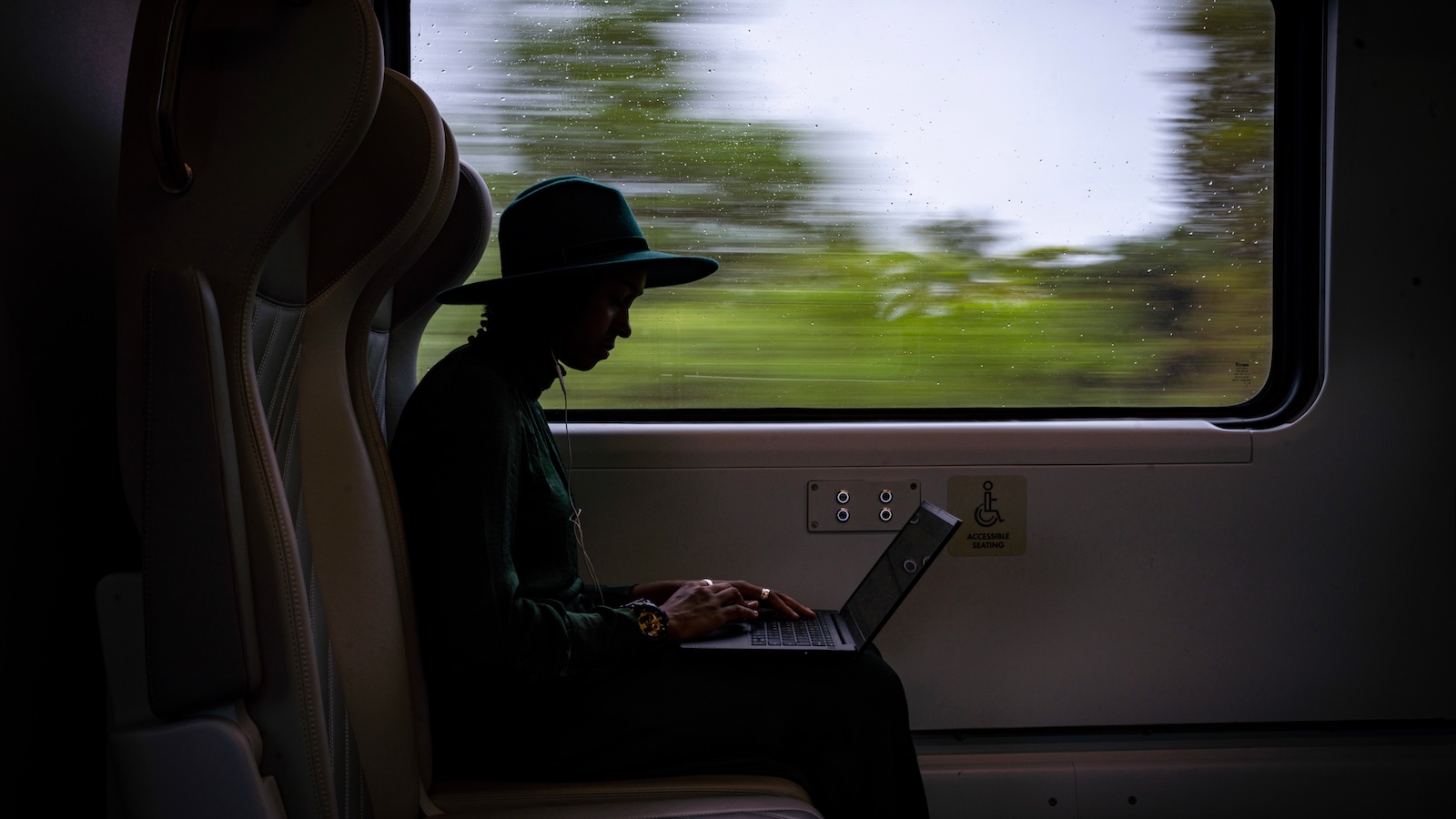
"Brightline’s literally like going to the airport and being on a plane," Reich said, describing the onboard experience. "It’s a luxury experience. It’s nice. It’s pleasant. It’s comfortable." Beyond the cost of a ticket, he added, "there’s nothing to complain about."
With Amtrak simultaneously smashing its own historical ridership records and Brightline’s passenger counts climbing, American travelers appear increasingly willing to choose rail over traditional highway driving or short-haul flights. However, Brightline’s high-profile financial troubles expose a much larger and more difficult question for the future of American transportation: Who will ultimately pay to build and maintain the massive infrastructure needed to give more citizens that option?
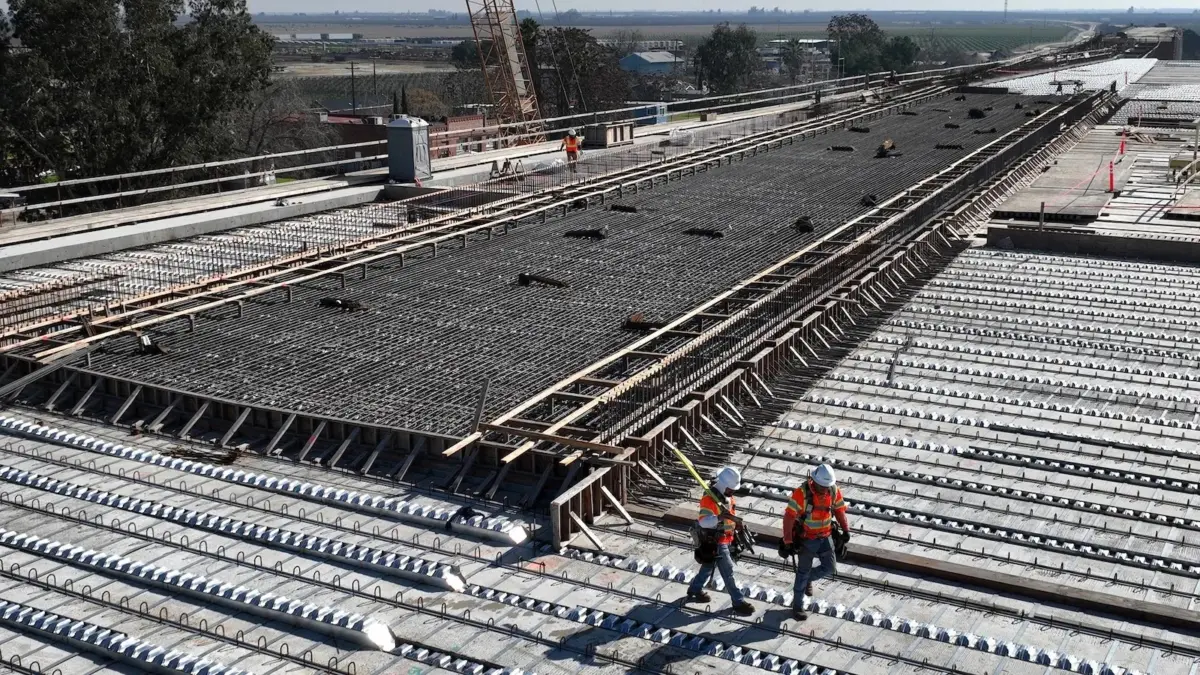
Brightline West is currently developing a 218-mile high-speed rail line connecting Las Vegas to the Los Angeles suburb of Rancho Cucamonga. Under the current design plan, passengers arriving from Nevada would connect to an existing commuter rail line for the final leg of the ride into downtown Los Angeles. That ambitious $21 billion project has already secured a $3 billion federal grant and is currently seeking an additional $6 billion federal loan as it works to lock down the complex financial package required to complete construction.
By contrast, California’s long and troubled journey toward building its own standalone high-speed rail system connecting San Francisco and Los Angeles approached the financing problem from the opposite side of the equation. Having spent nearly two decades relying almost exclusively on public funding, the California project is now actively exploring ways to bring private investors on board to finish the job.
Jim Mathews, who leads the Rail Passengers Association, views Brightline’s Chapter 11 restructuring as a pragmatic and beneficial move that "probably gives Brightline breathing room" to finally get out from underneath what he described as a "crushing" debt load. He noted in an email that improving the company’s financial outlook will ultimately benefit passenger rail overall by ensuring that more people retain access to reliable train service.
At the same time, Mathews emphasized that the government needs to play a much stronger, more direct role in financing major rail projects. He argued that the sustained, multi-billion-dollar investments required to launch complex transportation initiatives are often completely beyond the financial means of the private sector alone, even when structured as public-private partnerships.
"Building a railroad is very hard and very expensive," Mathews said. "This is a good example of why governments always have a legitimate role to play."
Money is far from the only major hurdle facing private rail developers. Private operators must also navigate the immense technical and logistical challenges of integrating their new high-speed systems with existing public infrastructure, according to Alon Levy, a research scholar at the New York University Marron Institute.
Levy pointed out that Brightline West’s decision to terminate its run in Rancho Cucamonga rather than pushing directly into downtown Los Angeles perfectly illustrates this difficulty. Reaching the heart of Los Angeles would require deep, complex coordination with regional commuter operators like Metrolink. Building a truly integrated, national passenger rail network will ultimately require coordinated, top-down federal action, Levy explained.
Meanwhile, Rick Harnish, who leads the High Speed Rail Alliance, argues that passenger rail infrastructure should be treated more like other established forms of public transportation in the United States. Commercial airlines do not pay out-of-pocket to build and maintain commercial airports, and trucking companies do not pay to construct the national highway system. Those massive infrastructure networks are built and maintained by taxpayers because private capital simply cannot bear the upfront burden alone.
"Private capital will not invest in the kind of infrastructure you need to fund public transit," Harnish said.
For Harnish, the steadily rising ridership figures on both Brightline and Amtrak demonstrate clearly that the public demand for rail travel is robust. What is currently missing is a commensurate level of public investment in the physical tracks and signals required to meet that demand.
"It’s time for both the feds and states to start investing in good, high-quality tracks," he said.
For Brightline leadership, the immediate, day-to-day challenge remains keeping their brightly colored trains running smoothly across Florida. But the larger, lingering question—both for Brightline and for the broader future of American passenger rail—remains figuring out exactly who will pay to build and maintain the tracks running beneath them.